|
VOOZH | about |
|
VOOZH | about |
Panel data (also known as longitudinal or cross-sectional time-series data) consists of observations on multiple entities (such as individuals, firms, or states) tracked over time. This data structure allows analysts to:
Panel data analysis is widely used in economics, social sciences, and business research for its ability to provide richer information compared to purely cross-sectional or time-series data.
The main models used in panel data analysis are:
While StatsModels does not have a dedicated high-level panel data API, it supports panel analysis through:
A balanced panel is created dataset with 5 states and 10 years each, including income (independent variable) and violent (dependent variable):
Set a multi-index for the panel structure,organizes data for panel analysis(not strictly required for modeling, but good practice):
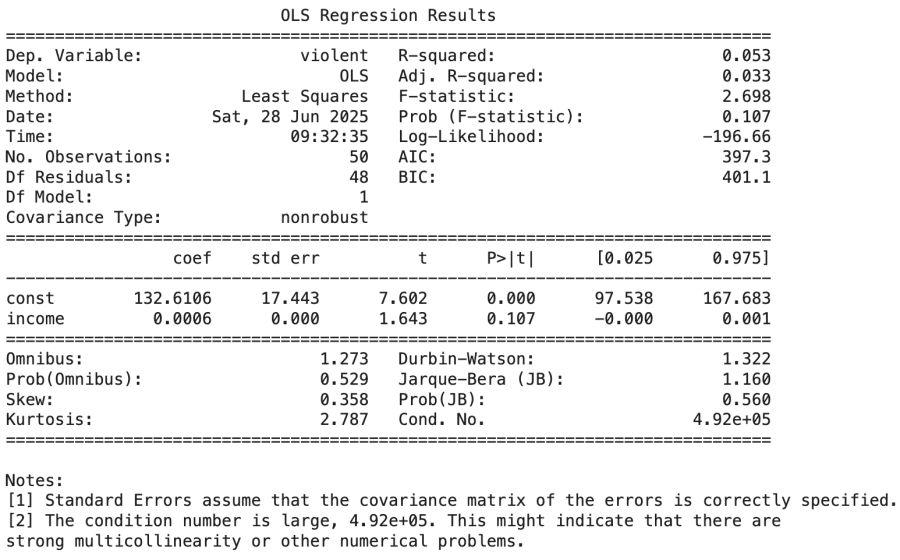
This model ignores the panel structure and treats all observations as independent:
Output
This model controls for unobserved, time-invariant differences between entities(states) by adding state dummies:
Output
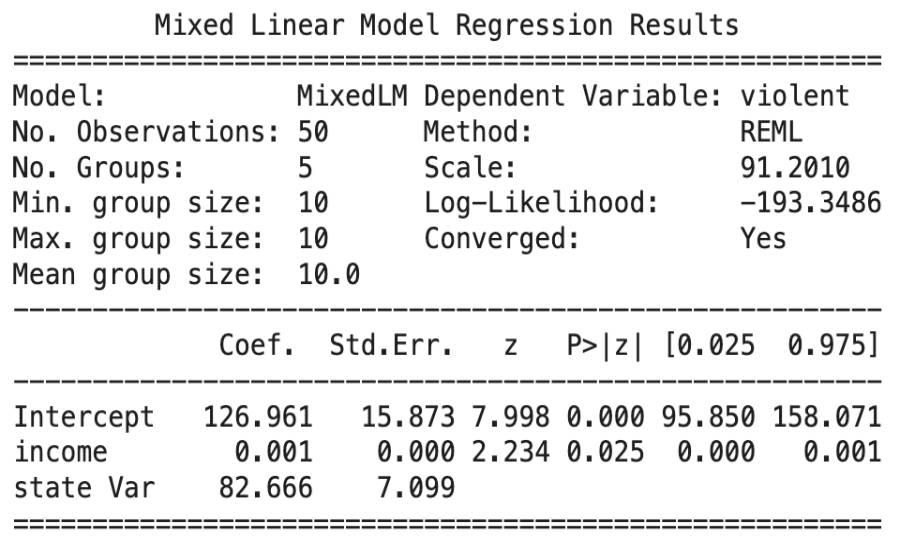
This model treats state effects as random variables across states, assuming these effects are uncorrelated with the regressors:
Output
You can download the complete source code from here : Panel Data Analysis in StatsModels