|
VOOZH | about |
|
VOOZH | about |
A data structure is a storage that is used to store and organize data. It is a way of arranging data on a computer so that it can be accessed and updated efficiently.
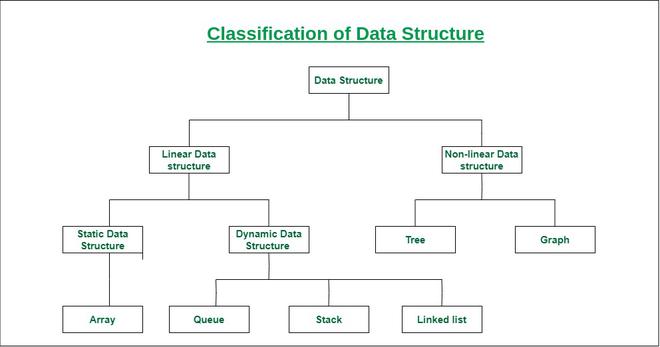
A data structure organizes, processes, retrieves, and stores data, making it essential for nearly every program or software system. To help you master them, we've compiled a comprehensive guide covering types, classifications, and applications of data structures. This article simplifies everything, helping you choose the right one in minutes.
Table of Content
Data structure has many different uses in our daily life. There are many different data structures that are used to solve different mathematical and logical problems. By using data structure, one can organize and process a very large amount of data in a relatively short period. Let's look at different data structures that are used in different situations.
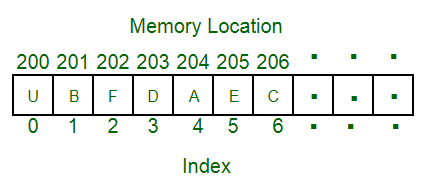
An array is a linear data structure and it is a collection of element of same data type stored at contiguous memory locations.
It offers mainly the following advantages.
Different applications of an array are as follows:
Arrays efficiently manage and store database records.
Want to get started with arrays? You can try out our curated articles and lists for the best practice:
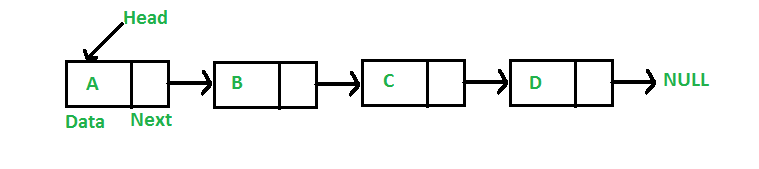
A linked list is a linear data structure in which elements are not stored at contiguous memory locations. The elements in a linked list are linked using pointers as shown in the below image.
Applications of the Linked list
Want to get started with a linked list? You can try out our curated articles and lists for the best practice:
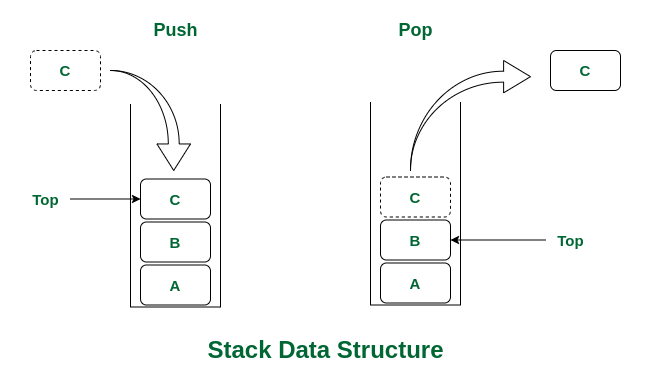
Stack is a linear data structure that follows LIFO(Last in first out) principle i.e., entering and retrieving data is possible from only one end. The entering and retrieving of data is also called push and pop operation in a stack.
Applications of Stack
Different applications of Stack are as follows:
Want to get started with Stack? You can try out our curated articles and lists for the best practice:
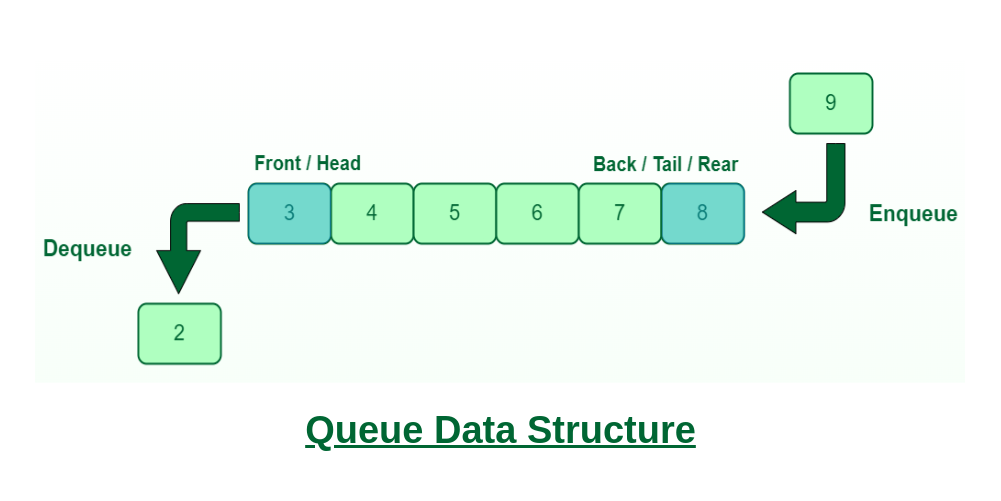
Queue is a linear data structure that follows First In First Out(FIFO) principle i.e. the data item stored first will be accessed first. In this, entering is done from one end and retrieving data is done from other end. An example of a queue is any queue of consumers for a resource where the consumer that came first is served first.
Applications of Queue:
Different applications of Queue are as follows:
Want to get started with Queue? You can try out our curated articles and lists for the best practice:
A tree is a non-linear and hierarchical data structure where the elements are arranged in a tree-like structure. In a tree, the topmost node is called the root node. Each node contains some data, and data can be of any type. It consists of a central node, structural nodes, and sub-nodes which are connected via edges. Different tree data structures allow quicker and easier access to the data as it is a non-linear data structure.
Applications of Tree:
Want to get started with Tree? You can try out our curated articles and lists for the best practice:
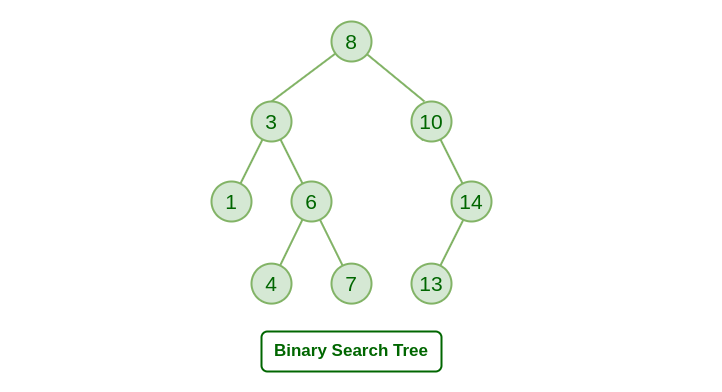
A Binary Search Tree (or BST) is a data structure used for organizing and storing data in a sorted manner. Each node in a Binary Search Tree has at most two children, a left child and a right child, with the left child containing values less than the parent node and the right child containing values greater than the parent node. This hierarchical structure allows for efficient searching, insertion, and deletion operations on the data stored in the tree.
Applications of Binary Search Tree:
Want to get started with BST? You can try out our curated articles and lists for the best practice:
A graph is a non-linear data structure that consists of vertices (or nodes) and edges. It consists of a finite set of vertices and set of edges that connect a pair of nodes. The graph is used to solve the most challenging and complex programming problems. It has different terminologies which are Path, Degree, Adjacent vertices, Connected components, etc.
Applications of Graph:
Want to get started with Graph? You can try out our curated articles and lists for the best practice:
Please refer Advanced Data Structure for more advanced data structures.