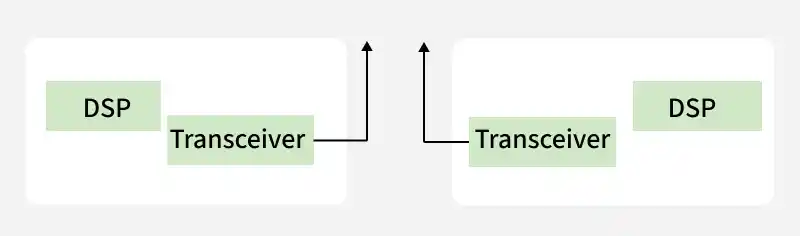
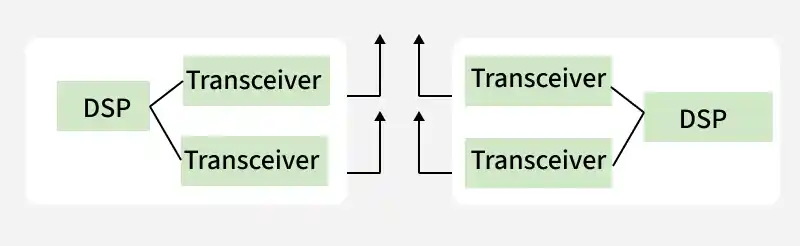
SISO and MIMO represent two important approaches in control engineering and support analysis and design of dynamic systems in Electronic Engineering. Choosing between SISO and MIMO approaches depends on the complexity of the system, how many variables need control, and the desired performance outcomes.
A SISO (Single Input Single Output) system controls one output using a single input, making the relationship simple and easy to manage. Such control structures suit processes where behaviour depends on a single control action. Applications include motor speed control, temperature regulation in heating equipment, and basic process control systems. Design and analysis remain relatively simple because interaction between multiple variables does not occur.
A MIMO (Multiple Input Multiple Output) system handles scenarios where several inputs affect multiple outputs at the same time. These systems are used in complex engineering settings where many parameters must be coordinated to ensure stable and efficient operation. Typical applications include robotics, aerospace, and chemical process industries, where multiple variables interact during system control.
SISO (Single Input Single Output)
Single Input Single Output (SISO) refers to a control system structure where one input signal produces one corresponding output response. Such systems focus on controlling a single variable, which creates a clear and direct relationship between input action and output behaviour. Simple structure allows easier study of system dynamics and supports straightforward application of control and signal processing techniques.
Simpler to design, build, and analyze compared with complex control systems.
Analyzing system stability is simpler, which helps engineers design controllers more efficiently.
Building and maintaining these systems usually requires less time and cost.
Fewer interactions between inputs and outputs make identifying and fixing problems much easier.
Disadvantages
Limited flexibility for processes involving multiple inputs and outputs.
Efficiency may decrease in systems with many interdependent variables.
Difficulties may arise in managing coupling effects between several variables.
Applications
HVAC systems for regulating temperature in heating and air conditioning.
Robotics and industrial automation, where precise motor speed control is required.
Liquid level control in storage tanks, with flow rate as input and liquid level as output.
Power systems, for controlling voltage levels and ensuring stable operation.
MIMO (Multiple Input Multiple Output)
MIMO systems in control engineering use multiple inputs and outputs to manage complex processes simultaneously, similar to using multiple lanes on a highway to improve traffic flow. This approach increases system throughput, optimizes resource use, and ensures reliable performance.
Multipath propagation and spatial diversity help overcome signal fading or interference by sending signals along different paths.
MIMO system design is more complex than SISO systems due to interactions among multiple inputs and outputs.
Matrix-based representations, including transfer function matrices and state-space models, describe the effect of each input on every output and provide a clear understanding of system dynamics.