|
VOOZH | about |
|
VOOZH | about |
Dynamic Method Dispatch is the mechanism by which a call to an overridden method is resolved at runtime rather than at compile time. It enables Java to support runtime polymorphism, where a superclass reference can refer to a subclass object, and the method that gets executed depends on the actual object type.
Parent obj = new Child();
obj.method();
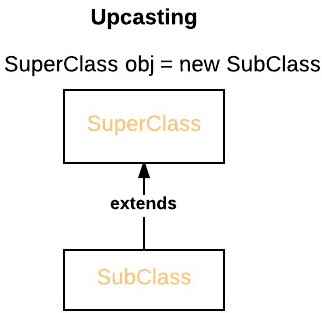
This diagram illustrates upcasting in Java, where a subclass object is assigned to a superclass reference, allowing access to inherited members while supporting runtime polymorphism.
Therefore, if a superclass contains a method that is overridden by a subclass, then when different types of objects are referred to through a superclass reference variable, different versions of the method are executed. Here is an example that illustrates dynamic method dispatch:
Inside A's m1 method
Inside B's m1 method
Inside C's m1 method
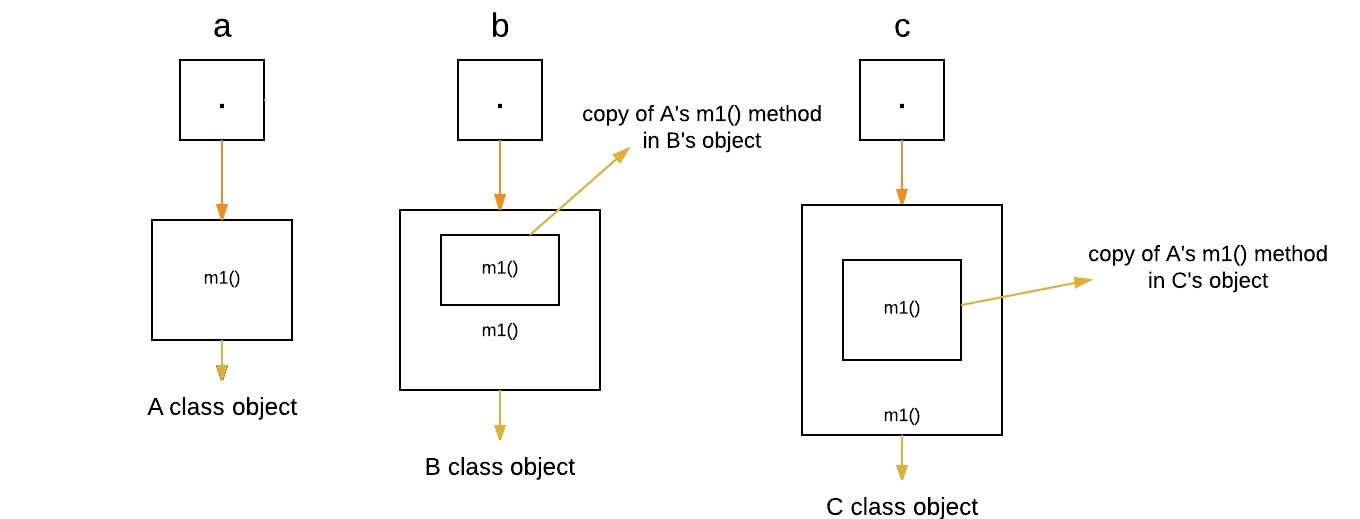
Explanation : The above program creates one superclass called A and it's two subclasses B and C. These subclasses overrides m1( ) method. Inside the main() method in Dispatch class, initially objects of type A, B, and C are declared.
A a = new A(); // object of type A
B b = new B(); // object of type B
C c = new C(); // object of type C
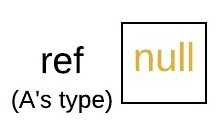
Now a reference of type A, called ref, is also declared, initially it will point to null.
A ref; // obtain a reference of type A
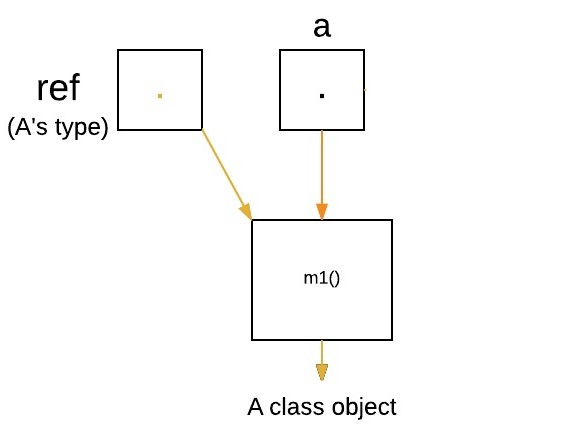
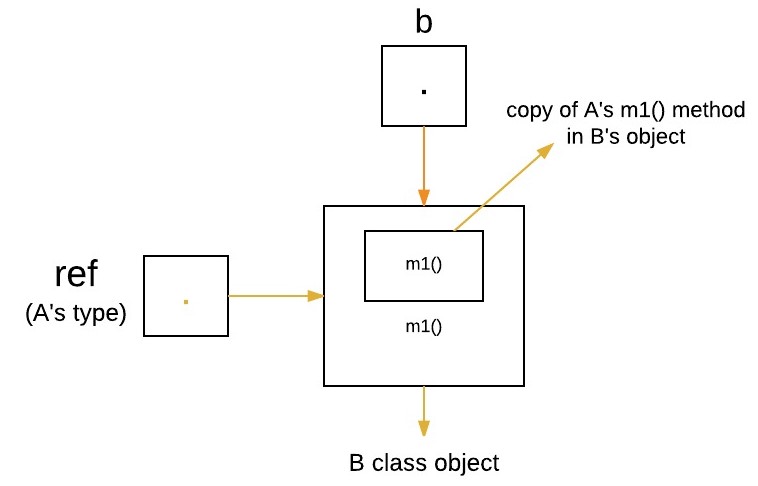
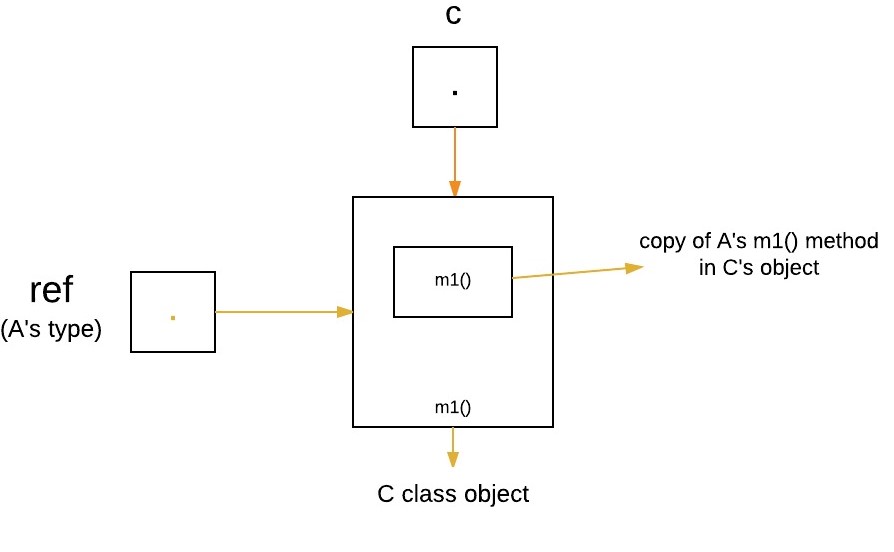
Now we are assigning a reference to each type of object (either A's or B's or C's) to ref, one-by-one, and uses that reference to invoke m1( ). As the output shows, the version of m1( ) executed is determined by the type of object being referred to at the time of the call.
ref = a; // r refers to an A object
ref.m1(); // calling A's version of m1()
👁 qref = b; // now r refers to a B object
ref.m1(); // calling B's version of m1()
👁 Blank Diagram - Page 1 (3)ref = c; // now r refers to a C object
ref.m1(); // calling C's version of m1()
In Java, we can override methods only, not the variables(data members), so runtime polymorphism cannot be achieved by data members.
10
Explanation: In above program, both the class A(super class) and B(sub class) have a common variable 'x'. Now we make object of class B, referred by 'a' which is of type of class A. Since variables are not overridden, so the statement "a.x" will always refer to data member of super class.
Related article: