|
VOOZH | about |
|
VOOZH | about |
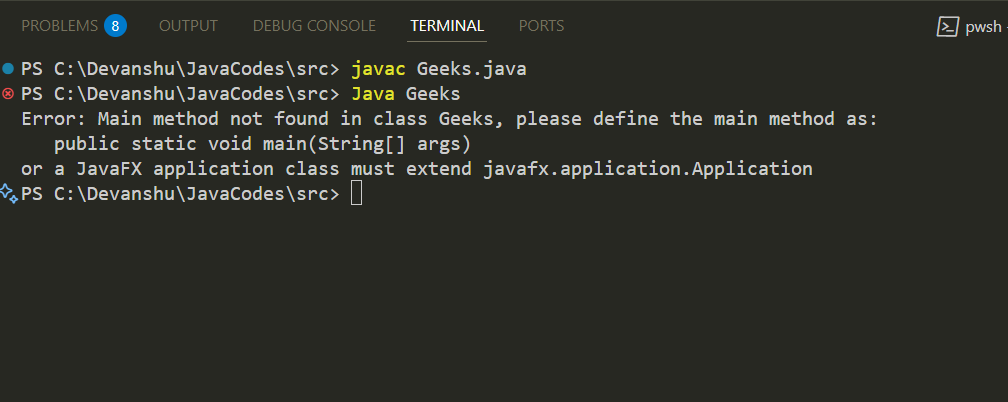
Java’s main() method is the entry point of every Java program, where the JVM begins execution. If the main() method is missing or its signature is incorrect, the program will compile but won’t run.
Syntax of the main() method is always written as:
Example: The most common method to define the main() method is shown in the example below.
I am a Geek
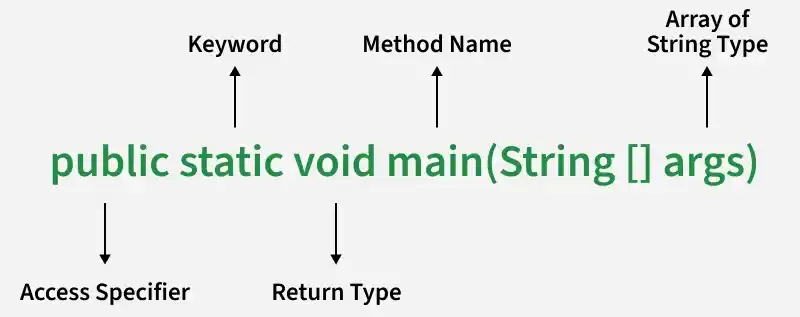
Every word in the public static void main statement has a meaning in the JVM that is described below:
It is an Access modifier, which specifies from where and who can access the method. Making the main() method public makes it globally available. It is made public so that JVM can invoke it from outside the class as it is not present in the current class.
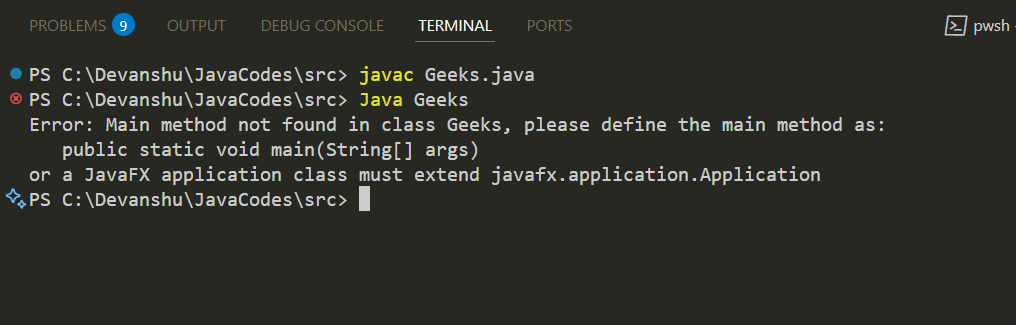
If the main method is not public, it's access is restricted.
Example:
Output:
It is a keyword that is when associated with a method, making it a class-related method. The main() method is static so that JVM can invoke it without instantiating the class. This also saves the unnecessary wastage of memory which would have been used by the object declared only for calling the main() method by the JVM.
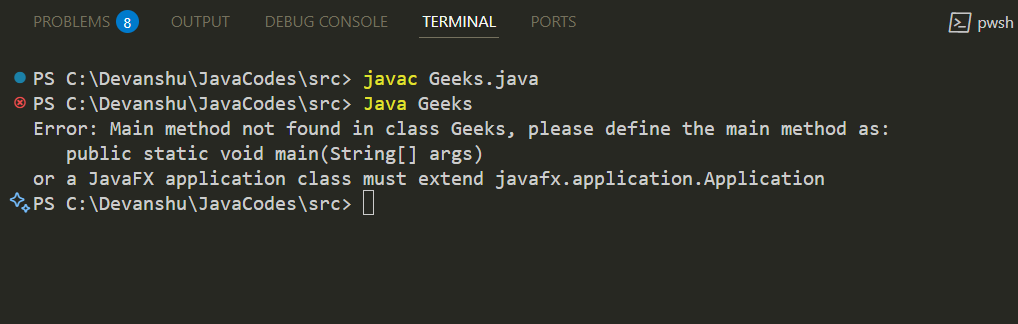
If you try to run Java code where main is not static, you will get an error.
Example:
Output:
It is a keyword and is used to specify that a method does not return anything. As the main() method does not return anything, its return type is void. As soon as the main() method terminates, the Java program terminates too. Hence, it doesn't make any sense to return from the main() method as JVM can't do anything with its return value of it.
If main method is not void, we will get an error.
Example:
Output:
It is the name of the Java main method. It is the identifier that the JVM looks for as the starting point of the Java program. It's not a keyword.
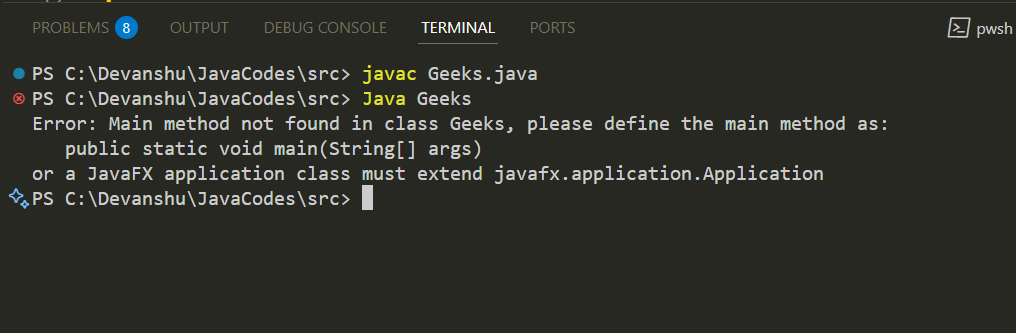
If we change the name while initiating main method, we will get an error.
Output:
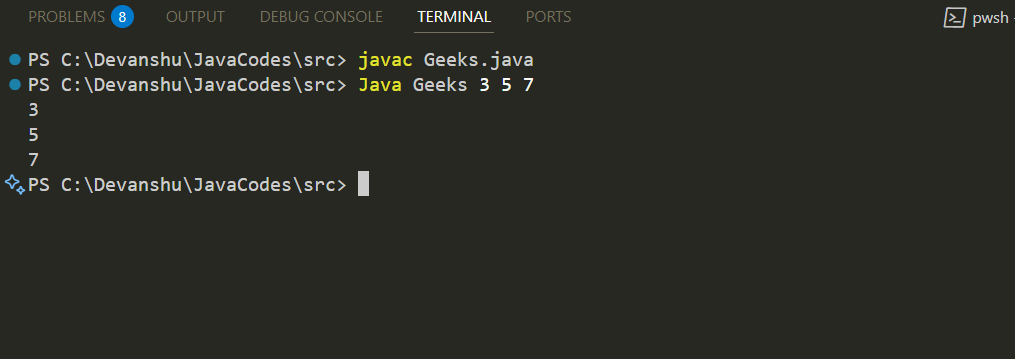
It stores Java command-line arguments and is an array of type java.lang.String class. Here, the name of the String array is args but it is not fixed and the user can use any name in place of it.
Example: Execution Process of String[]
Output:
Apart from the above-mentioned signature of main, you could use public static void main(String args[]) or public static void main(String... args) to call the main function in Java. The main method is called if its formal parameter matches that of an array of Strings.
Overloading the main() method is possible in Java, meaning we can create any number of main() methods in a program. To overload the main() method in Java, we need to create the main() method with different parameters.
Example: Overloading main method in Java.
Running main() with no arguments