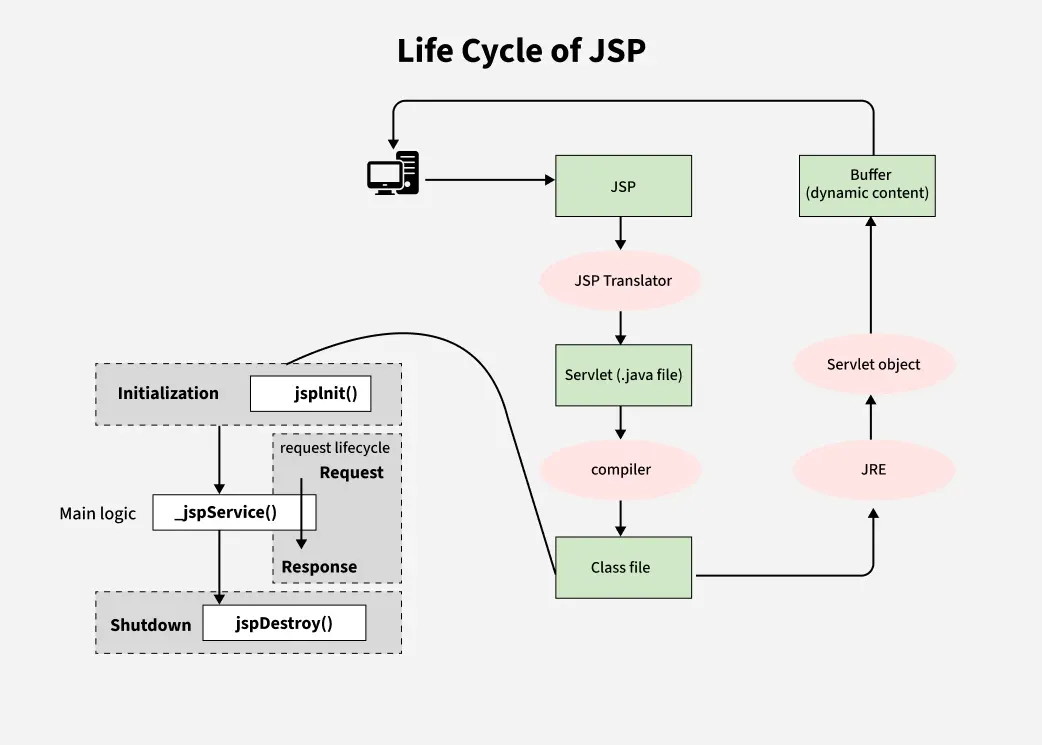
The life cycle of a JavaServer Page (JSP) consists of various phases that start from its creation, followed by its translation into a servlet, and finally managed by the servlet lifecycle. The JSP engine handles this process automatically.
JSP is converted into a servlet before execution.
The servlet is compiled and loaded by the server.
jspInit() method is called once for initialization.
Real-world example: When you open a login page on a website, the JSP file first gets converted into a servlet and initialized. Each time a user enters their credentials, the _jspService() method processes the request and shows the result (success or error), and when the server stops, jspDestroy() is called.
Life Cycle of JSP
The JSP (JavaServer Pages) life cycle defines the stages a JSP page goes through from creation to destruction on the server. It explains how a JSP is translated into a servlet, executed to handle requests, and finally removed when no longer needed.