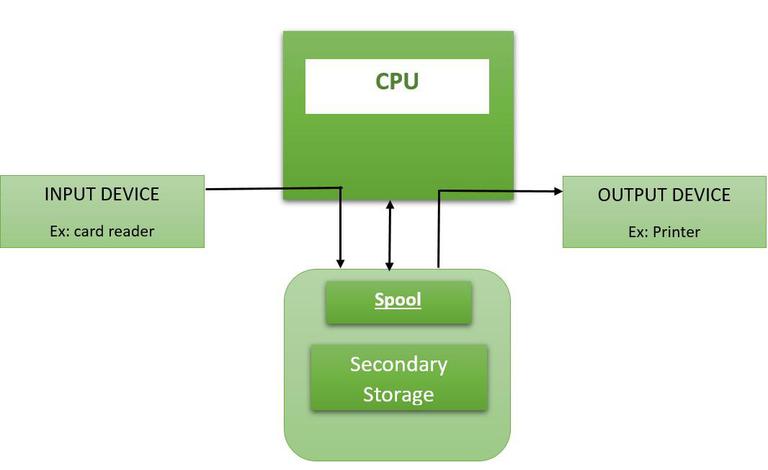
| Overlaps the input/output of one job with the execution of another job. | Overlaps the input/output of a job with the execution of the same job. |
| Stands for Simultaneous Peripheral Operation On-Line. | Has no full form. |
| More efficient since multiple jobs can be processed at the same time. | Less efficient compared to spooling. |
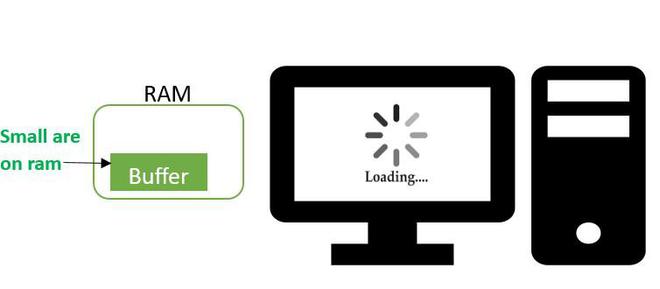
| Uses disk as a large buffer. | Uses a limited area of main memory (RAM). |
| Supports remote processing. | Does not support remote processing. |
| Implemented using spoolers to manage I/O requests and resources. | Implemented using software or hardware buffers like FIFO or circular buffers. |
| Can handle large amounts of data as storage is on disk. | Limited by the size of main memory. |
| Provides better recovery from errors since data is stored on disk. | Buffer overflow may cause data loss or corruption. |
| More complex due to additional management software. | Simpler and easier to implement. |
| Example: Printing jobs are queued on disk and sent to the printer sequentially. | Example: Video streaming uses a buffer to preload data in memory for smooth playback. |