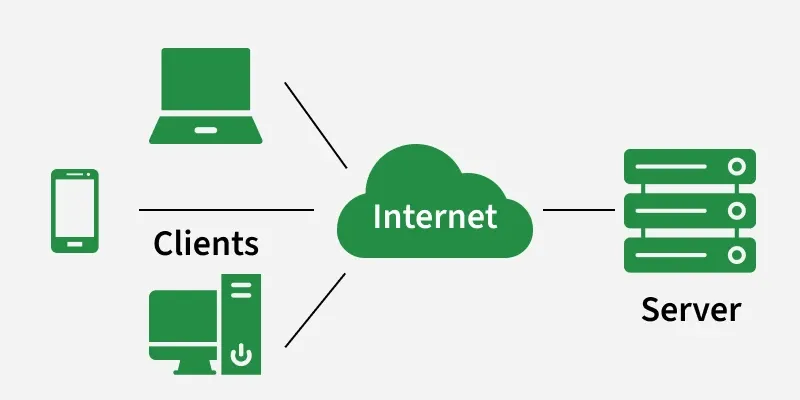
A Distributed Operating System refers to a model in which applications run on multiple interconnected computers, offering enhanced communication and integration capabilities compared to a network operating system. Here, multiple CPUs are utilized, but for end-users, it appears as a typical centralized operating system.
Note: Effective communication channels like high-speed buses and telephone lines connect all processors, each equipped with its own local memory and other neighboring processors.
Structure of Distributed OS
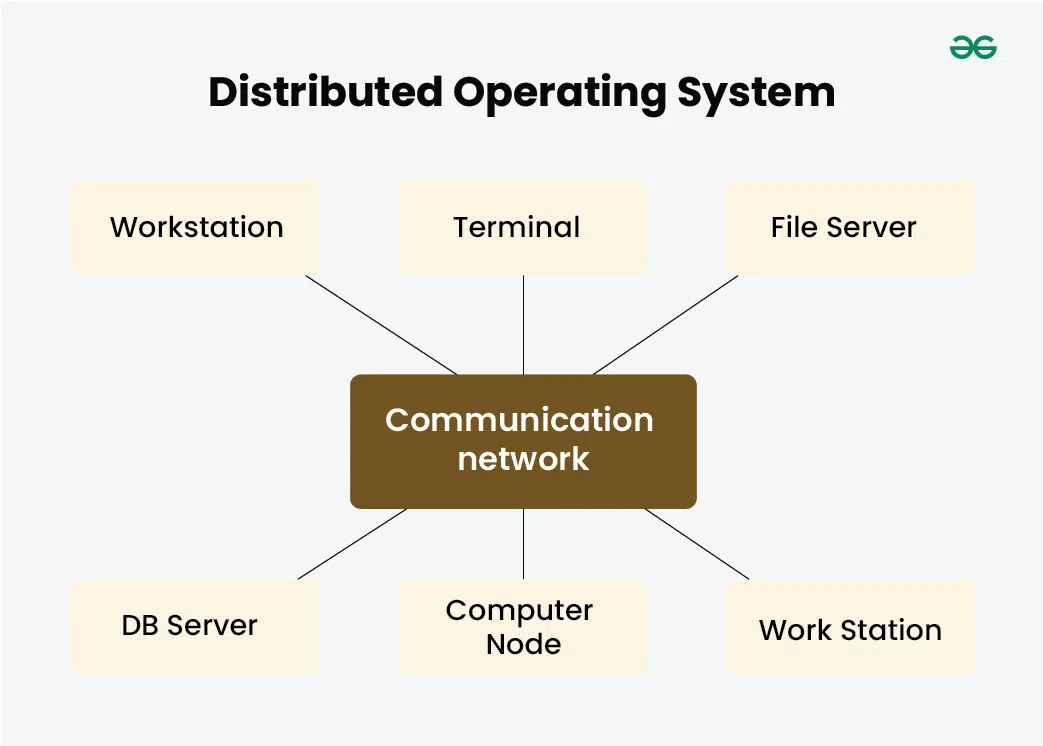
A Distributed Operating System (DOS) manages a collection of independent computers and makes them appear to users as a single unified system. The key structural components connected through a Communication Network are as follows:
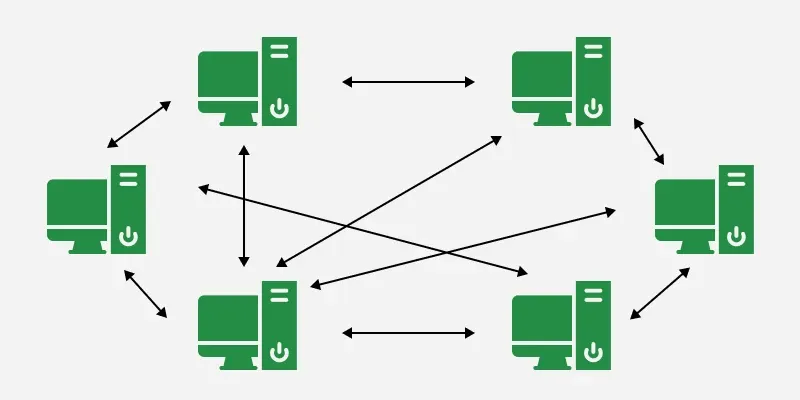
In peer-to-peer (P2P) systems, interconnected nodes directly communicate and collaborate without centralized control. Each node can act as both a client and a server, sharing resources and services with other nodes.
P2P systems enable decentralized resource sharing, self-organization and fault tolerance.
They support efficient collaboration, scalability and resilience to failures without relying on central servers.
This model facilitates distributed data sharing, content distribution and computing tasks, making it suitable for applications like file sharing, content delivery and blockchain networks.
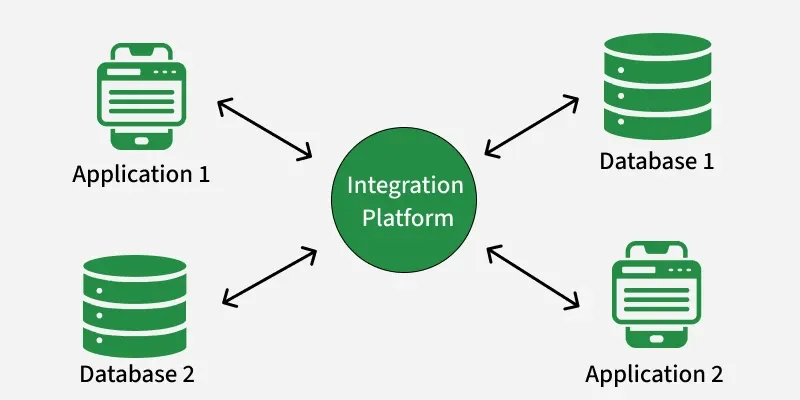
Middleware acts as a bridge between different software applications or components, enabling communication and interaction across distributed systems.
It abstracts complexities of network communication, providing services like message passing, remote procedure calls (RPC) and object management.
Middleware facilitates interoperability, scalability and fault tolerance by decoupling application logic from underlying infrastructure.
It supports diverse communication protocols and data formats, enabling seamless integration between heterogeneous systems.
Middleware simplifies distributed system development, promotes modularity and enhances system flexibility, enabling efficient resource utilization and improved system reliability.
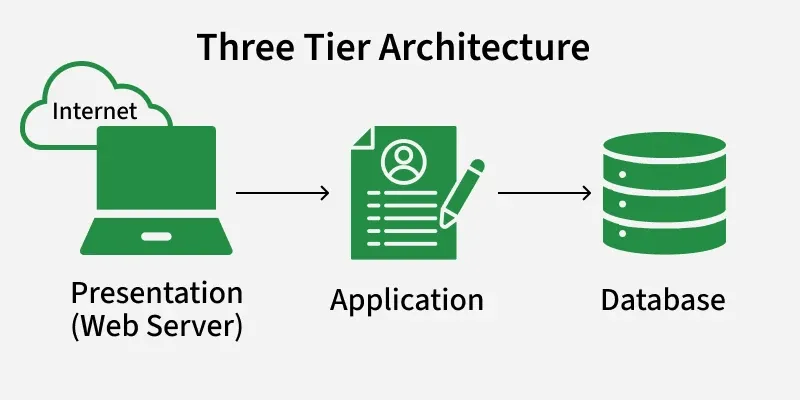
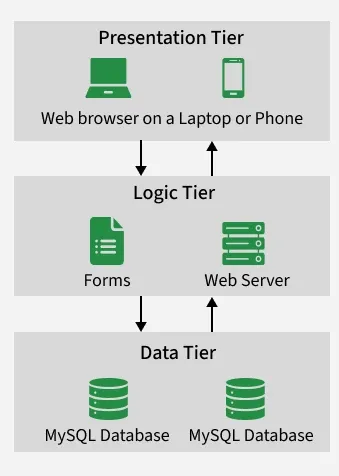
In a distributed operating system, the three-tier architecture divides tasks into presentation, logic and data layers. The presentation tier, comprising client machines or devices, handles user interaction.
The logic tier, distributed across multiple nodes or servers, executes processing logic and coordinates system functions.
The data tier manages storage and retrieval operations, often employing distributed databases or file systems across multiple nodes.
This modular approach enables scalability, fault tolerance and efficient resource utilization, making it ideal for distributed computing environments.
In an N-tier architecture, applications are structured into multiple tiers or layers beyond the traditional three-tier model. Each tier performs specific functions, such as presentation, logic, data processing and storage, with the flexibility to add more tiers as needed.
This architecture enables complex applications to be divided into modular components distributed across multiple nodes or servers.
Each tier can scale independently, promoting efficient resource utilization, fault tolerance and maintainability.
N-tier architectures facilitate distributed computing by allowing components to run on separate nodes or servers, improving performance and scalability.
This approach is commonly used in large-scale enterprise systems, web applications and distributed systems requiring high availability and scalability.
Distributed operating systems find applications across various domains where distributed computing is essential.
Cloud Computing Platforms
Distributed operating systems form the backbone of cloud computing platforms like Amazon Web Services (AWS), Microsoft Azure and Google Cloud Platform (GCP).
These platforms provide scalable, on-demand computing resources distributed across multiple data centers, enabling organizations to deploy and manage applications, storage and services in a distributed manner.
Internet of Things (IoT)
Distributed operating systems play a crucial role in IoT networks, where numerous interconnected devices collect and exchange data.
These operating systems manage communication, coordination and data processing tasks across distributed IoT devices, enabling applications such as smart home automation, industrial monitoring and environmental sensing.
Distributed Databases:
Distributed operating systems are used in distributed database management systems (DDBMS) to manage and coordinate data storage and processing across multiple nodes or servers.
These systems ensure data consistency, availability and fault tolerance in distributed environments, supporting applications such as online transaction processing (OLTP), data warehousing and real-time analytics.
Content Delivery Networks (CDNs)
CDNs rely on distributed operating systems to deliver web content, media and applications to users worldwide.
These operating systems manage distributed caching, content replication and request routing across a network of edge servers, reducing latency and improving performance for users accessing web content from diverse geographic locations.
Peer-to-Peer (P2P) Networks
Distributed operating systems are used in peer-to-peer networks to enable decentralized communication, resource sharing and collaboration among distributed nodes.
These systems facilitate file sharing, content distribution and decentralized applications (DApps) by coordinating interactions between peers without relying on centralized servers.
High-Performance Computing (HPC)
Distributed operating systems are employed in HPC clusters and supercomputers to coordinate parallel processing tasks across multiple nodes or compute units.
These systems support scientific simulations, computational modeling and data-intensive computations by distributing workloads and managing communication between nodes efficiently.
Distributed File Systems
Distributed operating systems power distributed file systems like Hadoop Distributed File System (HDFS), Google File System (GFS) and CephFS.
These file systems enable distributed storage and retrieval of large-scale data sets across clusters of machines, supporting applications such as big data analytics, data processing and content storage.
Examples of Distributed OS
Solaris: The SUN multiprocessor workstations are the intended use for it.
OSF/1: The Open Foundation Software Company designed it and it works with Unix.
Micros: All nodes in the system are assigned work by the MICROS operating system, which also guarantees a balanced data load.
DYNIX: It is created for computers with many processors, known as Symmetry.
Locus: It can be viewed simultaneously from both local and distant files without any location restrictions.