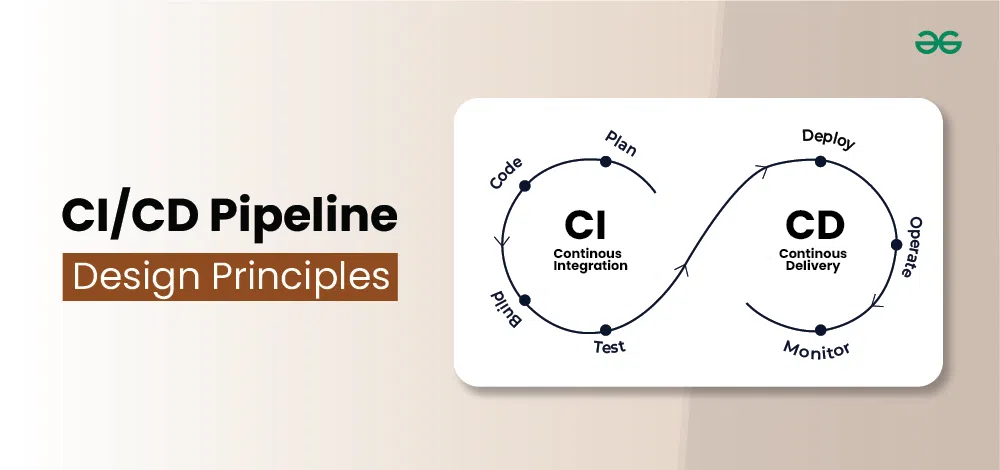
Continuous Integration and Continuous Deployment (CI/CD) pipelines have become essential for modern software development, enabling faster, more reliable delivery of applications. Designing an effective CI/CD pipeline is crucial to streamline development, ensure quality, and enhance collaboration. This article delves into the key principles of CI/CD pipeline design.
Continuous Integration (CI) and Continuous Deployment (CD) are practices in software development and system design aimed at improving the process of integrating, testing, and deploying code changes.
1. What is Continuous Integration (CI)?
CI involves the frequent integration of code changes into a shared repository. Each integration is automatically built and tested, allowing developers to detect and address issues early in the development cycle. Key aspects of CI include:
Automated Builds: Code changes are automatically compiled and built into executable formats.
Automated Testing: Code changes are subjected to a suite of automated tests to ensure they do not introduce bugs or regressions.
Version Control: All code changes are tracked in a version control system (e.g., Git), enabling collaboration and rollback if necessary.
2. What is Continuous Deployment (CD)?
CD extends CI by automatically deploying the integrated and tested code to production or other environments. This ensures that new features, bug fixes, and updates are delivered to users as quickly as possible. Key aspects of CD include:
Automated Deployments: Code changes that pass automated tests are automatically deployed to production or staging environments.
Monitoring and Rollback: Deployed changes are monitored to ensure they work as expected, and mechanisms are in place to quickly rollback if issues arise.
Incremental Updates: Changes are deployed in small, incremental batches, reducing the risk associated with large releases.
Together, CI/CD practices enable teams to deliver software more efficiently, with higher quality and faster time-to-market.
Design Principles of CI/CD Pipeline
Designing an effective CI/CD pipeline involves several key principles that ensure the pipeline is efficient, reliable, and scalable. Here are the core design principles of a CI/CD pipeline, along with their benefits and impacts on the system:
1. Automated Builds
Principle: Automate the process of building the application from the source code.
Benefits:
Ensures consistency and repeatability in the build process.
Reduces manual errors.
Impact:
Increases developer productivity by freeing up time spent on manual builds.
Ensures that every build is identical, which aids in debugging and quality assurance.
2. Automated Testing
Principle: Integrate automated testing at every stage of the pipeline.
Benefits:
Detects issues early in the development cycle.
Ensures that new code changes do not break existing functionality.
Impact:
Enhances code quality and reliability.
Builds confidence in the codebase, allowing for faster iteration and deployment.
3. Continuous Integration
Principle: Frequently integrate code changes into a shared repository.
Benefits:
Promotes early detection of integration issues.
Encourages collaboration and communication among team members.
Impact:
Reduces integration problems and conflicts.
Ensures that the codebase is always in a deployable state.
4. Continuous Delivery/Deployment
Principle: Automate the deployment process to deliver changes to production or staging environments continuously.
Benefits:
Speeds up the delivery of new features and bug fixes.
Reduces the risk of deployment errors by using automated, tested deployment scripts.
Impact:
Ensures that updates are delivered quickly and efficiently.
Enhances the ability to respond to market changes and customer feedback.
5. Version Control
Principle: Use a robust version control system (e.g., Git) to manage source code.
Benefits:
Tracks all changes, allowing for easy rollback and auditability.
Facilitates collaboration and code reviews.
Impact:
Provides a single source of truth for the codebase.
Enhances collaboration among developers and teams.
6. Monitoring and Logging
Principle: Implement comprehensive monitoring and logging throughout the pipeline.
Benefits:
Provides visibility into the performance and health of the pipeline and deployed applications.
Helps in quickly identifying and resolving issues.
Impact:
Improves system reliability and uptime.
Provides data for continuous improvement of the pipeline and processes.
7. Scalability
Principle: Design the pipeline to handle growth in team size, codebase complexity, and deployment frequency.
Benefits:
Ensures that the pipeline can support the evolving needs of the project and organization.
Enhances the ability to handle larger volumes of code changes and deployments.
Impact:
Future-proofs the pipeline against increasing demands.
Maintains efficiency and performance as the project scales.
By adhering to these principles, teams can design CI/CD pipelines that are not only efficient and reliable but also capable of evolving with the needs of the project and organization.
Real-World Examples of Using CI/CD Design Principles
Automated Builds: Netflix
Example: Netflix has automated their build process using Jenkins and Spinnaker.
Benefit: Ensures consistent and repeatable builds, allowing developers to focus on coding rather than manual builds.
Impact: Significantly reduces build errors and enhances the overall efficiency of the development process.
Automated Testing: Google
Example: Google integrates extensive automated testing, including unit tests, integration tests, and end-to-end tests.
Benefit: Detects issues early, ensuring high code quality.
Impact: Reduces the number of bugs in production, leading to a more stable and reliable product.
Continuous Integration: Facebook
Example: Facebook uses a custom CI system that continuously integrates code changes.
Benefit: Promotes early detection of integration issues.
Impact: Facilitates a collaborative development environment and ensures that the codebase is always in a deployable state.
Continuous Delivery/Deployment: Amazon
Example: Amazon implements continuous deployment to automatically release new features and updates.
Benefit: Enables rapid delivery of new features and improvements.
Impact: Enhances customer satisfaction by quickly responding to feedback and market demands.
Version Control: GitHub
Example: GitHub itself is a prime example of using Git for version control, allowing developers to manage code changes effectively.
Benefit: Tracks all changes, making it easy to rollback and audit.
Impact: Facilitates collaboration and code reviews, ensuring a high-quality codebase.
Infrastructure as Code (IaC): Microsoft
Example: Microsoft Azure uses IaC tools like Azure Resource Manager and Terraform.
Benefit: Ensures consistent and repeatable infrastructure provisioning.
Impact: Reduces configuration drift and manual errors, enhancing scalability and manageability.
Conclusion
In conclusion, designing an effective CI/CD pipeline is pivotal for achieving streamlined, reliable, and scalable software development. By adhering to core principles such as automated builds, continuous integration, automated testing, and continuous deployment, teams can ensure high-quality code, reduce manual errors, and accelerate the delivery of new features and updates.