|
VOOZH | about |
|
VOOZH | about |
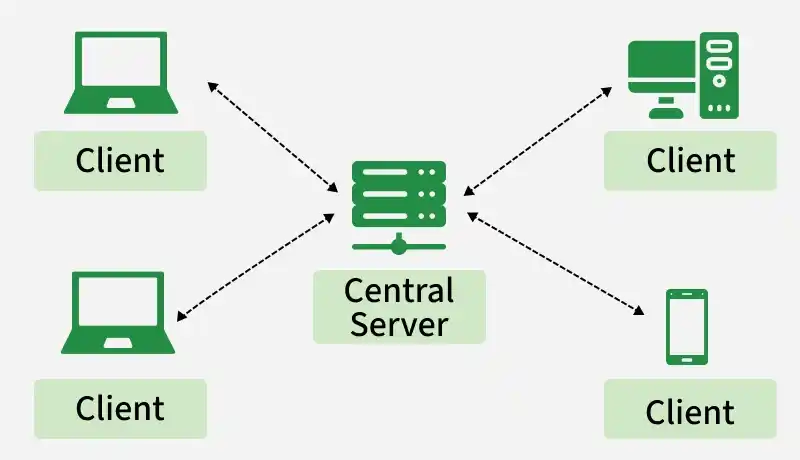
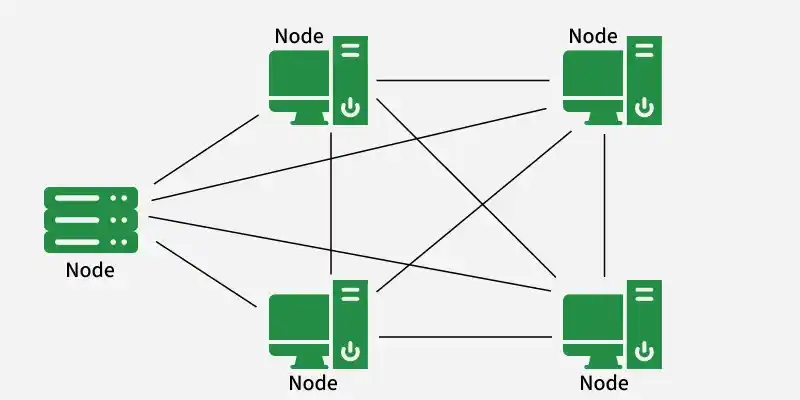
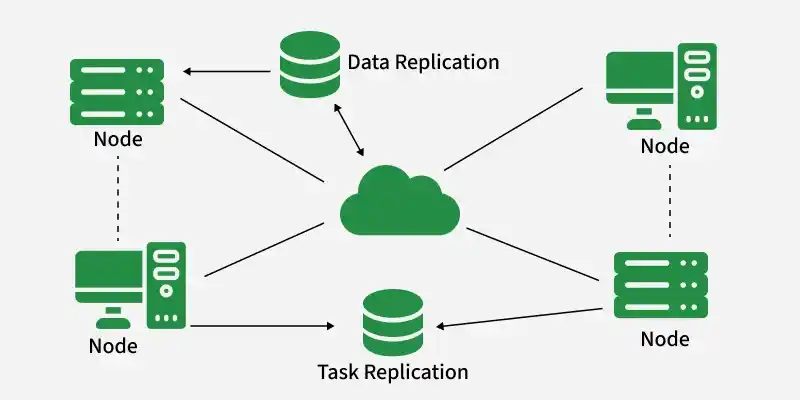
Centralized, decentralized and distributed models present the different methods used to design and manage modern computing systems.
It is a computing architecture in which a single central server or authority manages all processing, data storage, and decision-making for connected clients.
This is a computing model in which control and decision-making powersare distributed among multiple independent nodes.
This is a computing model in which multiple interconnected nodes work together over a network.
| Basis | Centralized System | Decentralized System | Distributed System |
|---|---|---|---|
| Control | One central authority controls everything. | Multiple authorities share control. | Control may vary, but processing is spread across nodes. |
| Data Storage | Data is stored at one main location. | Data is maintained by multiple independent nodes. | Data is partitioned or replicated across several machines. |
| Scalability | Scaling requires upgrading the central server. | Scaling is done by adding more independent nodes. | Scaling is achieved by distributing the workload across machines. |
| Performance | Performance depends on the central unit’s capacity. | Load is shared among multiple authorities. | Tasks run in parallel on multiple nodes. |
| Complexity | Architecture is simple and easy to manage. | Coordination between nodes increases complexity. | Synchronization and consistency management are complex. |
| Best Suited For | Small or tightly controlled environments. | Systems needing shared governance. | Large-scale and high-availability applications. |