|
VOOZH | about |
|
VOOZH | about |
Graphic design is everywhere—it's the logos we see, the websites we browse, the advertisements we interact with, and even the product packaging we admire. At its core, graphic design is the craft of combining visuals like images, colors, and typography to communicate messages effectively and aesthetically. Whether you're building a brand, creating a marketing campaign, or designing a user interface, graphic design plays a crucial role in shaping how ideas are presented and perceived.
In this comprehensive guide, we look into what graphic design is, explore its different types, and discuss the tools and skills needed to succeed in this creative field. Whether you're a beginner or a seasoned professional, understanding the fundamentals of graphic design is key to mastering this art and advancing your career.
Graphic designers use their creativity and tools to create designs that not only look good but also work well. We'll look at what graphic design involves, why it's important, and how designers create something from just an idea.
Table of Content
Graphic design is the art of combining visual elements like typography, images, and colors to communicate messages or evoke specific emotions. It encompasses various mediums such as digital graphics, print materials, and branding. Key elements include layout, composition, balance, contrast, and harmony. Graphic design plays a crucial role in marketing, advertising, user interface design, and creating memorable brand identities.
The main purpose of graphic design is to communicate and solve problems through visual content. It involves using text, images, colors, and symbols to convey messages and ideas in a way that is both effective and aesthetically pleasing. Graphic design is used across various industries for purposes such as branding, advertising, web design, editorial design, product packaging, and more. The goal is to attract, engage, and inform audiences, often with the intent of prompting them to take a specific action or to create a strong brand recognition.
Graphic design is a broad field with various specializations, each serving different purposes:
Visual identity design focuses on creating the visual elements that define a brand. Designers in this field develop logos, typography, color schemes, and brand guidelines to ensure consistency across all brand materials.
This type of design is used to create promotional content that drives consumer engagement. Examples include print ads, social media graphics, and product packaging. The goal is to communicate marketing messages in a visually compelling way that motivates action.
Web design involves creating engaging and aesthetically pleasing online experiences for users. Designers focus on the layout, color scheme, typography, and usability of websites. The aim is to make websites functional, easy to navigate, and visually appealing, enhancing the overall user experience.
Publication designers work with printed materials like books, magazines, and newspapers. They design layouts that are both visually appealing and easy to read, ensuring the content is well-organized and engaging.
Packaging design is crucial for attracting customers and reinforcing brand identity. It’s not just about aesthetics—packaging needs to be functional and convey key product information.
Motion graphics bring visual elements to life through animation and audio, which can be used in advertisements, animated logos, and explainer videos. This dynamic form of design can make complex ideas more accessible and engaging through movement.
Also known as experiential design, this type combines elements from interior, architectural, and graphic design to enhance the way people interact with public spaces. This can include wayfinding systems, mural designs, branding, and informational displays that connect people to places.
Illustrators create original artwork that complements or acts as the primary visual representation in various applications. Unlike standard graphic design, illustration can provide a more artistic and unique style to projects like children’s books, editorial articles, and boutique packaging.
UI design focuses on the aesthetics of user interfaces for software, websites, and apps. The goal is to create interfaces that are intuitive and easy to use, with careful consideration given to the placement of buttons, icons, typography, color schemes, and responsive design.
Typography is an art form that involves choosing typefaces, adjusting font size, and spacing letters to improve readability and visual appeal. Good typography can dramatically enhance the effectiveness of a design by ensuring the text is both readable and attractive.
Infographics are visual representations of information, data, or knowledge intended to present content quickly and clearly. Graphic designers in this field distill complex data into digestible, engaging graphics that communicate information at a glance.
A graphic designer creates visual concepts to communicate ideas that inspire, inform, or captivate consumers in the field of Graphic Design. They use a variety of design elements to achieve artistic or decorative effects. Here’s a breakdown of what a graphic designer typically does:
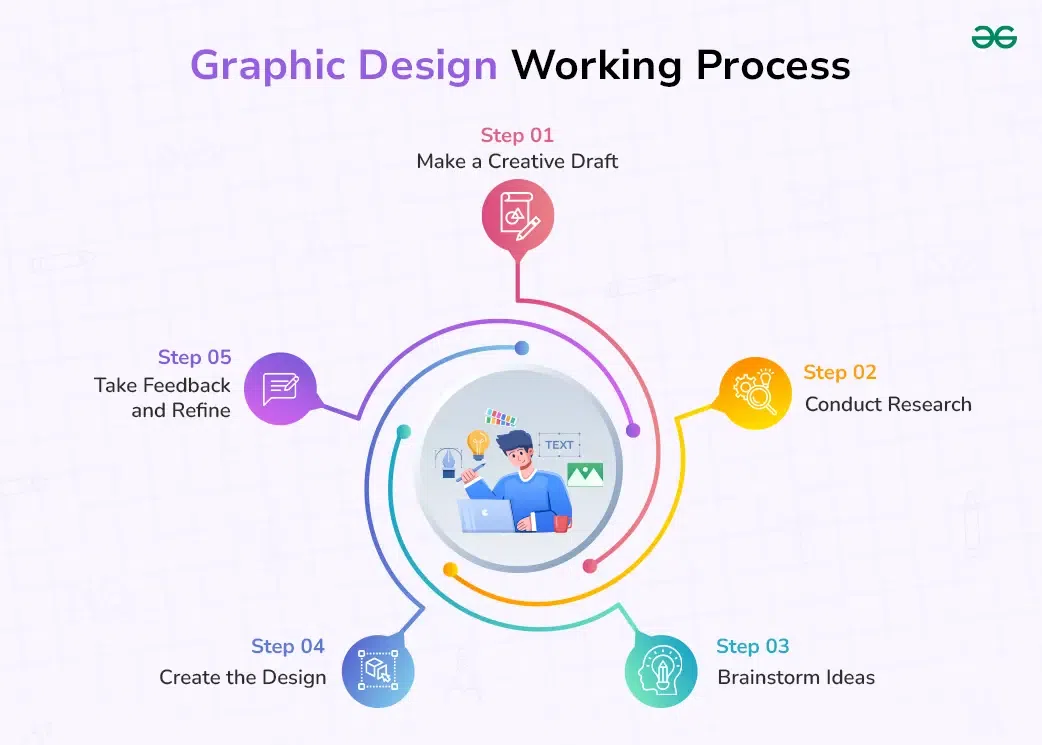
The working process of graphic design involves several key steps that ensure designers effectively communicate their ideas and meet their project objectives. Here’s a detailed overview of the typical workflow in graphic design:
It is a document that helps the designers to understand the project and its requirements. The document should contain every requirement and information so that no issues arise in future.
A thorough research should be conducted depending on the scope of the project and get as much information as possible.
Before making the final product the designer should brainstorm all possible ideas. This helps in the final design process by filtering out the best ideas possible and even mix and some of the best ones and create a wireframe.
After getting the final wireframe for the project the design should be made with careful considerations and by following design principles.
After creating the design take feedback from the clients or the customers and work on any changes or refinements are required.
Graphic designers rely on both software and hardware to bring their ideas to life. Here are the key tools used in the industry:
A successful graphic designer needs a combination of creative, technical, and conceptual skills. Below are some key skill sets in graphic design:
Graphic design projects need creative ideas and good problem-solving skills. Designers have to make sure the text, decorations, and pictures look good together. There are two main ways to think about this: the “process school” focuses on how messages are sent and received, while the semiotic school sees communication as creating signs that interact with people to create meaning.
Typography is about creating, changing, and arranging text to make it easy to read and look nice. Designers pick the type of letters, change the size, and adjust the spacing between letters and lines. This skill is important for anyone working with text, like typographers and graphic designers.
Also Read : What is Typography?
Page layout is about arranging items like text and images on a page. This is important for both printed items and digital content because it helps present information clearly. Designers use grid systems to organize content well, making sure everything is balanced and looks good.
Also Read : What is Grid System?
To read more about Graphic Designer Job Profile click here
If you’re new to graphic design or looking to expand your skills, here are some actionable steps:
- How to Learn Graphic Design?
- How To Design Fascinating Icons for UI UX Design?
- Various Types of Graphic Design You Need to Know
- Types of Graphic Design | Tools and Best Practices
- Difference Between Graphic Artist and Graphic Designer
- Difference between Graphic Design and Illustration
- How to Make a Logo in Illustrator?
- 8 Graphic Design basics you need to know
- Difference between PPI and DPI
- Elevating Web UI with Animation and Motion Graphics Techniques
- Graphic Designing Tools Every Designer Should Know
In conclusion, graphic design is a powerful way to communicate using visuals. Graphic designers use their creativity and technical skills across different areas like logo design, web design, and more, to make information appealing and easy to understand. The process involves a lot of planning, studying, and working together to make sure that each design not only looks good but serves its purpose well. From building a brand's identity to designing websites, graphic design plays a crucial role in how we see and interact with the world around us. As technology keeps changing, the need for skilled graphic designers continues to be important, making it a valuable and exciting career choice.