 |
VOOZH | about |
|
VOOZH | about |
21 min
read
Explore Bubble apps examples with 8 successful real apps built with Bubble. See SaaS, marketplaces, MVPs, features, scale, and use cases.
By
Jesus Vargas
Updated on
May 29, 2026
.
Reviewed by
Douglas Noldor
Bubble Developer
Real-World Experience with No-Code Tools: With over 320 apps built, we know firsthand what works—and what doesn't—when using no-code platforms like Glide, Bubble, FlutterFlow and Webflow.
Expert Team with 40+ Years of Combined Experience: Our team has deep technical knowledge, with experts who use no-code tools to solve real-world problems for clients every day, ensuring our advice is actionable and reliable.
Detailed Guides Based on Actual Projects: We don’t just talk about no-code; we use it daily to solve real business problems for our clients, from MVPs to complex automations.
Take a deeper look at our editorial guidelines
Bubble is a visual app development platform that helps teams build real web and mobile applications without traditional coding. What started as a web-first tool is now used to power full products, with many teams launching SaaS platforms, internal systems, and mobile apps from a single Bubble codebase. This shift has made Bubble a serious option for production apps, not just experiments.
Looking at real Bubble app examples shows what actually works in the real world. These bubble apps handle real users, real data, and real business pressure.
This guide focuses on production-ready Bubble apps across SaaS, marketplaces, internal tools, and mobile experiences, showing how teams move from idea to launch without the overhead of traditional development.
Bubble App Development
Bubble Experts You Need
Hire a Bubble team that’s done it all—CRMs, marketplaces, internal tools, and more
Bubble is used to build complex, data-driven products that require custom logic, user roles, and scalable workflows. It’s especially suited for platforms that need flexibility, fast iteration, and full control over how the product evolves over time.
Read more | Types of apps you can build with Bubble.io
These aren’t demos, templates, or “weekend builds.” Each example below is a production bubble app built for real teams, with real workflows, real users, and measurable results, across categories like internal tools, marketplaces, AI products, and subscription platforms.
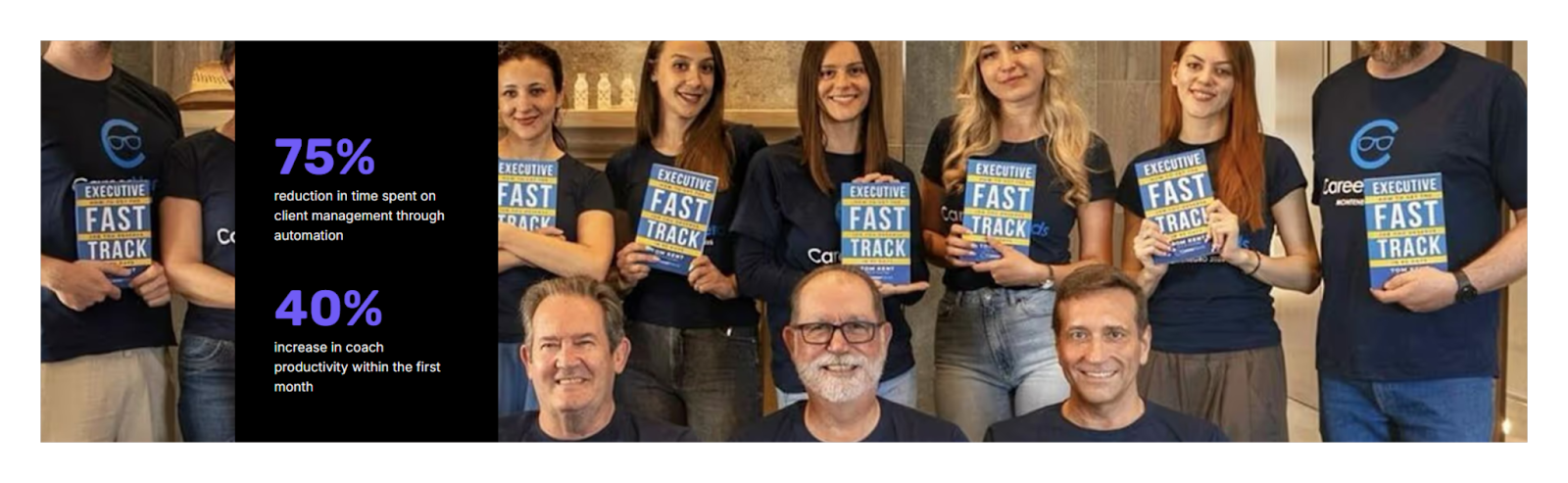
A centralized operations platform that replaced a spreadsheet-based coaching workflow with dashboards, role-based access, and automation. It was designed to support a long, structured 6–12 month program without losing visibility or control as the client base grew.
What problem the bubble app solved
CareerNerds relied on Google Sheets with one workbook per client, spread across phases, tabs, and manual updates. Coaches lost time finding the right context, tracking milestones, and coordinating handoffs between branding and networking. There was no scalable accountability system for homework or reminders, and it was getting harder to see the full picture of operations.
Why Bubble was the right choice
The app required multiple user roles (admins, coaches, clients, virtual assistants), plus dashboards tailored to each role and phase of the journey. It also needed custom workflows for progress tracking, collaboration, and a structured LinkedIn feedback loop, without sacrificing speed of iteration during the 14-week build.
Outcomes or measurable results
The new platform reduced time spent on client management through automation and created real operational visibility. Admin effort dropped as progress became visual and actionable, and collaboration improved with cleaner handoffs and centralized context. Results included a 75% reduction in administrative time and a 40% increase in coach productivity within the first month.
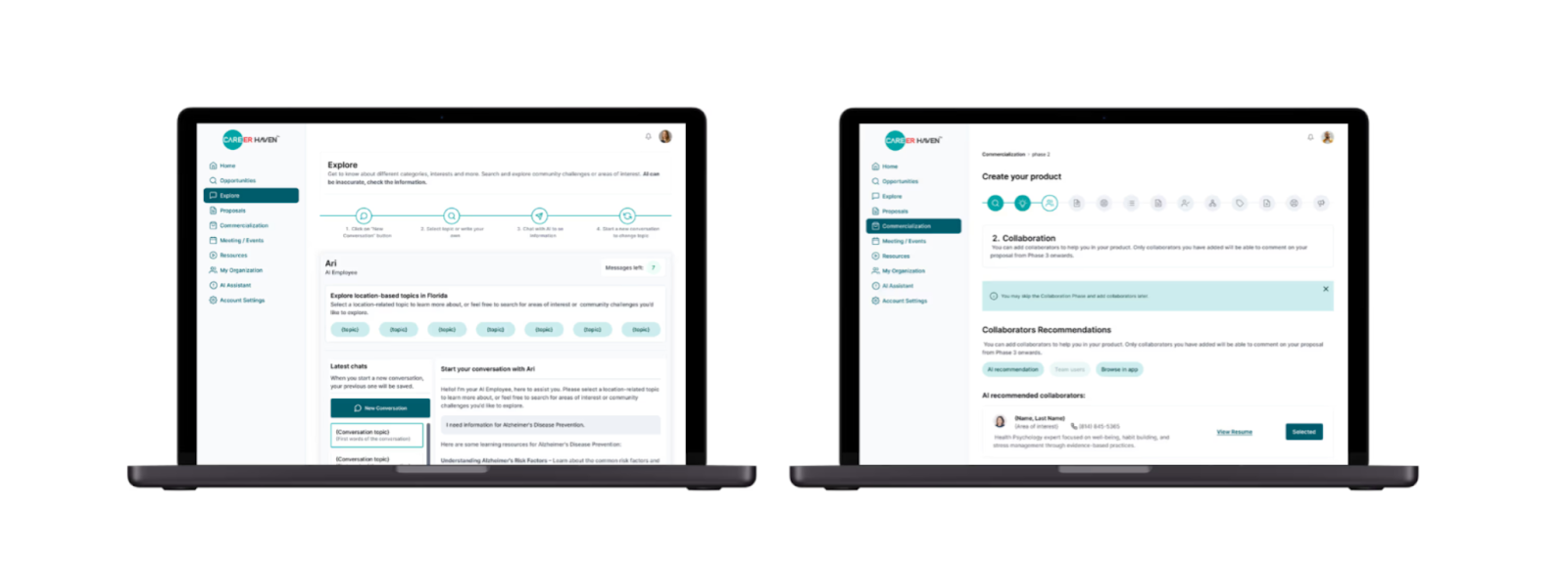
An AI grant proposal platform that evolved from a validated Glide proof-of-concept into a more scalable Bubble product. Built to support a deeper AI-assisted workflow, multi-step journeys, and more robust collaboration as the product matured into its fourth version.
What problem the bubble app solved
The initial version validated demand, but couldn’t support the growing vision: users needed real-time “expert-level” guidance, smoother collaboration, and more scalable architecture as requirements became more complex. The team also needed AI capabilities far beyond what had been built earlier, especially for document-heavy research and proposal requirements.
Why Bubble was the right choice
The Bubble version enabled a more sophisticated product structure for an AI-driven experience. It supported a multi-part user journey, plus integrations that strengthened scalability and data handling (e.g., Bubble as platform + Supabase as database). It also allowed the system to evolve without rebuilding the product from scratch.
Outcomes or measurable results
The platform improved proposal speed and execution by reducing research effort and helping users complete proposals more efficiently. The results include a 40% reduction in time spent on proposal research y 70% of proposals completed within initial timeline estimates, mostrando impacto directo en velocidad y consistencia del output.
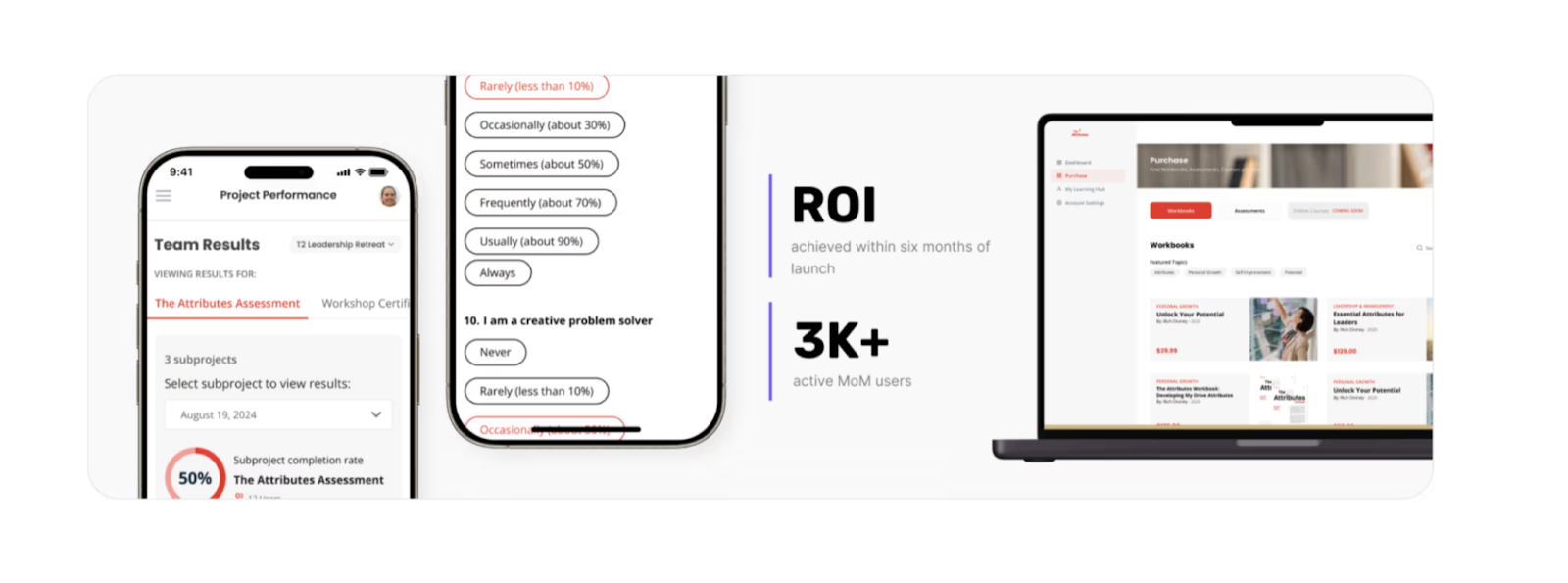
A scalable assessment platform built to support both individual users and enterprise use cases, with multi-role access, professional reporting, and monetization layers. The build evolved in phases, allowing the product to expand without breaking performance as demand increased.
What problem the bubble app solved
Their original Webflow-based tool couldn’t keep up with traction. It struggled with enterprise onboarding, team-based assessments, multi-tier access, and premium outputs expected by high-value clients. The platform limitations effectively capped growth: it wasn’t built for B2B sales, scalable access control, or a broader product catalog.
Why Bubble was the right choice
The system demanded complex role logic (six user types), robust dashboards, advanced reporting, and billing/subscription structures, plus the ability to iterate across versions while maintaining stability. Bubble’s flexibility supported continuous evolution: new modules, scaling to large cohorts, and future AI personalization features layered on top of the core product.
Outcomes or measurable results
The rebuild turned the product into a revenue engine: it achieved ROI within six months of launch, reached 3K+ active MoM users, and successfully onboarded 1,300 users into a single project without performance issues. It also enabled multiple revenue streams through tiered access, digital products, and enterprise subscriptions.
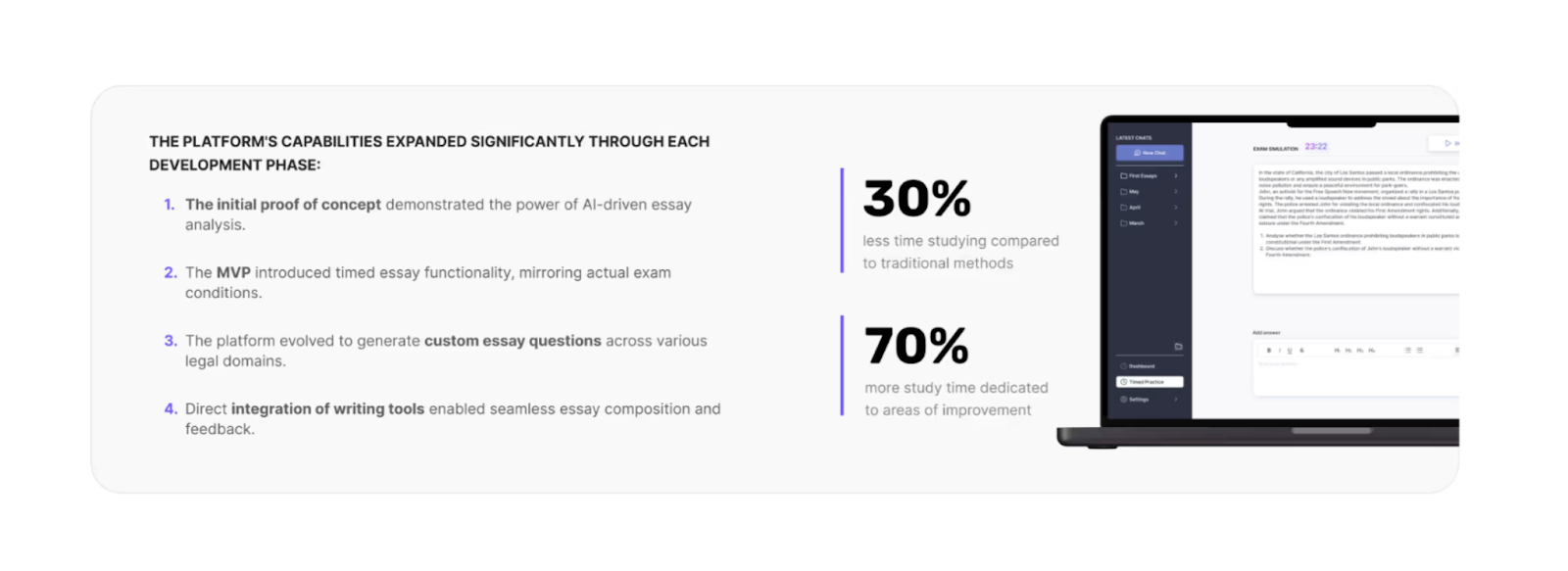
An AI-powered study platform designed to make bar exam preparation more efficient through personalized feedback and targeted practice. Built quickly to ship a functional product experience while preserving a clean, focused interface for intensive study workflows.
What problem the bubble app solved
Traditional bar prep often lacks personalized feedback and wastes time on unfocused study. Students struggle to identify weaknesses, correct them consistently, and build confidence through measurable progress. The challenge wasn’t just content volume, it was the lack of targeted analysis and guidance that matches each learner’s needs.
Why Bubble was the right choice
The product needed flexibility to build an AI-driven workflow inside an intuitive, distraction-free interface. Bubble supported fast iteration while integrating the logic needed for essay analysis, personalized recommendations, and future evolution into pricing tiers and complementary features, without turning the UX into a complex tool.
Outcomes or measurable results
Users reported studying more efficiently: 30% less time studying compared to traditional methods and 70% more study time dedicated to areas of improvement. That shift is exactly what strong learning platforms aim for: less noise, more targeted reps, and clearer progress.
A construction operations bubble app that replaced chaotic scheduling and fragmented processes with a unified system. Built to improve documentation workflows, reduce operational friction, and integrate with existing systems while supporting growth.
What problem the bubble app solved
Their Google Sheets and ServiceTitan setup created ongoing friction: messy scheduling, copy-paste errors, missing documentation, and low visibility across projects. The team spent too much time fighting tools instead of managing work, and rapid growth made the existing process unsustainable. They didn’t need a patch, they needed a re-architecture of operations.
Why Bubble was the right choice
The build required custom UX and logic (including a specialized weekly scheduling experience) plus robust API integration with ServiceTitan. Bubble gave the flexibility to match exact workflow requirements, build unified reporting views, and implement real-time operational management without forcing the business into a rigid template.
Outcomes or measurable results
Within the first month of deployment, they achieved an 80% reduction in late or missing documentation and a 40% increase in operational efficiency. The system improved subcontractor coordination and project visibility, creating a foundation that scales with the business instead of slowing it down.
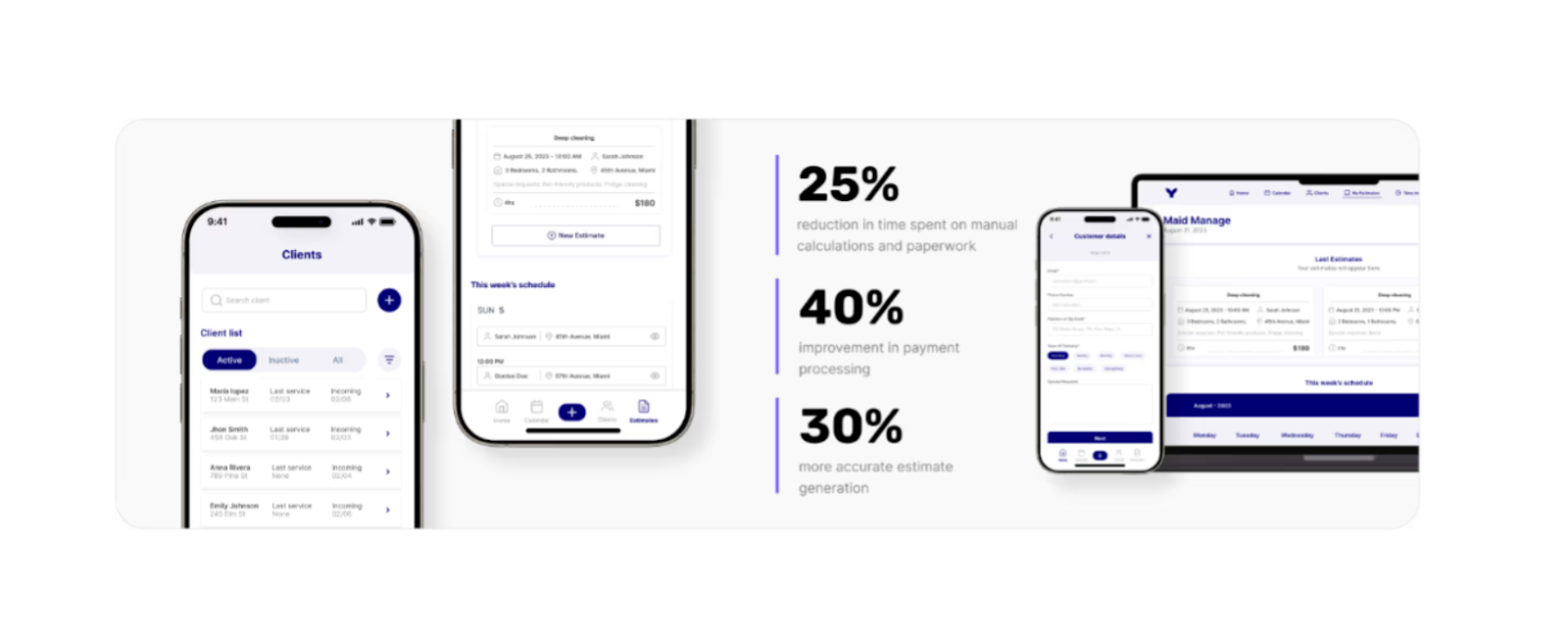
An operations and payments platform for cleaning services that standardized estimates and improved the booking/payment workflow. Built to be simple enough for day-to-day use while making pricing and collections more consistent and professional.
What problem the app solved
Manual pricing and booking workflows created inconsistent estimates, missed appointments, and payment confusion. Workers lost paid time to admin, cash-based collection caused friction, and the overall process undermined trust and professionalism with clients. Off-the-shelf tools were either too complex or not built for the reality of small cleaning ops.
Why Bubble was the right choice
The platform needed custom calculation logic, a scheduling workflow tied to payment events, and a clean, accessible UX for users with varying technical proficiency. Bubble supported quick iteration and product-level control over how pricing, bookings, and collection logic worked end-to-end.
Outcomes or measurable results
The bubble app reduced admin overhead and improved collections: 25% reduction in time spent on manual calculations and paperwork plus 40% improvement in payment processing. It also improved estimate accuracy and client experience by making pricing clearer and the payment flow more reliable.
A two-sided staffing marketplace for the event production world, connecting producers and technicians through structured requirements, matching, communication, and protected payments. Built to reduce the chaos and delay of traditional “who-do-you-know” hiring.
What problem the bubble app solved
Producers wasted pre-production time chasing contacts, waiting on replies, and handling last-minute emergencies without a reliable replacement flow. Technicians missed opportunities because hiring relied on word-of-mouth networks. Manual coordination created errors in schedules, requirements, and payments, plus recurring misunderstandings about what each event needed.
Why Bubble was the right choice
A true marketplace required dual experiences (producers vs technicians), custom matching logic, built-in messaging, and structured documentation of requirements and agreements. Bubble allowed product-level flexibility while supporting payment protection via Stripe Connect, which is critical when both sides need trust in the transaction.
Outcomes or measurable results
After launch, the platform reduced producer overhead and sped up hiring cycles: 40% reduction in administrative workload and a 50% increase in efficiency compared to traditional hiring methods. Most positions were filled within 24 hours of posting, and last-minute replacements dropped from days to hours.
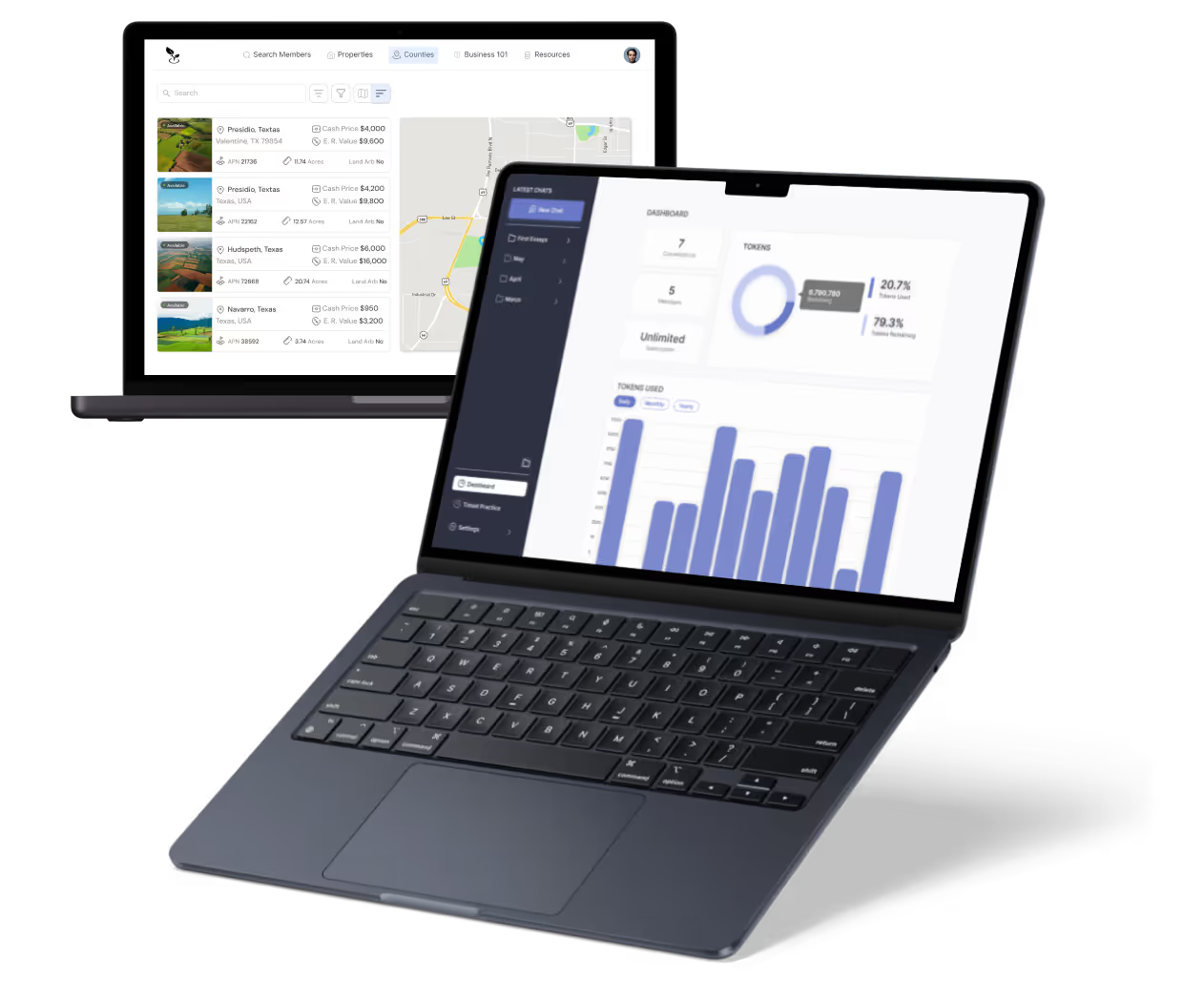
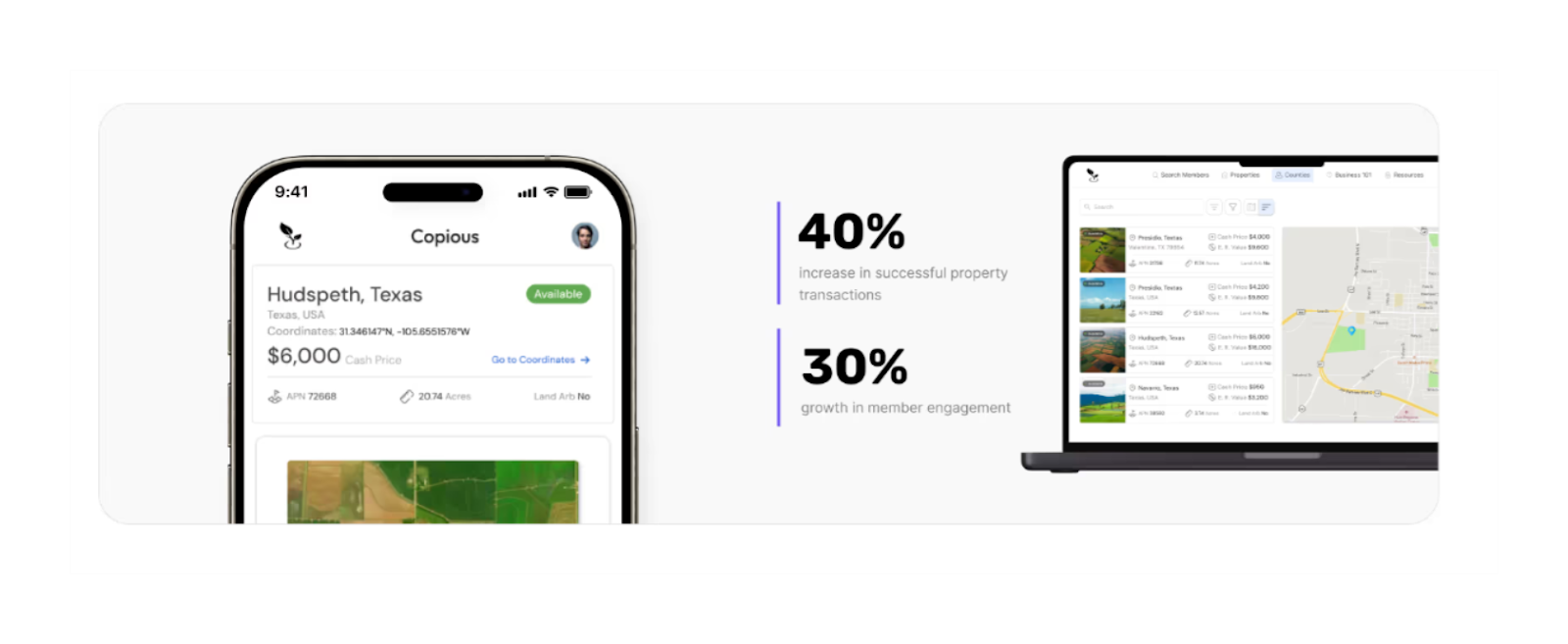
A land investment marketplace MVP built to centralize wholesale property opportunities into a single, searchable platform. Designed to help investors discover, evaluate, and transact faster by replacing fragmented listings with standardized data and geographic context.
What problem the bubble app solved
Land investment opportunities were scattered across social media groups, forums, and informal networks, making market research slow and incomplete. Investors wasted time filtering irrelevant listings, validating inconsistent data, and switching between tools to evaluate locations. Trust between buyers and sellers was also difficult to establish in such a fragmented ecosystem.
Why Bubble was the right choice
The product required a custom marketplace with standardized listing fields, location-based search, integrated satellite views, and secure member-to-member messaging. Bubble allowed the team to build and iterate quickly while supporting complex filtering, mapping integrations, and a community-driven experience in a single MVP.
Outcomes or measurable results
After launch, the platform delivered clear operational impact. Successful property transactions increased as relevant matches became easier to identify, and engagement rose as users spent more time evaluating opportunities directly inside the app. Results included a 40% increase in successful transactions and 30% growth in member engagement.
Across all the real-world Bubble apps shown above, certain features appear consistently.
These capabilities enable teams to move beyond simple interfaces and build production-ready products that support real operations, complex logic, and long-term scalability.
Read more | Top Bubble agencies
To support real business operations, Bubble apps are rarely built in isolation. The examples above rely on a combination of external tools and integrations to extend functionality, automate workflows, and connect the product to the rest of the business ecosystem.
Read more | How to hire Bubble developers
Beyond features and integrations, the real value of Bubble apps shows up in measurable business outcomes.
The examples above demonstrate how teams use Bubble to move faster, reduce risk, and build products that support growth without the overhead of traditional development.
Read more | Bubble MVP app development
Choosing the right no-code platform depends on the type of product you’re building, the level of complexity involved, and how far you expect the product to scale. Bubble is a strong fit for many scenarios, but it’s not the best option for every use case.
Read more | How we build an AI-powered app with Bubble
Building with Bubble gives founders speed and flexibility—but how you build matters as much as what you build. This section is about making a clear, informed decision between going DIY and working with an experienced product team.
If you’re serious about turning a Bubble app into a real product, one that supports real users, scales with your business, and doesn’t need to be rebuilt six months later, it’s worth designing it properly from day one.
At LowCode Agency, We work as a product team, not just builders. If you’re evaluating Bubble for something that matters operationally or commercially, let’s talk and map out what building it right would actually look like.
Bubble App Development
Bubble Experts You Need
Hire a Bubble team that’s done it all—CRMs, marketplaces, internal tools, and more
Bubble apps can power much more than simple prototypes. Today, they are used to launch real SaaS products, marketplaces, AI tools, internal systems, and scalable MVPs that support real users and real revenue. When built with the right structure, Bubble lets teams move fast while still planning for performance, flexibility, and long-term growth.
If these examples sparked ideas, the next step is turning them into a clear plan. At LowCode Agency, we help teams move from inspiration to execution by defining the right use case, scope, and architecture from day one.
If you want to build something that lasts, not just experiment, let’s discuss your bubble app and map out the right approach.
Last updated on
May 29, 2026
.
Jesus Vargas
-
Founder
Jesus is a visionary entrepreneur and tech expert. After nearly a decade working in web development, he founded LowCode Agency to help businesses optimize their operations through custom software solutions.
Custom Automation Solutions
Save Hours Every Week
We automate your daily operations, save you 100+ hours a month, and position your business to scale effortlessly.
Our AI — trained on 300+ shipped products — tells you what to build, what to skip, and what it'll actually cost. No fluff.
Assess My Idea"Working with LowCode Agency was the best decision I made in 2025"
Franklin Frith
CEO at HRM
Yes. Bubble is widely used to build full SaaS products, including subscription management, user authentication, role-based access, dashboards, and billing logic. Many startups launch, validate, and scale SaaS platforms on Bubble before—and sometimes instead of—moving to custom code.
Bubble apps can scale to large user bases when built with proper architecture. Performance depends on database structure, workflow design, and hosting configuration. Production-grade Bubble apps regularly support thousands of active users when scalability is planned from the beginning, not retrofitted later.
Yes. Bubble supports AI-powered features through API integrations with services like OpenAI, vector databases, and automation tools. It’s commonly used for AI assistants, recommendation systems, document analysis, and workflow automation, especially when combined with external processing and background tasks.
Bubble can support highly complex applications, including multi-role platforms, advanced permissions, conditional logic, integrations, and custom workflows. The main limitation isn’t capability but design discipline, complex apps require strong data modeling and architecture decisions to remain maintainable as features grow.
Absolutely. Bubble is well-suited for public-facing platforms such as marketplaces, SaaS products, dashboards, and community platforms. Apps can be fully responsive, SEO-ready, and accessible to non-logged-in users, while still supporting complex backend logic and authenticated user experiences.
Bubble is commonly used by startups, SaaS founders, service businesses, and growing companies building internal tools or customer-facing platforms. It’s especially popular where speed to market, iteration, and flexibility matter more than native mobile performance or low-level system control.
Comparison
Bubble
Bubble vs Retool | 13 Factors to Decide the Best One
Compare Bubble vs Retool across 13 key factors including design, logic, data, and scalability to choose the right platform for your next app project
Bubble
How to Build an HR Analytics App with Bubble
Build an HR analytics app with Bubble. Track headcount, turnover, and engagement in real-time dashboards — no code, no expensive HR software.
Bubble
How to Build an Auction Platform App with Bubble
Build an auction platform with Bubble. Run live or timed auctions, manage bids, and process payments — no custom backend needed.
Bubble
How to Build a Volunteer Management App for Events with Bubble
Build a volunteer management app for events with Bubble. Schedule shifts, track sign-ups & coordinate teams no coding, step-by-step guide.
Bubble
How to Build a Knowledge Base App with Bubble
Build a knowledge base with Bubble. Organize docs, enable search, and control access by role — a fully custom alternative to Confluence or Notion.
Bubble
How to Build an Automotive CRM App with Bubble
Build an automotive CRM with Bubble. Track leads, manage inventory, and automate follow-ups for dealerships — fully custom, no code required.







.avif)


