|
VOOZH | about |
|
VOOZH | about |
10 min
read
Learn the full SaaS application development process, from idea to launch. Discover costs, tech stack, timelines, and best practices for startups in 2026
By
Jesus Vargas
Updated on
Jun 12, 2026
.
Reviewed by
Real-World Experience with No-Code Tools: With over 320 apps built, we know firsthand what works—and what doesn't—when using no-code platforms like Glide, Bubble, FlutterFlow and Webflow.
Expert Team with 40+ Years of Combined Experience: Our team has deep technical knowledge, with experts who use no-code tools to solve real-world problems for clients every day, ensuring our advice is actionable and reliable.
Detailed Guides Based on Actual Projects: We don’t just talk about no-code; we use it daily to solve real business problems for our clients, from MVPs to complex automations.
Take a deeper look at our editorial guidelines
SaaS application development means building software that lives in the cloud and is used through the internet. Users don’t need to install anything on their computer. They just log in through a browser or app and get instant access. This makes SaaS simple, flexible, and cost-effective.
SaaS applications offer compelling advantages that make them the preferred choice for modern businesses. Whether you're a startup testing your first product or an established company expanding globally, the SaaS model delivers benefits that traditional software simply can't match.
Read more | Best Mobile App Development Agencies
No-code platforms have democratized software creation, allowing entrepreneurs to transform ideas into fully functional applications without writing a single line of code.
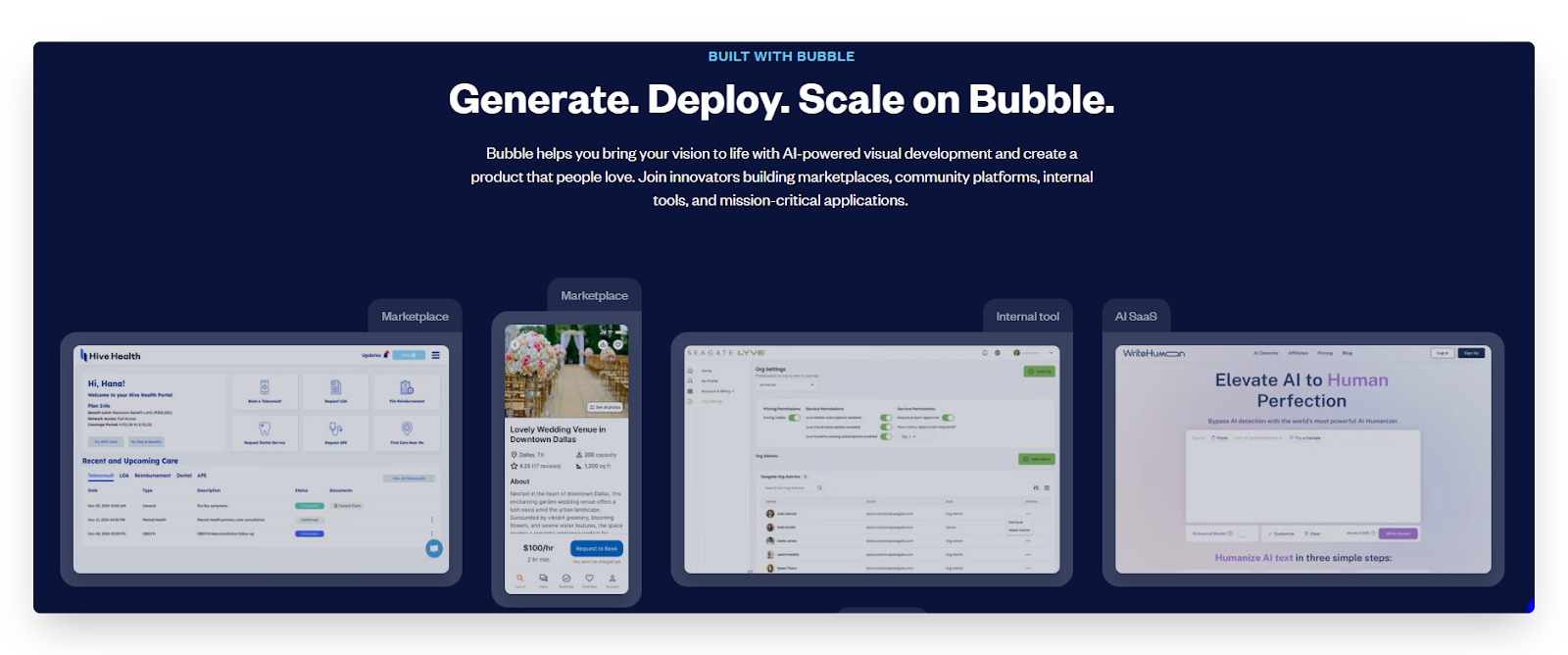
Bubble is one of the most powerful no-code platforms for SaaS application development. Its visual editor allows you to design complex, database-driven apps without writing code. The drag-and-drop interface makes building user dashboards, subscription models, and multi-user systems simple.
What sets Bubble apart is its strong workflow engine and backend database, ideal for handling complex business logic. Whether you’re creating user management features, payment systems, or data-heavy dashboards, Bubble provides scalability and flexibility, making it perfect for SaaS startups and enterprises alike.
Read more | Can You Build an AI SaaS with No-code?
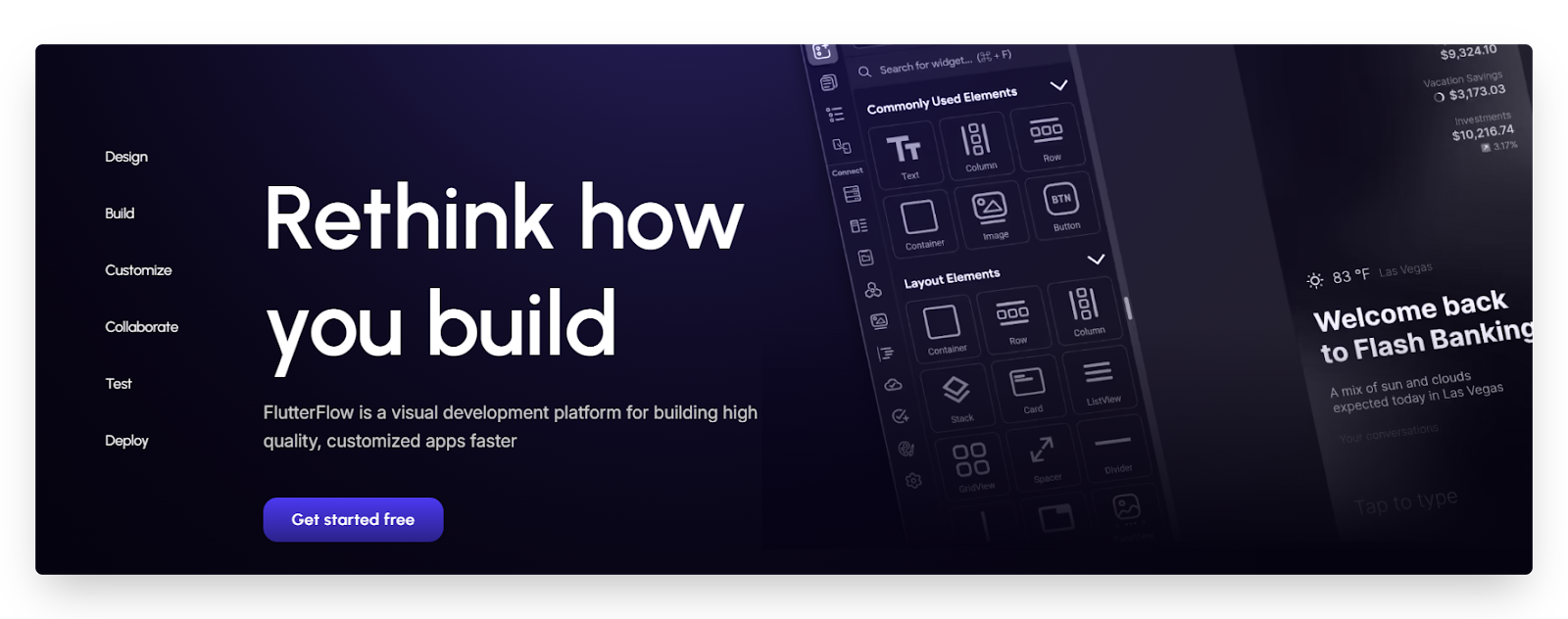
FlutterFlow is a low-code platform designed for SaaS apps that need a strong mobile presence. Built on Google’s Flutter framework, it enables cross-platform development, meaning you can launch on iOS, Android, and the web from a single codebase. Its drag-and-drop design tools speed up development while still allowing custom code for advanced features.
FlutterFlow is especially suitable for SaaS startups targeting mobile-first audiences because it combines native mobile performance with quick iteration. The platform supports integrations, APIs, and complex logic, making it a strong option for scalable SaaS solutions.
Read more | Can You Build a SaaS with FlutterFlow?
Glide simplifies SaaS development by turning data into fully functional applications within minutes. Its intuitive drag-and-drop interface makes it accessible even for beginners, while its deep integration with spreadsheets like Google Sheets, Airtable, and Excel enables rapid app building.
Glide is ideal for SaaS tools focused on data management, workflow automation, or internal business apps. Startups can quickly prototype and validate their SaaS ideas without heavy investment. Its fast development cycle and user-friendly design make it one of the best platforms for building and scaling lightweight SaaS products efficiently.
Building a SaaS product follows a clear process that turns an idea into a scalable, revenue-generating application.
The first step in SaaS application development is researching the market to ensure there’s demand for your idea. Analyze competitors, identify gaps, and define your target audience. Validation can come through surveys, interviews, or testing lightweight prototypes.
This step prevents wasted resources by confirming whether users are willing to pay for your solution. Solid research also helps refine your value proposition and ensures that your SaaS product addresses real-world problems with a clear competitive edge.
Once the idea is validated, the next step is defining the product scope. Break your vision into essential features that solve the core problem, leaving advanced features for later. This stage involves creating wireframes, user flows, and a roadmap to guide development.
Planning prevents scope creep and ensures a focused approach. By prioritizing must-have features, you reduce complexity, speed up development, and set a foundation for iterative growth, ensuring your SaaS evolves in response to user needs.
Monetization is at the heart of SaaS success. The right approach depends on your product, audience, and competition.
Planning monetization early helps align product design with pricing strategies. Features like tiered access or user management systems may need to be integrated from the start, ensuring financial sustainability and smoother scaling.
The platform you choose determines how fast you can launch and scale. Tools like Bubble, FlutterFlow, and Glide are leading options for SaaS development. Bubble is best for complex workflows, FlutterFlow for mobile-first apps, and Glide for data-driven tools.
The choice depends on your product’s scope, target audience, and required integrations. A strong no-code platform ensures quick iteration, scalability, and cost efficiency while reducing reliance on large engineering teams, making it ideal for SaaS startups with lean resources.
Working with experts can save time and prevent costly mistakes. Partners like LowCode Agency specialize in building scalable SaaS products with the right no-code tools. We act as a product team, guiding strategy, design, and development, while ensuring the app is scalable, AI-ready, and user-friendly.
Partnering with professionals also ensures your SaaS aligns with long-term growth goals, not just a quick launch. This support is especially valuable for non-technical founders who need a reliable development partner.
Read more | Questions to ask before hiring a no-code agency
Strategic Technology Partner
We Help You Win Long-Term
We don’t just deliver software—we help you build a business that lasts.
A Minimum Viable Product (MVP) is the fastest way to bring your SaaS idea to life. In 4–8 weeks, you can develop a functional version that includes only the core features. The goal is not perfection but speed and usability, allowing early adopters to test and provide feedback.
Building an MVP reduces risk, validates your idea in real conditions, and saves resources by focusing only on what matters. It sets the foundation for future iterations and scaling.
Read more | SaaS MVP development guide
After launching the MVP, gathering real user feedback is critical. Monitor usage, track performance, and collect customer insights to identify gaps or pain points. This step allows you to refine the product, prioritize new features, and improve the user experience.
Iteration ensures that your SaaS evolves with user needs, avoiding stagnation. Early feedback loops also help build stronger customer loyalty. Constant refinement creates a competitive advantage and positions your SaaS for sustainable long-term growth in the market.
Read more | Top no-code agencies
Once validated and improved through iterations, it’s time to scale into a full-featured SaaS. This involves expanding infrastructure, adding advanced features, integrating with third-party tools, and strengthening security. Scaling also includes optimizing monetization, refining user onboarding, and improving performance for larger audiences.
At this stage, processes like automated testing and customer support systems become vital. By carefully scaling, you ensure stability, reliability, and market competitiveness, turning your initial MVP into a robust SaaS product ready for wider adoption.
Many growing SaaS companies also invest in advanced quality assurance and continuous testing solutions to reduce deployment risks and maintain a seamless user experience. Tools from Parasoft can help development teams automate testing processes and improve software reliability as applications scale.
Read more | No-code Agency vs In-house teams
Avoiding common pitfalls is essential to ensure your SaaS product grows steadily and keeps users satisfied.
By avoiding these mistakes, SaaS founders can focus on building a product that is user-friendly, scalable, and trusted by customers.
Read more | No-code Agency vs traditional Agency
AI is reshaping how SaaS platforms deliver value, making them smarter, faster, and more user-focused.
Artificial intelligence helps SaaS businesses go beyond standard features by enabling automation, personalization, and real-time decision-making. Instead of offering static tools, AI allows applications to adapt and improve continuously based on user behavior and data patterns.
By embedding AI at the right stage, SaaS applications evolve into intelligent systems that adapt to users, ensuring long-term competitiveness and customer satisfaction.
AI App Development
Your Business. Powered by AI
We build AI-driven apps that don’t just solve problems—they transform how people experience your product.
SaaS application development is a balance of technology, business strategy, and user experience. With the right approach, tools, and expert support, you can launch a scalable, secure, and profitable SaaS product in months rather than years. The key lies in focusing on core features first, validating with real users, and iterating for long-term growth.
At LowCode Agency, we’ve built more than 330 custom apps and AI solutions for startups and enterprises. If you’re ready to bring your SaaS vision to life, reach out to us — let’s talk.
Last updated on
June 12, 2026
.
Jesus Vargas
-
Founder
Jesus is a visionary entrepreneur and tech expert. After nearly a decade working in web development, he founded LowCode Agency to help businesses optimize their operations through custom software solutions.
Custom Automation Solutions
Save Hours Every Week
We automate your daily operations, save you 100+ hours a month, and position your business to scale effortlessly.
Our AI — trained on 300+ shipped products — tells you what to build, what to skip, and what it'll actually cost. No fluff.
Assess My Idea"Working with LowCode Agency was the best decision I made in 2025"
Franklin Frith
CEO at HRM
SaaS application development means creating cloud-based software that users access through a browser or mobile app without installation. Unlike traditional software, SaaS is hosted centrally, updated automatically, and accessible from anywhere. This model removes maintenance for users while giving developers full control over updates, features, security, and performance, ensuring smooth delivery and scalability.
Building a SaaS MVP usually takes 4 to 8 weeks with no-code platforms compared to 6 to 12 months using traditional coding. The exact timeline depends on complexity, required integrations, and team experience. Simple SaaS tools can launch in weeks, while advanced systems with workflows and dashboards may take several months for development and testing.
The cost of SaaS development varies by approach and scope. Building on your own reduces expenses but demands time and learning. Hiring a professional agency often starts around 30000 dollars and includes strategy, design, optimization, and ongoing support. This investment ensures scalable architecture, prevents costly rebuilds, and accelerates launch, providing better long-term growth opportunities for startups.
The ideal tech stack depends on product goals, user needs, and scalability requirements. No-code platforms like Bubble are best for complex web applications, while others fit mobile-first or data-focused products. When choosing, consider factors such as integrations, performance, development speed, and maintenance. A carefully selected stack ensures reliable scaling, smoother updates, and long-term product sustainability.
Yes, you can build SaaS applications without coding by using no-code platforms. These tools provide visual interfaces, drag-and-drop builders, and workflow engines that manage user accounts, payments, and databases. While no coding is required, creating a successful SaaS still needs strong planning, user-focused design, and a clear business model to ensure adoption and long-term success.
You should consider rebuilding your SaaS MVP if growth is limited, performance slows with higher usage, or adding features becomes difficult. Security issues, high scaling costs, and platform restrictions are also warning signs. Before committing to a full rebuild, focus on optimization and incremental improvements, as complete rebuilds often require more time and higher investment.
Custom App Development
How to Start an E-commerce Business Using Low-code
Learn how to start an e-commerce business using low-code platforms. Covers tools, setup steps, payments, automation, and scaling basics.
Custom App Development
Custom CRM Development | Full Guide for 2026
Learn how to build a custom CRM in 2026 using no-code tools. Full guide with features, cost, steps, and expert tips.
Custom App Development
Enterprise Software Development Process: Complete Guide
Learn the enterprise software development process from planning through deployment. Understand phases, methodologies, best practices, and common pitfalls.
Custom App Development
Standard vs Enterprise Software Development
Understand the differences between standard and enterprise software development. Learn what makes enterprise projects unique and how approaches must adapt.
AI
Custom App Development
How to Build an AI-Driven Accountant App (2026)
Build an AI-driven accountant app using no-code tools like Bubble or Glide. Automate finance tasks with GPT, OCR, and expert agency support
Custom App Development
No-code/Low-code
Low-code Real Estate App Development Guide
Low-code real estate app development guide covering app types, core features, workflows, integrations, costs, and scalability for modern property platforms.