|
VOOZH | about |
|
VOOZH | about |
We use cookies to improve your experience on our site. By using our site, you are agreeing to the collection and use of data as described in our Privacy Policy.
Cookie Settings×Table of contents
API providers often provide access to a broad range of sensitive data through their endpoints, whether that’s related to employees, customers, business financials, and more.
To ensure that only the right individuals have access to confidential data, API providers and 3rd-party integration solutions can implement access controls (i.e., API access controls).
We’ll break down how API access controls work, highlight the benefits of adopting them, and share some best practices for using them.
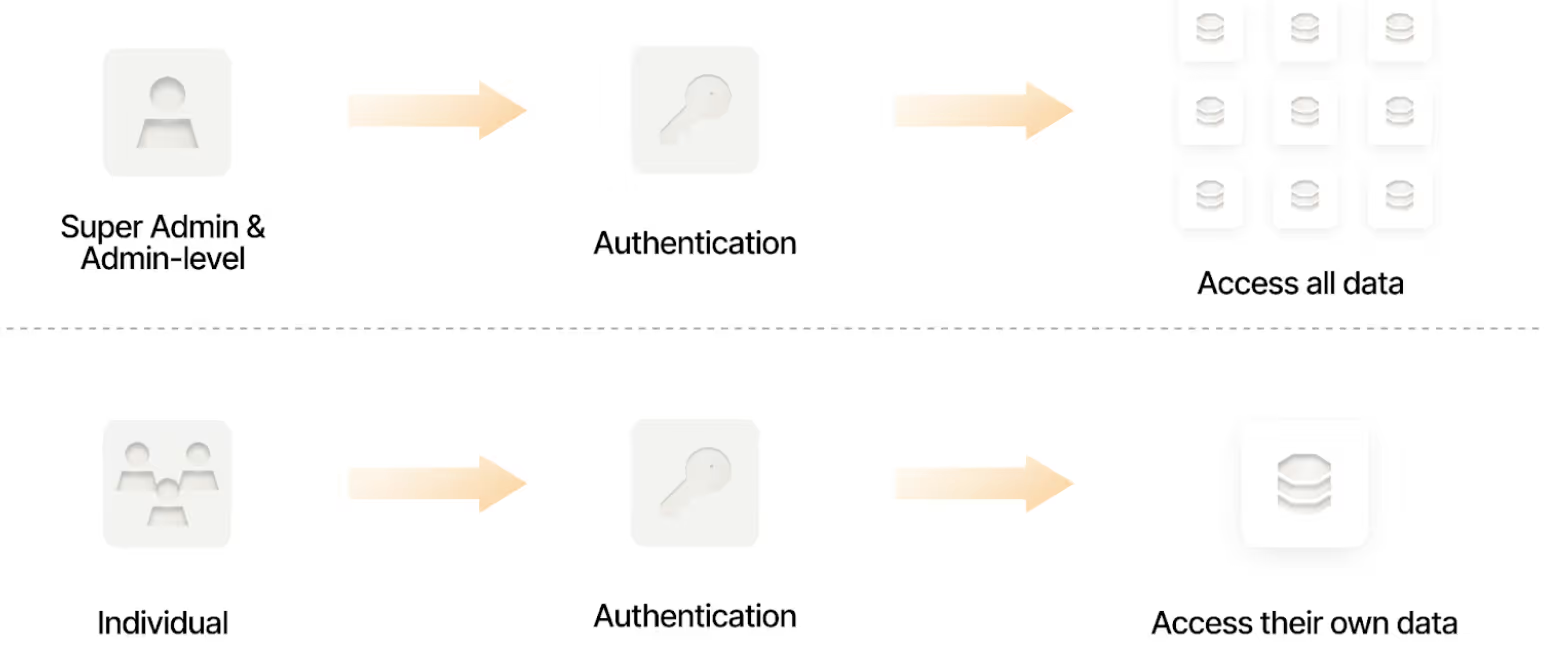
API access controls are typically role-based permissions that an API provider can enforce once an account is successfully authenticated.
API access controls can include:
Note: Access control mechanisms can vary across API providers. While the access controls covered above are most common, some API providers might allow for other approaches, such as attribute-based access controls (which can include other dimensions, like IP address and/or time of day)
Related: A guide to using SaaS APIs
Here are just a few real-world applications of API access controls.
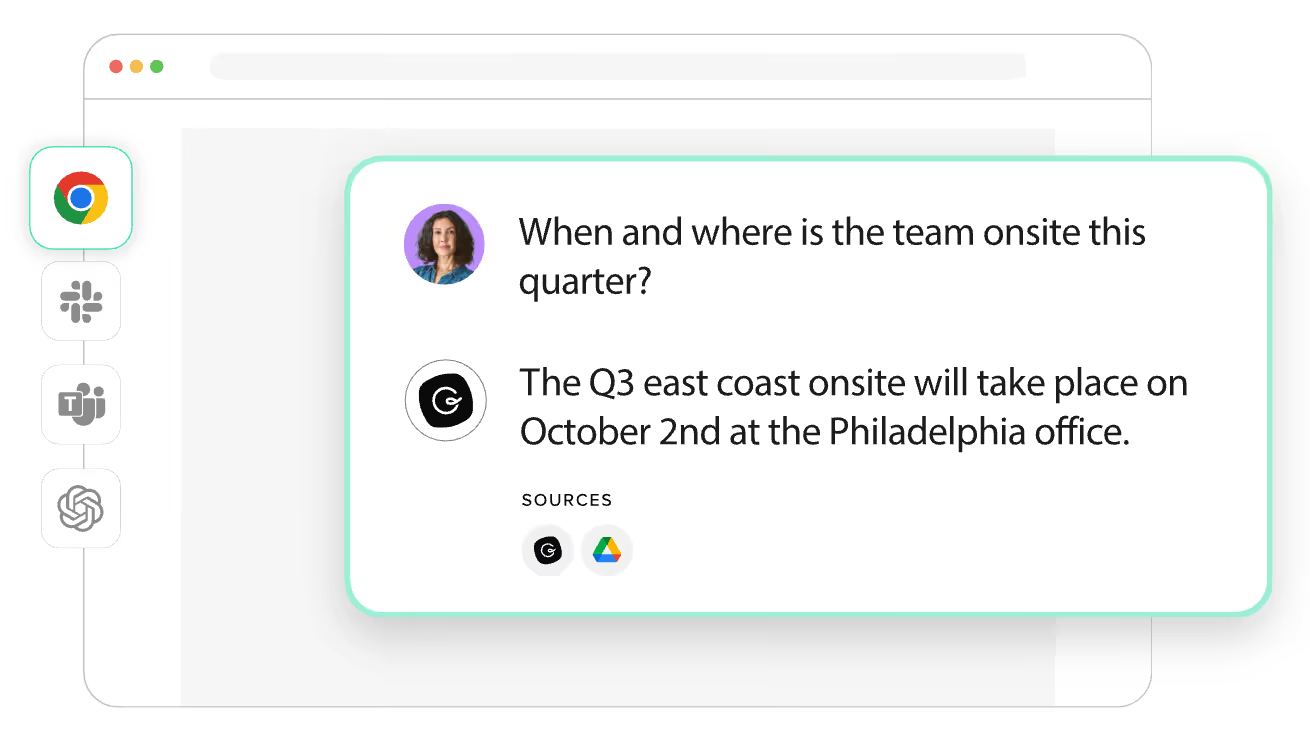
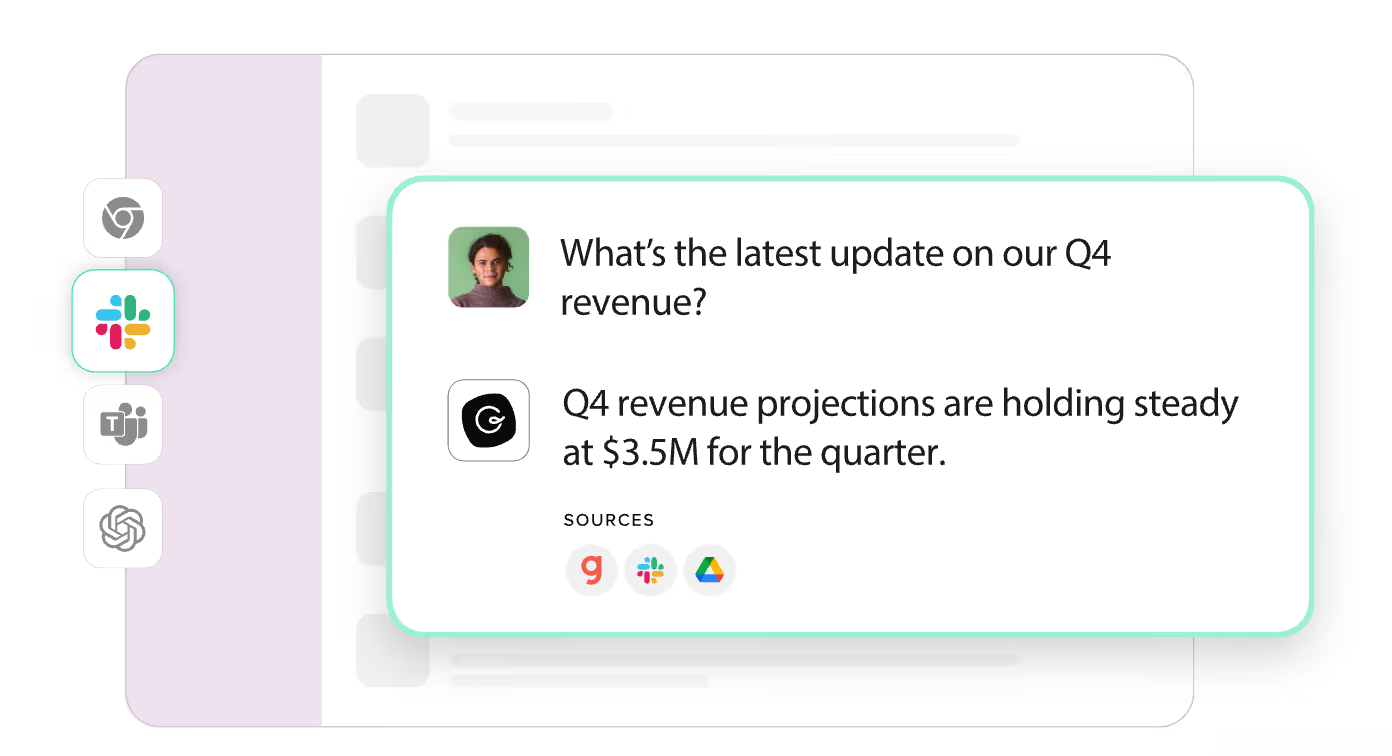
Guru offers an enterprise AI search platform that helps employees search for and discover helpful information, whether that’s related to their PTO policy, a specific customer, the steps for resolving a billing issue—and much more.
To power their platform, they offer API-based integrations with customers’ file storage applications, ticketing tools, project management platforms, CRMs, among other types of systems.
These integrations also use access controls to ensure that every employee only receives answers to questions that fall within their permissions in the integrated applications.
For example, if a document with information on a team’s offsite is accessible to any employee, an employee can use Guru to quickly find out when the offsite is happening.
On the other hand, if a document on financial forecasts has restricted access, only employees with access to it can get answers related to future revenue forecasts.
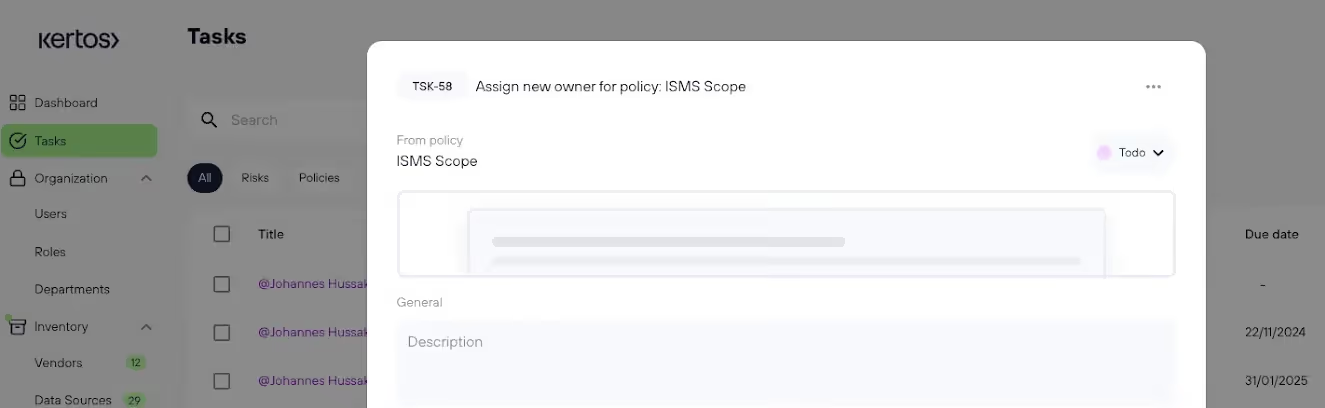
A compliance automation platform, like Drata, Kertos, or Thoropass, can use access controls from integrated ticketing systems to determine who can create and update compliance tickets (e.g., the director of IT). It can then use that information, alongside integrated HR data, to assign tasks to the right individuals automatically.
For example, say an employee who owned a compliance policy leaves the company (as determined by the customer’s integrated HR software). The individual in the integrated ticketing app with the appropriate permissions can go on to receive a task in the compliance automation platform—which can be synced with the ticketing system—that asks them to assign a new owner to that policy.
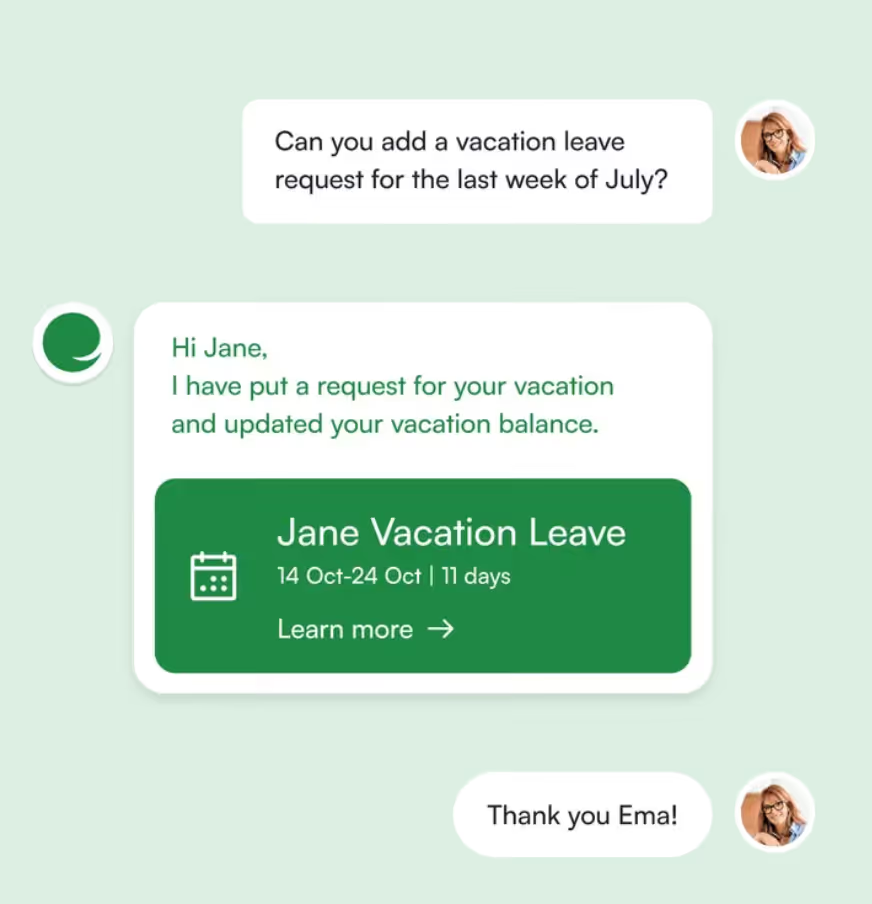
Ema lets you build AI agents to support countless tasks and workflows across teams.
To ensure their AI agents only perform actions that fall within the requester’s level of permissions, the AI agents use the integrated applications’ access controls.
For instance, if an employee is submitting a PTO request for someone else, the AI agent can determine that the employee doesn’t have permissions to do so in the integrated HR software. However, since the employee can submit PTO for themselves, the AI agent can facilitate this request in a matter of seconds.
Related: A guide to integrating AI agents with 3rd-party apps
Here are just a few of the benefits that come with using API access controls:
By only allowing authorized individuals to see confidential data and perform sensitive actions, you’re preventing significant security threats from taking place, from someone stealing an employee’s social security number to someone stealing a customer’s credit card information.
Preventing unauthorized individuals from seeing personally-identifiable information (PII) doesn’t just let you avoid harmful actions by malicious actors—it also lets you follow key data privacy and protection regulations, including GDPR, HIPAA, ISO 27001, and more.
Many prospects—especially at large companies—will need and expect your product to offer access controls. By providing them across all supported integrations, you’ll gain a competitive advantage and increase your close rate.
A unified API solution, which lets you add hundreds of integrations through a single, aggregated API, can support access controls across integration categories.
For example, Merge, the leading unified API solution, offers access controls for ticketing and file storage integrations, ensuring that leading SaaS providers can easily support integrations that meet enterprise companies' requirements.
To help you use API access controls effectively, you’ll need to consider and implement the following:
Integration solutions, like Merge, can take this work off their plates by offering integrations out-of-the-box that come with access control functionality.
{{this-blog-only-cta}}
Learn about all of the measures Merge takes to secure its 220+ integrations by scheduling a demo with their team.

.avif)



.png)