We use cookies to improve your experience on our site. By clicking “Accept”, you are agreeing to the collection and use of data as described in our Privacy Policy.
We use cookies to improve your experience on our site. By using our site, you are agreeing to the collection and use of data as described in our Privacy Policy.
As you look to scale your customer-facing integrations, you’ll likely come across Apideck, a unified API solution that offers customer-facing integrations for HRIS, CRM, accounting, and other categories of software.
Before deciding whether to move forward with the unified API vendor, it’s worth considering several other solutions.
We’ve rounded up the top ones worth considering below and broke down how each of them outperforms Apideck.
Note: This article was written on 11/25/2024. All of the information presented below is subject to change in the future.
Merge
Merge is a unified API platform that lets B2B SaaS organizations add HRIS, accounting, ticketing, ATS, file storage, and CRM integrations to their products.
Integration observability features: Merge provides a dashboard that monitors your integrations’ health holistically, fully-searchable logs, automated issue detection functionality and more—all in an intuitive UI. This enables your customer-facing employees to uncover, troubleshoot, and resolve integration issues themselves, quickly
White glove support: Merge’s post sales teams enable customers to build to Merge’s Unified API within a few weeks and provide strategic guidance on executing go-to-market activities around the integrations (.i.e, pricing the integrations)
Advanced features for syncing data: Merge offers a number of features that let customers sync custom objects and fields, all but ensuring customers can address their unique syncing requirements
When to choose Merge over Apideck
You want to invest in more robust integrations. In the categories Merge and Apideck overlap in (CRM, HRIS, ticketing, accounting, file storage, ATS), Merge offers more integrations and more comprehensive data coverage
You’re looking to outsource your integrations to a more proven company. Merge has a significantly larger team, customer base, and works with many more enterprise customers
You need a comprehensive integration monitoring solution. Merge’s Integration Observability tooling offers additional features and functionality, such as automated issue detection
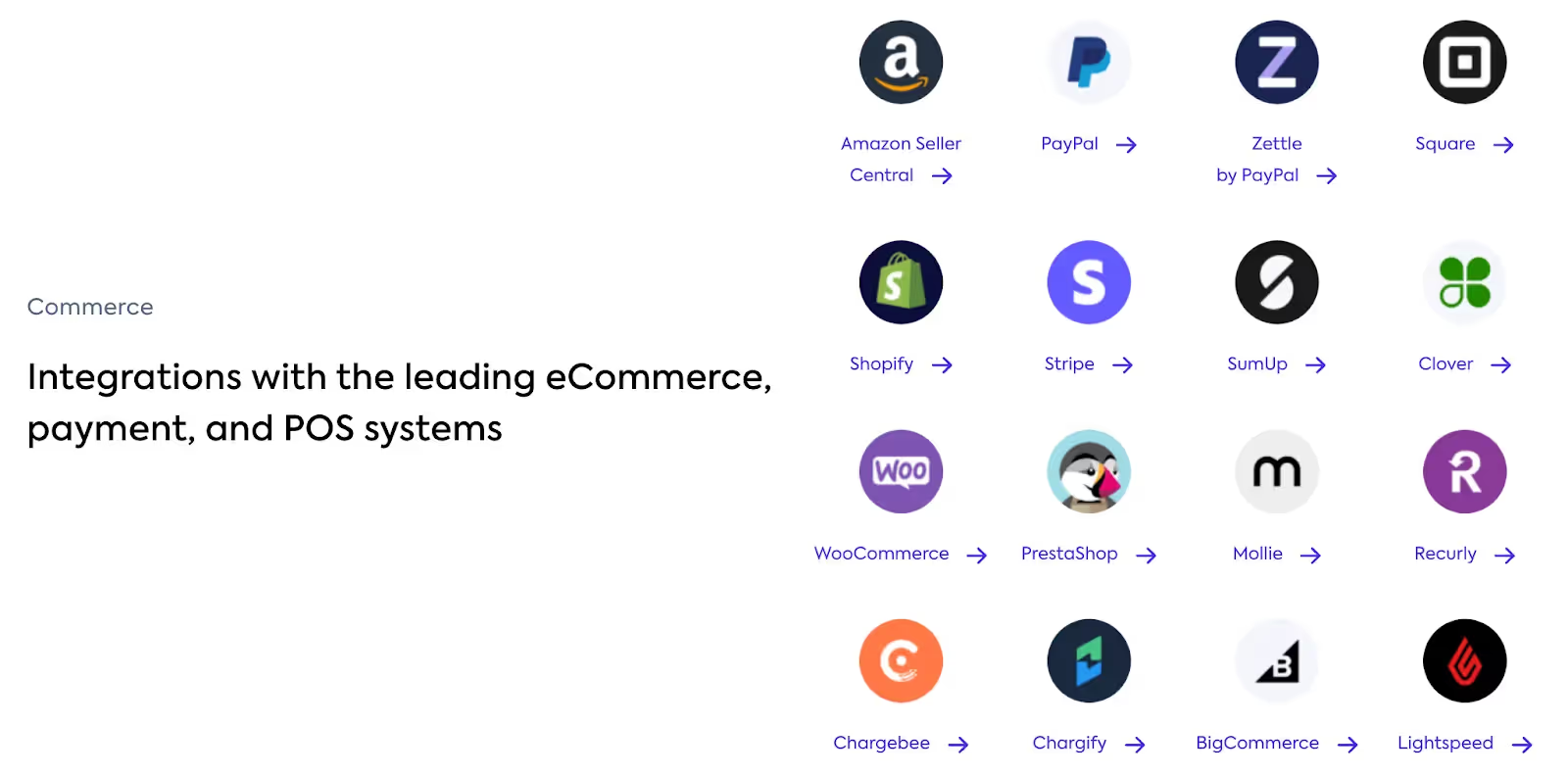
Using Codat, you can add a variety of customer-facing commerce integrations
Top features
Multi-category financial API: Codat lets you connect to accounting applications, banking systems, and commerce solutions
Supports bank feeds: Through their bank feeds API, your customers’ accounting software can receive bank statements on a regular cadence
Integration monitoring: They provide issue detection capabilities across their integrations
When to choose Codat over Apideck
You need to support financial integrations exclusively. Codat can help you add more financial integrations and access more data across them
You want to invest in a more proven integration solution. Like Merge, Codat is bigger than Apideck in a variety of ways and works with more enterprise fintech organizations and financial institutions
You’re looking for consultative support. Codat has more resources to help your team build and maintain integrations successfully through their platform
Paragon is an embedded integration platform as a service (iPaaS) that lets you add customer-facing integrations one by one in different categories and build workflow automations that work on top of them.
Top features
Searchable logs: Through a single view, you can easily find and review individual API logs
Flexible deployment: You can either build the integrations and automations yourself and have them fit natively in your product or let customers build the integrations and automations
Cross-category application connectors: You can access pre-built application connectors for e-signature platforms, project management systems, marketing automation tools, and more
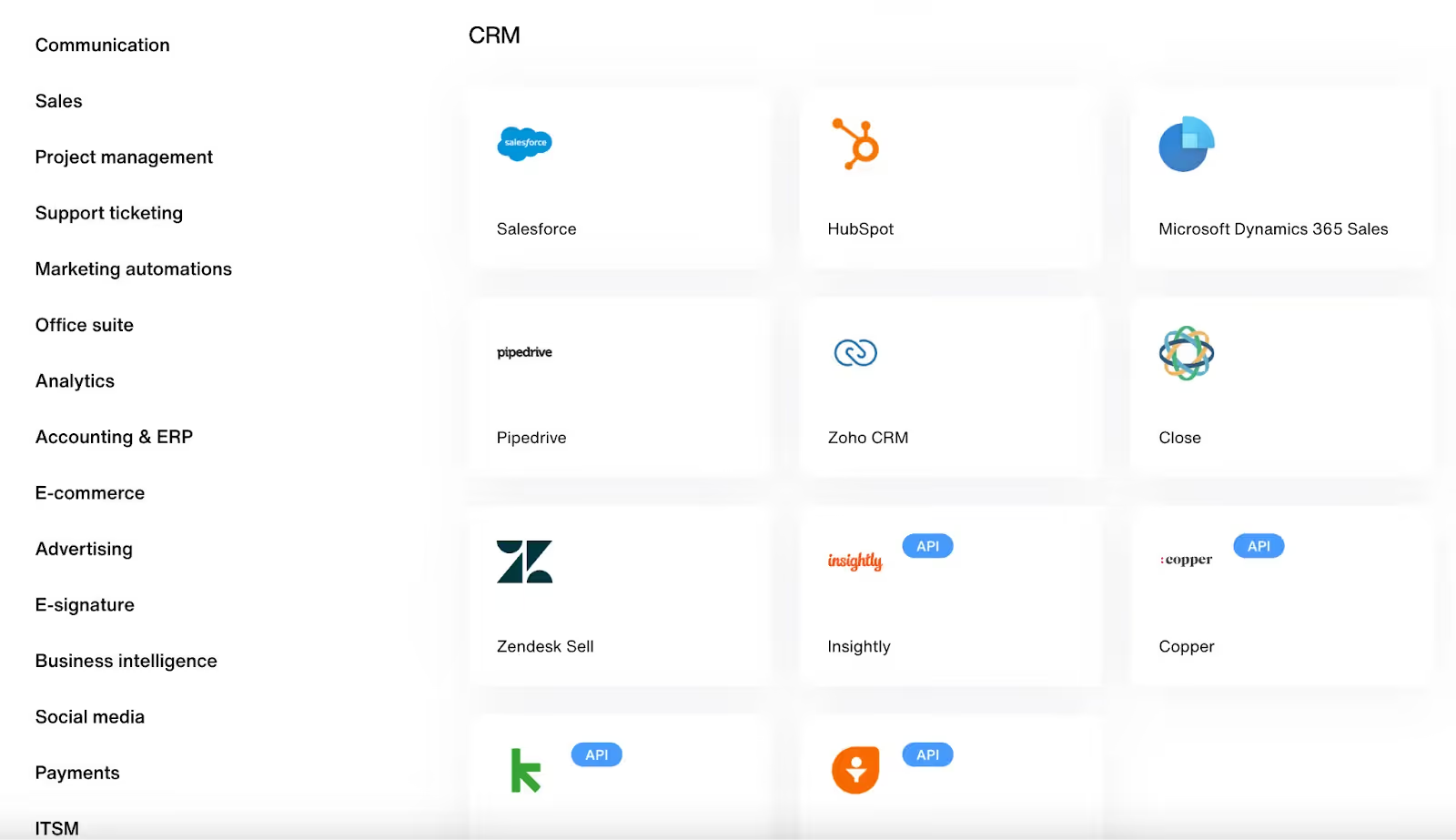
A snapshot of some of the integration categories Paragon supports
When to choose Paragon over Apideck
You want to access a richer set of integrations. Paragon supports several categories that Apideck doesn’t, such as content management, business intelligence, and advertising
Your engineers prefer an embedded workflow builder. If they have the capacity to build and manage integrations in Paragon and are used to using iPaaS and/or embedded iPaaS tools, it can make sense to choose Paragon over Apideck
Like Paragon, Workato offers an embedded iPaaS solution to help organizations add a wide range of customer-facing integrations and automations to their products.
Top features
A variety of additional solutions: In addition to an embedded iPaaS, Workato offers an iPaaS, an API management solution, Workbot®—for bringing automations to your business communications platform (e.g., Slack)—and more
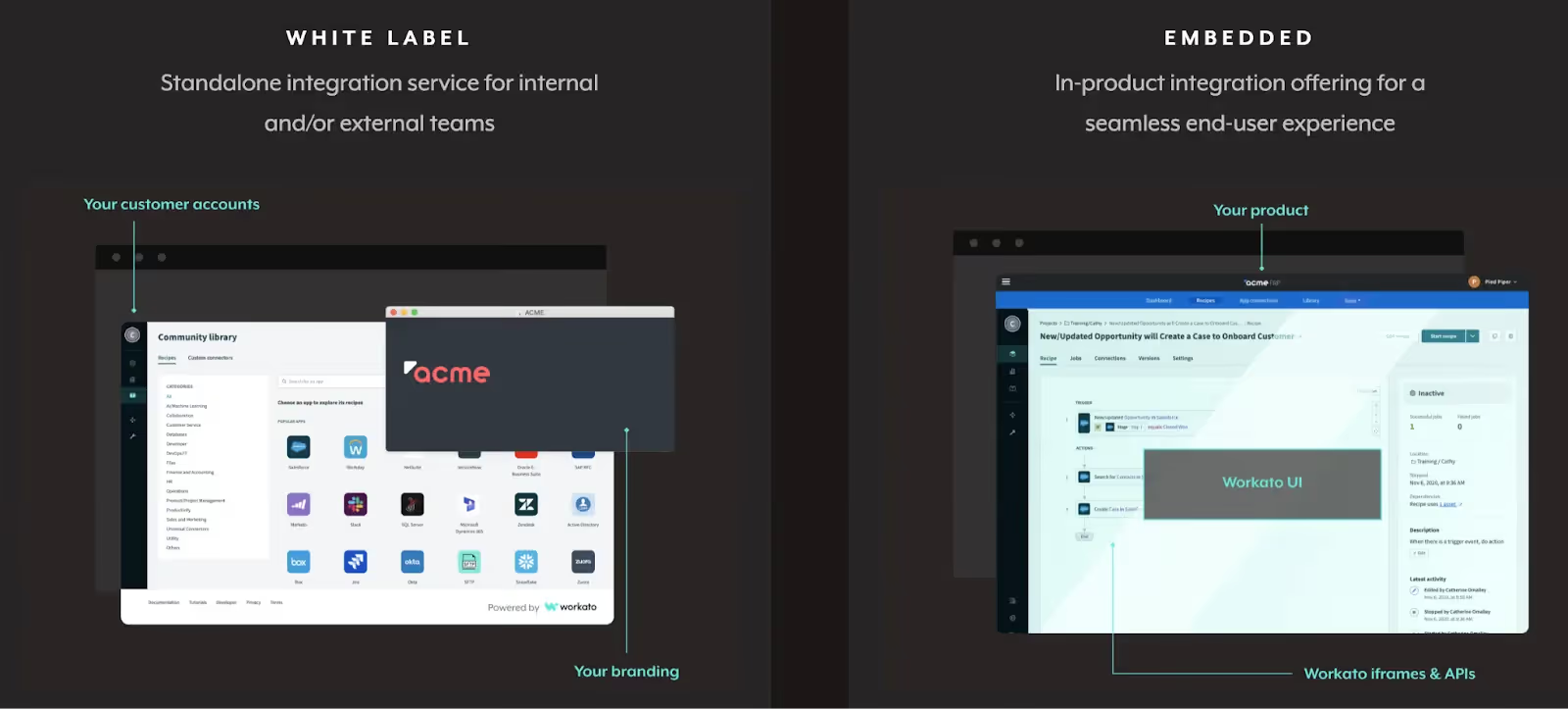
Customizable implementation options: You can choose who implements and maintains integrations (i.e., you or your customers) and decide whether to whitelabel the integrations or have them use Workato’s branding
Pre-built application connectors and automation templates: Workato offers more than a thousand application connectors and thousands of automation templates to help you integrate and automate faster
You want to access additional integration and automation solutions. This includes everything from integrating your internal applications to building and monitoring API endpoints
You need to integrate with additional categories of software. Unlike Apideck, Workato can help you integrate with business communications platforms, devops solutions, among other categories of tools
You’re hoping to work with an established integration partner. Workato has been around well over 10 years and works with many more enterprise organizations than Apideck, which can give you more confidence in Workato’s longevity
Tray.ai
Tray.ai is an “AI-ready iPaaS" that lets you build either internal or customer-facing automations via its low-code workflow builder.
Top features
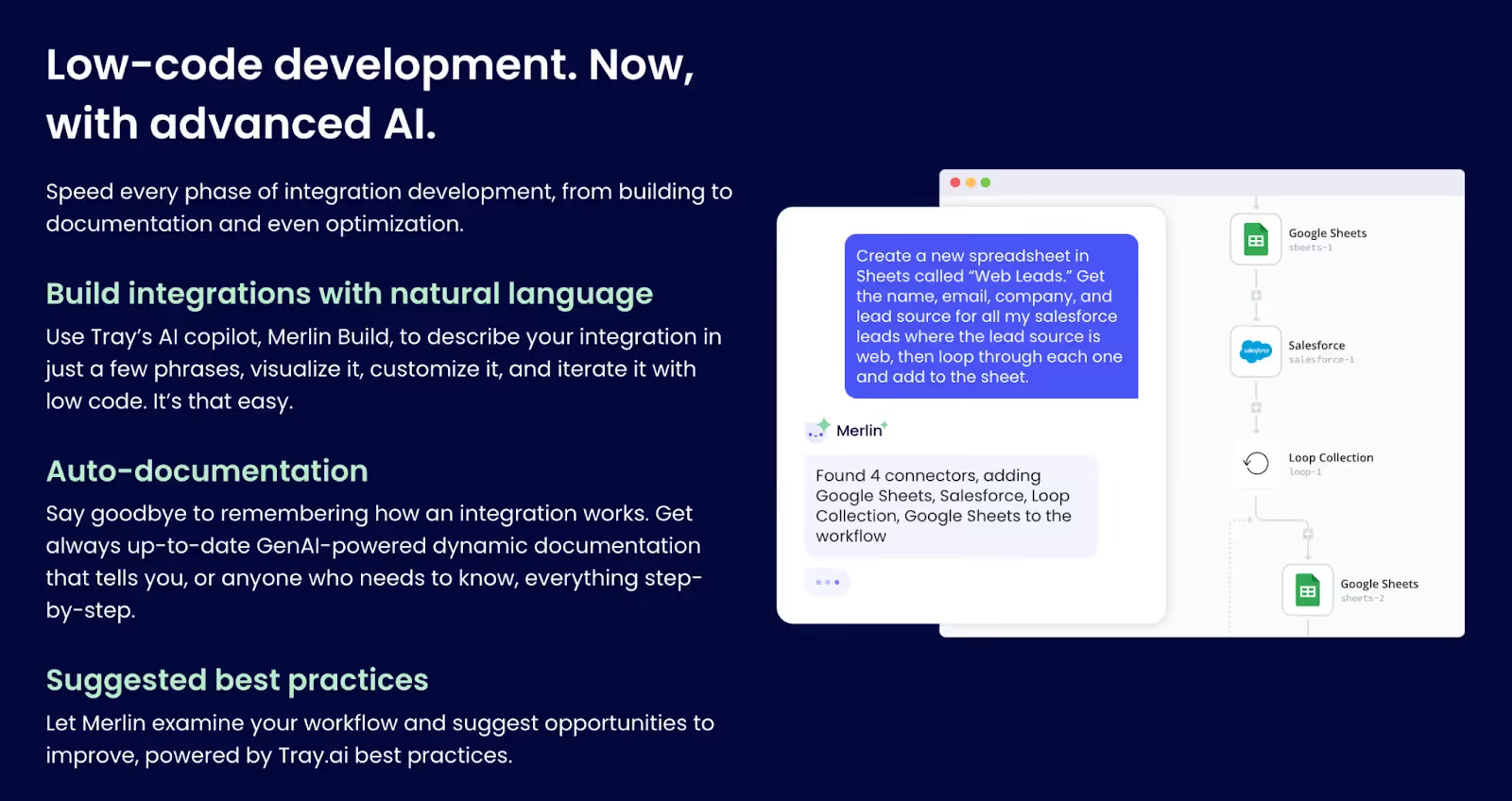
Suite of AI features: Through Merlin Intelligence, you can build automations that use AI to analyze and summarize transcripts; leverage AI to start building or improve on your automations; use AI to create documentation on integrations and automations, and more
Among other features, Merlin Intelligence can help you build, improve on, and/or document integrations and automations
API management: Lets you build and manage GET and POST REST APIs
API connectors: Hundreds of pre-built API connectors for apps across AI, e-commerce, marketing, sales, and more
When to choose Tray.ai over Apideck
You want a platform that’s committed to using AI: Tray.ai’s AI feature set is constantly expanding and improving, while Apideck has yet to provide meaningful AI capabilities
You’d prefer to outsource integrations to a bigger, more established company. Like Workato, Tray.ai has been around for more than a decade, and they have significantly more funding, customers, etc.
You need a wide range of integration and automation solutions. Tray.ai can also help you build and manage internal integrations and automations and develop and provide REST API endpoints
Prismatic
Prismatic offers an embedded iPaaS for B2B organizations.
Top features:
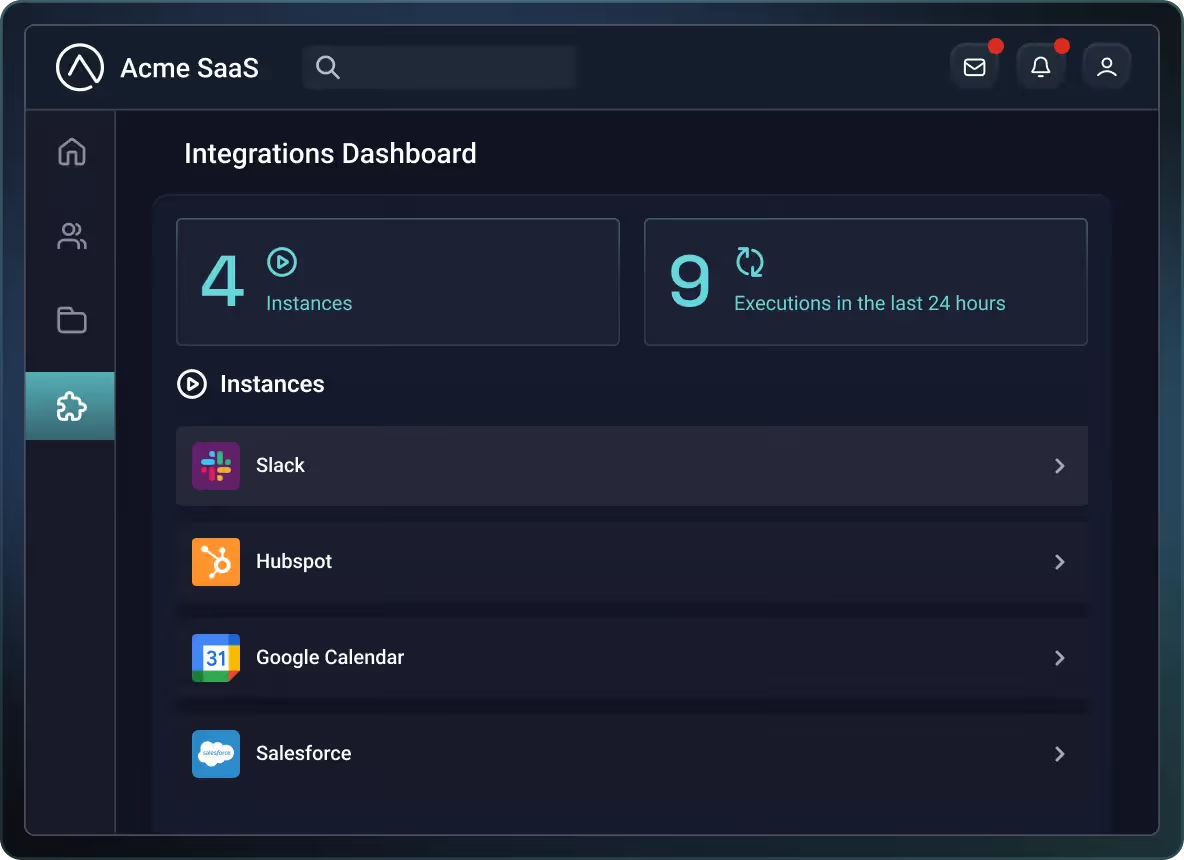
Integrations Dashboard: Prismatic lets you analyze your integrations’ health, level of activities, and can provide notifications for certain scenarios (e.g., a broken integration)
You’re looking for comprehensive customer validation to get internal buy-in. Prismatic has significantly more customer reviews on sites like G2 than Apideck
You need a HIPAA-compliant integration solution for certain clients. Prismatic is HIPAA compliant, while Apideck isn’t
You want customers to have more control over their integrations and automations. Prismatic lets customers control how, exactly, data flows across their integrations
Jon Gitlin is the Managing Editor of Merge's blog. He has several years of experience in the integration and automation space; before Merge, he worked at Workato, an integration platform as a service (iPaaS) solution, where he also managed the company's blog. In his free time he loves to watch soccer matches, go on long runs in parks, and explore local restaurants.




.png)