|
VOOZH | about |
|
VOOZH | about |
We use cookies to improve your experience on our site. By using our site, you are agreeing to the collection and use of data as described in our Privacy Policy.
Cookie Settings×Table of contents
Anthropic's recently-released Model Context Protocol (MCP) reaffirms that large language models (LLMs) need customer data to provide reliable, personalized, and useful outputs.
The protocol will likely play an invaluable role in helping AI models and 3rd-party applications integrate with one another. There are just a few things to consider when building and maintaining connections with this protocol.
You can read on to learn how MCP works, the benefits it provides, and how unified API solutions can complement it.
MCP is an open standard protocol released by Anthropic. It allows AI models to connect directly with external data sources so that the models can read data from and write data to the connected applications.
More specifically, MCP includes:
Related: What is an MCP gateway?
Here are just a few ways to leverage MCP.
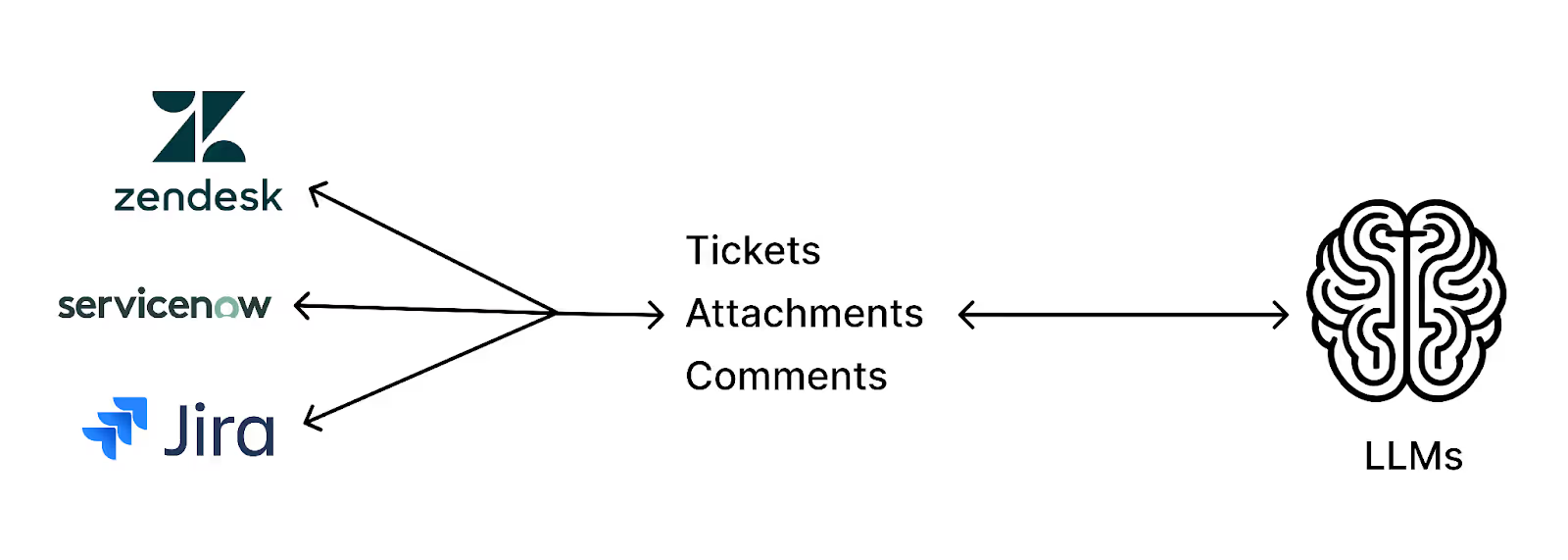
Say you offer a customer-facing AI chatbot that can use several LLMs (e.g., GPT-4o, Claude 3.5, etc.), depending on the support task it’s performing.
To help all of the AI chatbot’s underlying LLMs get the context needed to understand tasks and perform them, you can integrate the LLMs with the relevant support applications via the MCP protocol and give the LLMs access to read and write capabilities across these connected systems.
Learn about project management MCP servers you can connect to with Merge Agent Handler:
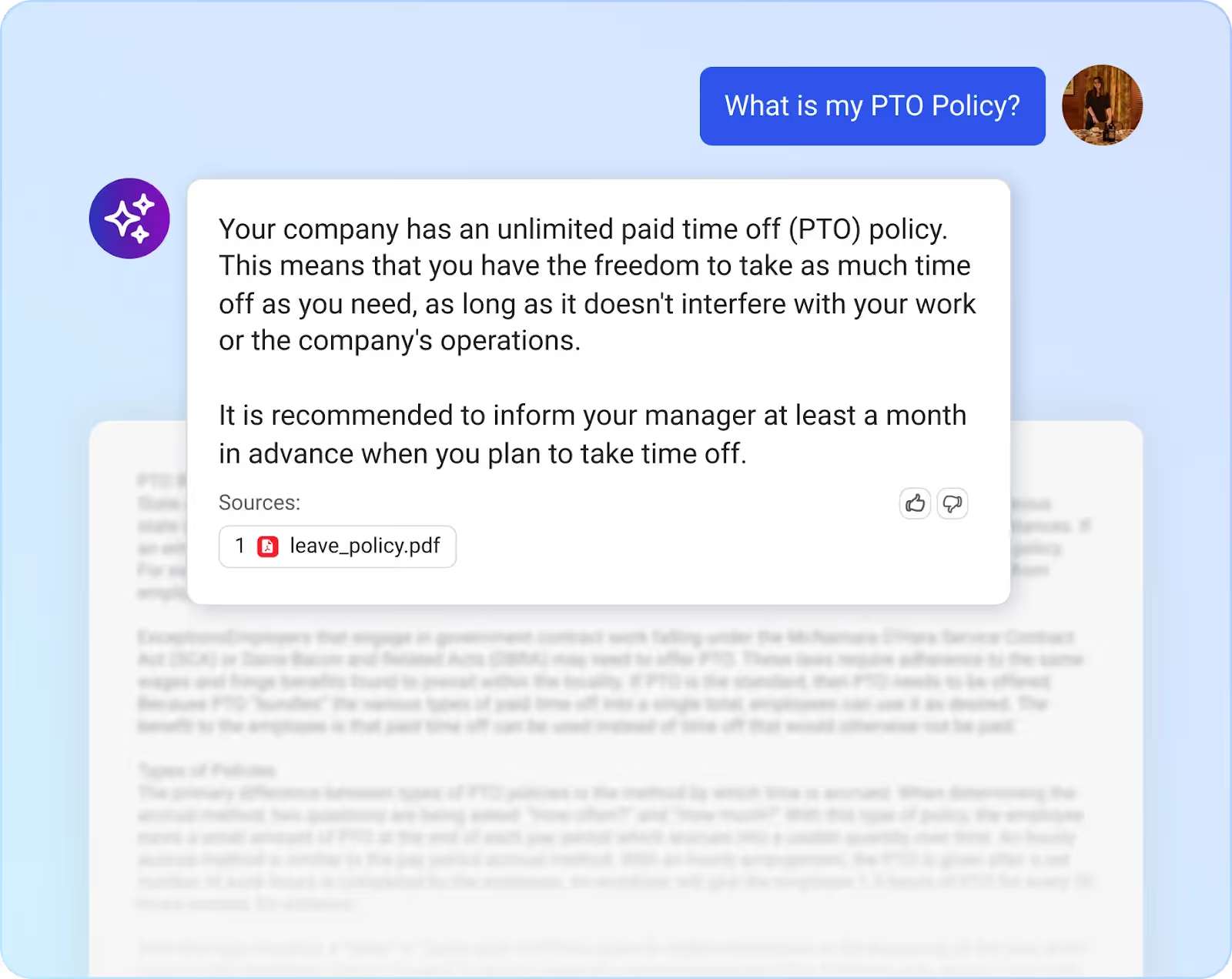
Imagine that you offer an AI assistant that can help customers’ employees ask a wide range of questions and receive answers in plain text (using NLP).
To ensure the AI assistant can answer a broad range of questions, you can integrate its underlying LLM with the clients’ file storage systems via MCP. The LLM can then ingest the contents from the documents and not only use these contents to generate outputs but also link out to the documents themselves.
Learn about file storage MCP servers you can connect to with Merge Agent Handler:
Now say you want to power AI agents that help customers manage interviews.
More specifically, you want the AI agent to not only remind interviewers about an upcoming interview but also provide context on candidates to help these interviewers prepare quickly, easily, and effectively.
To power this, you can integrate your AI agent’s LLM with your customers’ applicant tracking systems (ATSs) through MCP.
The AI agent can then ingest the information provided in the applications—from resumes to cover letters to Linkedin profiles—allowing it to generate summaries on candidates in a place that’s convenient for interviewers (e.g., Slack).
Learn about Merge Agent Handler's Greenhouse MCP server.
The Model Context Protocol offers several benefits that'll help support widespread adoption:
Related: Tips for using MCP
Here are a few areas it doesn’t cover:
Unified API solutions, which let you add hundreds of integrations to your product through a single, aggregated API, complement MCP for any integration, whether that’s managing authentication, data normalization, security, or sync speeds.
A unified API solution normalizes all of the integrated customer data, or converts that data to a predefined data model. This ultimately allows an LLM to handle prompts with more precision.
Unified API solutions can secure your integrations by giving you full control of the customer data you can access and who on your team can access it.
For example, a unified API solution can offer scopes—or the ability for either you or your customers to toggle off the specific fields that customers don’t want you to access and sync.
Unified API solutions can offer a full suite of integration observability features to help your customer-facing team manage any of your MCP-based integrations. This includes everything from automated issue detection to fully-searchable logs.
Finally, unified API solutions can support integrations with fast sync speeds. And many support webhooks to sync data in real-time—allowing an LLM to use the latest data for each customer.
Related: How to test an MCP server successfully
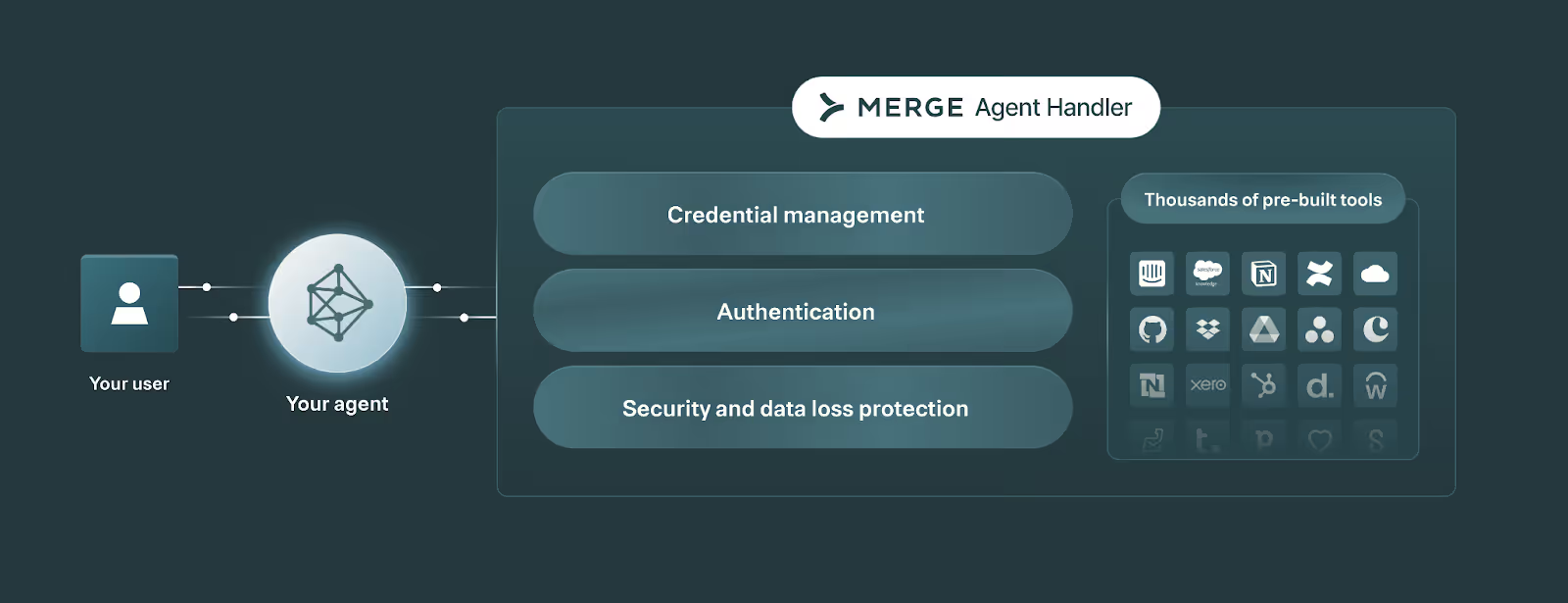
Merge Agent Handler offers a single platform to securely connect your AI agents to more than a thousand tools for dozens of pre-built connectors (you can also auto-generate countless more connectors!).
Agent Handler also offers the features and functionality you need to monitor and manage your agents’ integrations, from customizable alerts to fully-searchable logs to audit trails.
Start testing Agent Handler today by signing up for a free account!
Leverage Merge Agent Handler to securely connect your agents with thousands of tools, and manage and monitor any tool calls.
.avif)
.avif)
.avif)


.avif)


.png)