We use cookies to improve your experience on our site. By clicking “Accept”, you are agreeing to the collection and use of data as described in our Privacy Policy.
We use cookies to improve your experience on our site. By using our site, you are agreeing to the collection and use of data as described in our Privacy Policy.
Merge offers a unified API that lets you add hundreds of integrations to your product across key software categories, including accounting, HRIS, file storage, ticketing, CRM, and ATS.
Top features
Constantly builds out additional integrations and expands into key software categories. For example, they recently added integrations with Lattice, Coolcare, and FolksHR
Provides advanced integration observability features, like fully-searchable logs and automated issue detection, to help your customer-facing teams manage integrations independently and effectively
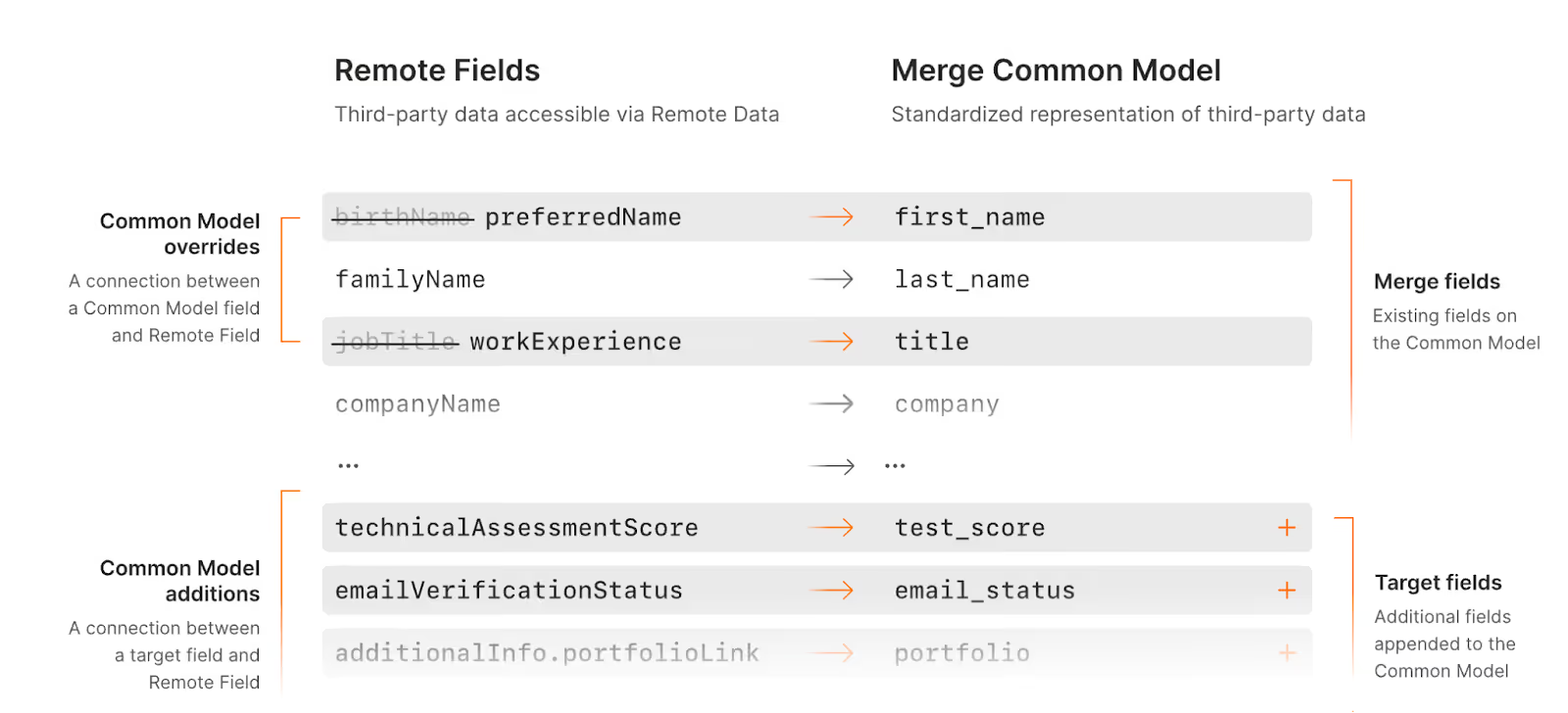
Offers advanced features—like Field Mapping and Authenticated Passthrough Request—to help you sync custom fields across your integrations
Field Mapping lets you sync any of your customers’ custom data by either building on top of Merge’s standardized data models or overriding any of the data models
When to choose Merge over Nango
You want to adopt a proven solution. Merge has been around a few years longer than Nango and has a more comprehensive track record of supporting enterprise organizations, such as BILL, Ramp, Qualtrics, and Mistral
You need to support reliable integrations. Nango relies on an open-source community to maintain their integrations, while Merge has a fully-staffed team of engineers who maintain the integrations on your behalf
You’d like comprehensive go-to-market support. As you launch product integrations, you’ll need to decide how to price, market, and support them. Merge—unlike Nango—has a team of integration experts that can help you navigate each of these areas successfully
Paragon provides an embedded integration platform as a service (iPaaS) that lets you build customer-facing integrations and workflow automations.
Top features
Supports agentic integrations with ActionKit—which offers a Model Context Protocol (MCP) server that lets you access their integrations’ endpoints via tools
Offers 20+ categories of API connectors to help you build a wide range of integrations, faster
Provides an enterprise price plan that supports advanced security and syncing features and functionality, like role-based access control, extended log storage (longer than 90 days), and dynamic field mapping
When to choose Paragon over Nango
You need integration support beyond Nango’s existing categories. Paragon can support more integrations than Nango (e.g., Magento), many of which can be table stakes for your product
You want more comprehensive support. You’ll only get adequate onboarding and ongoing support on Nango’s enterprise price plan. Paragon, on the other hand, offers onboarding support, ongoing support via email and Slack, and a dedicated customer success manager on several plans
You’re looking to test the platform through a relatively simple free trial. Paragon offers a 14-day free trial, and while Nango offers their own trial, theirs requires making meaningful infrastructure investments
Case in point: The CTO of Twine, a product intelligence platform, had this to say about Nango’s “free trial”:
“Nango requires an initial infrastructure investment before you can even start testing it.”
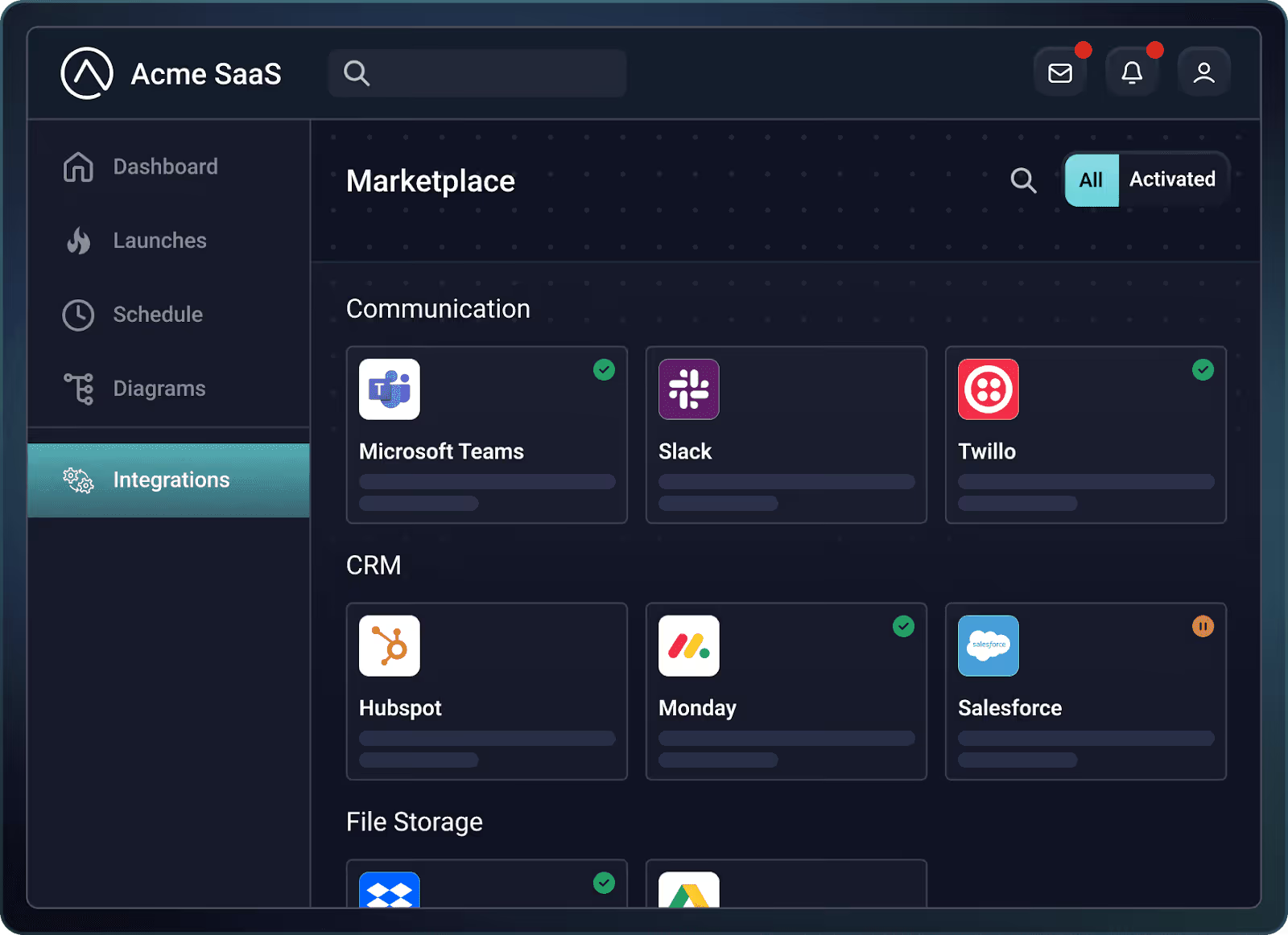
Prismatic offers an embedded iPaaS solution and an integration marketplace product that can help you market your integrations within your product and drive adoption.
How Prismatic advertises their integration marketplace product
Top features
Offers customizable deployment options. Namely, customers can either use Prismatic’s workflow builder within your product to activate integrations or your customer-facing team can activate the integrations on their behalf
Supports a highly-customizable integration marketplace product. For example, it lets you decide how users can configure integrations and it gives you the option to use their design and UX elements or incorporate your own
Lets you integrate with countless applications faster with pre-built connectors, including AI connectors like Google Gemini and OpenAI
When to choose Prismatic over Nango
You want to have an integration marketplace on your site. Nango doesn’t provide any support here
You need best-in-class support throughout your integration journey. All of Prismatic’s pricing plans include real-time chat and email support. Nango doesn’t provide any visibility on this level of support across their plans
Your customers want more control over their integrations. Prismatic, unlike Nango, lets you decide which customers can implement and fine tune their integrations and workflow automations
Workato offers a wide range of integration and automation solutions, including an embedded iPaaS.
Top features
Provides an iPaaS to help IT and business technology teams build internal integrations and automations across lines of business
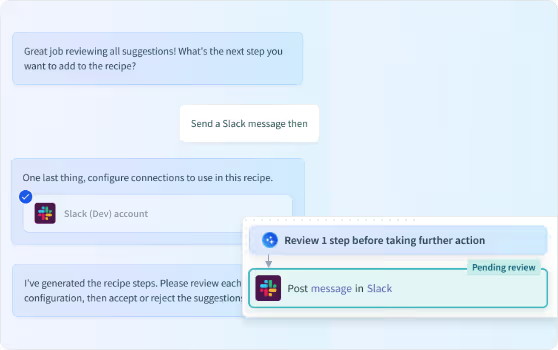
Offers Workbot®, a customizable chatbot for Slack or Microsoft Teams, to help users easily kickstart and participate in workflow automations
Offers a suite of AI features and capabilities to help you build better integrations and automations, faster. For example, their Copilots can help users turn plain text into usable “recipes”, or workflow automations
Their Copilots can also help users fine tune existing recipes
When to choose Workato over Nango
You want to use a proven solution. Workato is more than a decade old, and widely-known brands across industries use their embedded product, such as Zendesk, Shutterstock, and Autodesk
You want hands-on training and support. Workato not only offers a post-sales team that can help you become familiar with the platform, but they also have an academy that lets you and/or your customers become proficient in using their embedded workflow platform
Your integration needs extend beyond your product. You can also leverage Workato’s other integration offerings—like their iPaaS for internal use cases—to meet other integration requirements. Doing so can also help you earn a discount
Kombo is a European-based unified API solution that specializes in HRIS, payroll, and ATS integrations.
Top features
Lets you white label their solution end to end—including guides for setting up an integration. This can help make it seem as though your team built and maintains the integrations
Offers searchable logs to help you review specific syncs and troubleshoot issues more easily
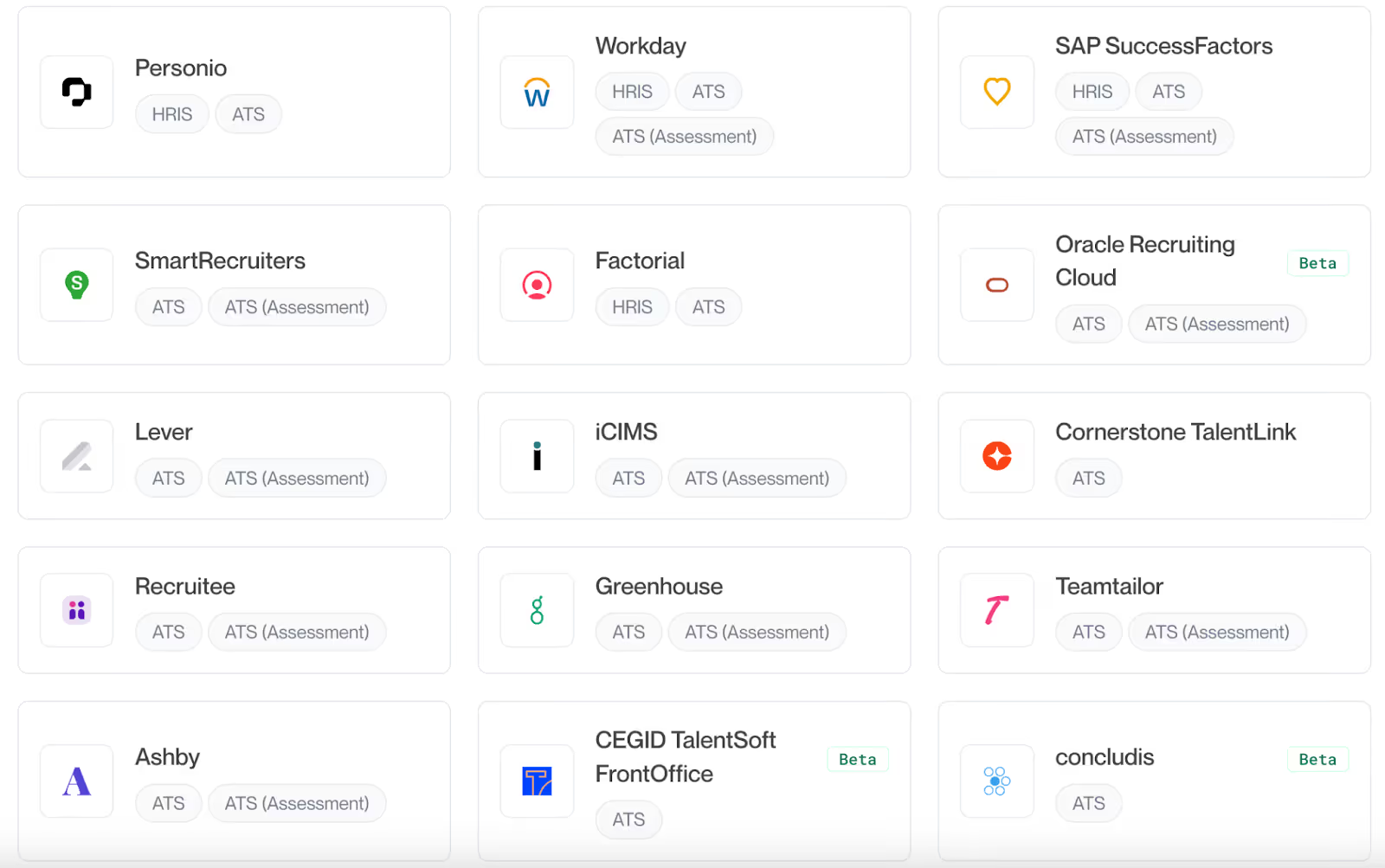
Provides extensive integration support for their categories. For example, they offer more than 70 integrations in HRIS alone
A snapshot of the HRIS integrations Kombo supports
When to choose Kombo over Nango
You only care about HRIS, payroll, and ATS integrations. Kombo offers more integrations across these categories and they're generally deeper (i.e., they can support more use cases)
You want to adopt a fast-growing and more promising solution. While both companies were founded in 2022, Kombo is growing much faster. For example, they have roughly 50 employees while Nango is still under 10
You need to support more integrations that are popular in the EU. Since Kombo was founded in the EU and serves most of its customers in that region, their integration offerings are naturally titled towards European companies' integration needs
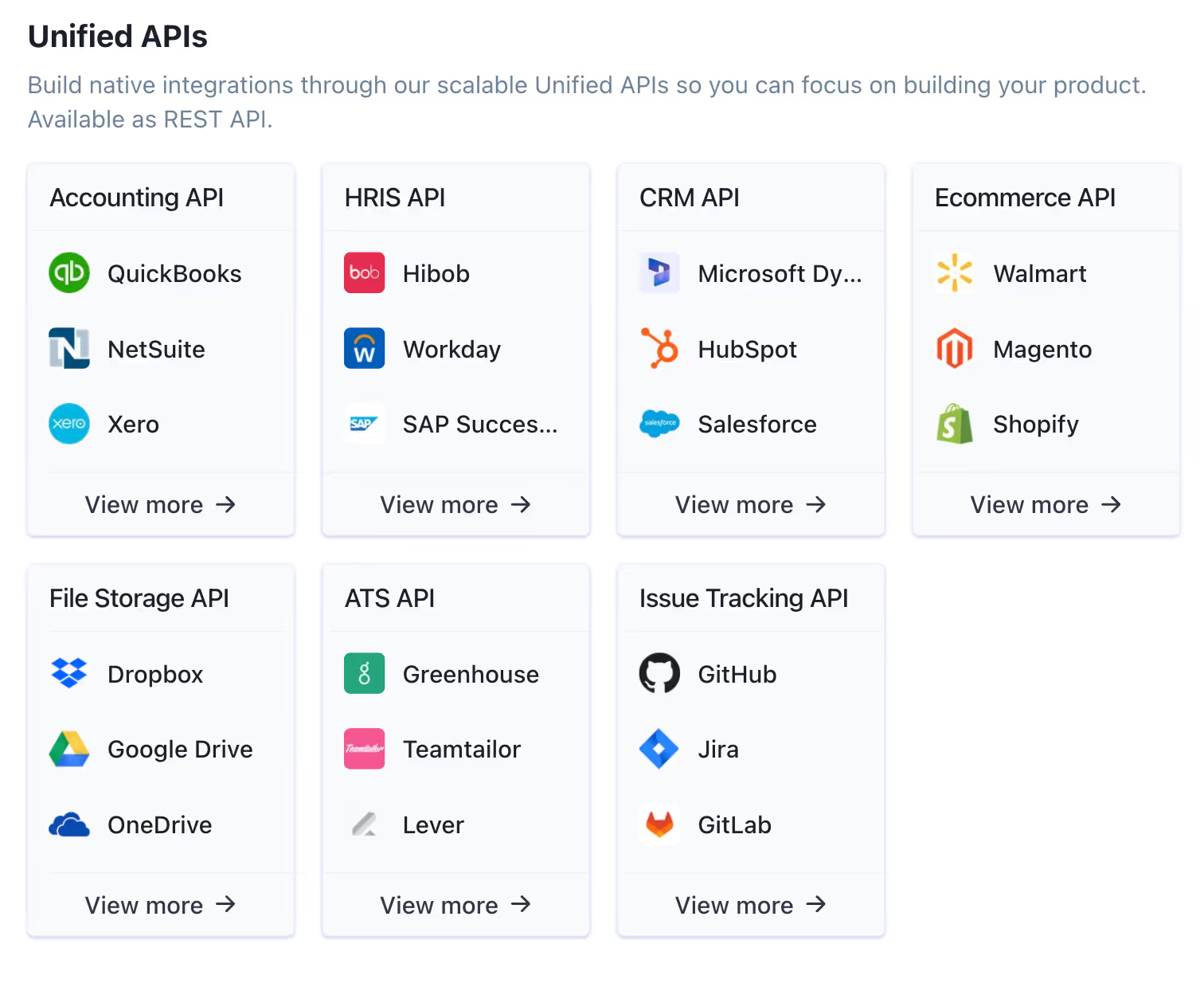
A snapshot of the integration categories Apideck support
Top features
Provides an integration marketplace solution that supports several kinds of pages. This includes everything from landing pages for individual integrations to a partner requests landing page that captures demand from potential integration partners
Offers Custom Field Mapping to help you sync custom data across customers’ apps
Has native and virtualized webhooks that can notify your product of events in customers’ systems in real-time. This, in turn, allows your product to respond quickly and effectively
When to choose Apideck over Nango
You want an integration partner that offers clear and flexible pricing plans. Unlike Nango, Apideck’s pricing includes explicit price points and details on what each plan entails
You want a usage-based free trial. Nango’s free trial is only 14 days while Apideck’s isn’t time bound—it’s usage based (you can make up to 2,500 requests for any unified API)
You’re also looking for an integration marketplace product. Apideck offers a relatively comprehensive solution, while Nango doesn’t offer anything currently
The best product integration solution for your business ultimately depends on your budget, your integration use cases, and the level of guidance and support you need.
That said, for nearly every scenario, Merge will be your best option.
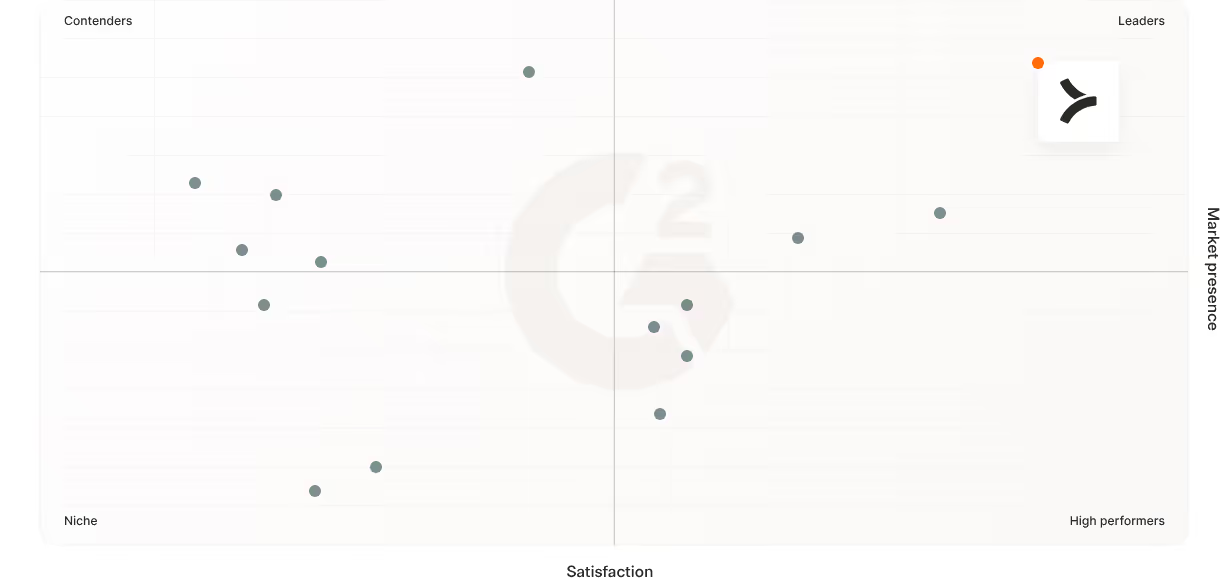
Merge is the leader in the G2 Grid® for Unified APIs, and has several customer stories (e.g., Firstbase) that highlight how it lets you scale and maintain your integrations more easily than embedded iPaaS vendors.
Jon Gitlin is the Managing Editor of Merge's blog. He has several years of experience in the integration and automation space; before Merge, he worked at Workato, an integration platform as a service (iPaaS) solution, where he also managed the company's blog. In his free time he loves to watch soccer matches, go on long runs in parks, and explore local restaurants.


.avif)
.avif)



.png)