|
VOOZH | about |
|
VOOZH | about |
| General Properties | |
|---|---|
| Symbol: | Bi |
| Commodity pages: | Bismuth |
| Atomic Number: | 83 |
| Standard atomic weight (Ar): | 208.98040(1) |
| Electron configuration: | [Xe] 4f14 5d10 6s2 6p3 |
| Photos | ||
|---|---|---|
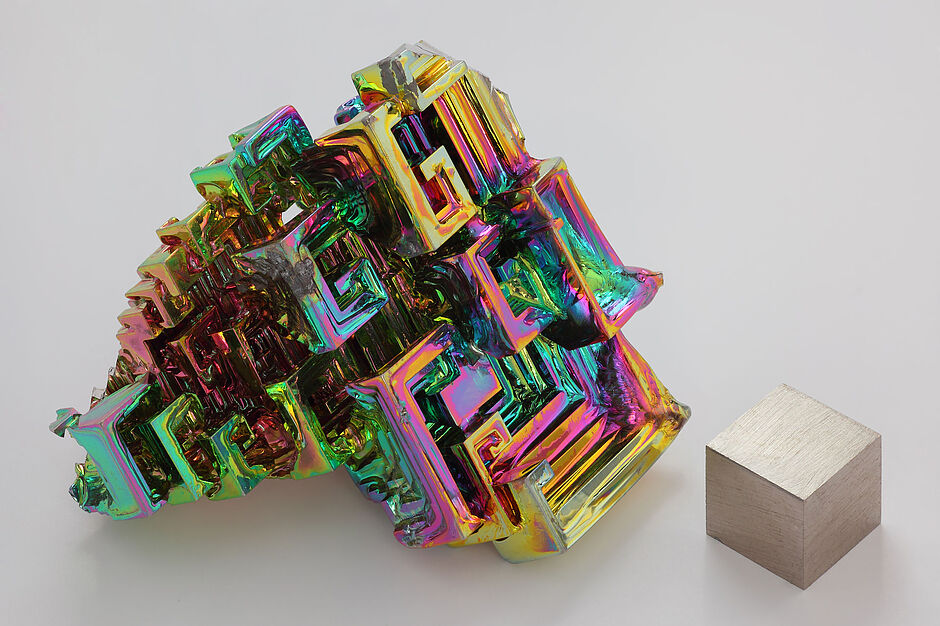
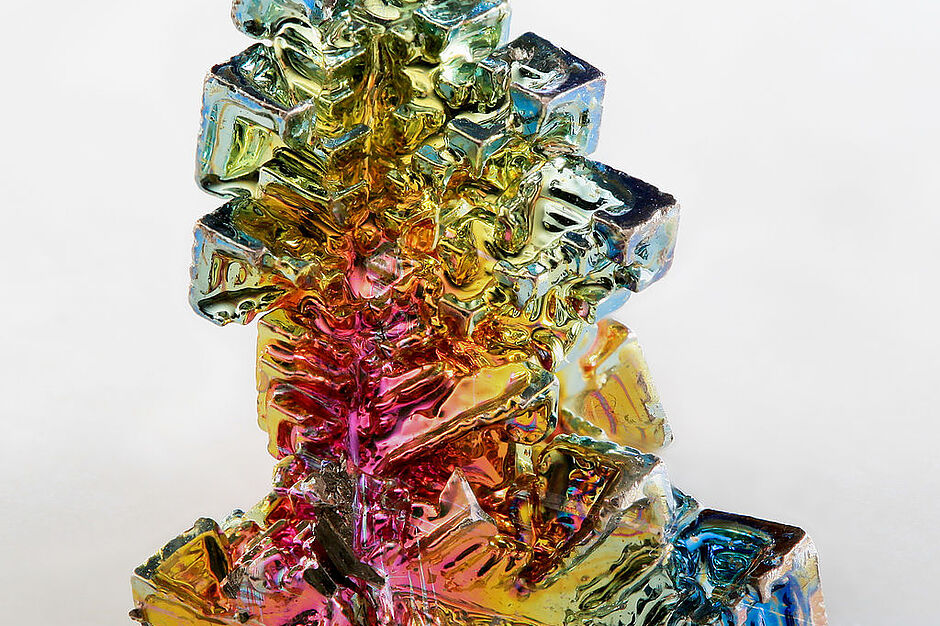
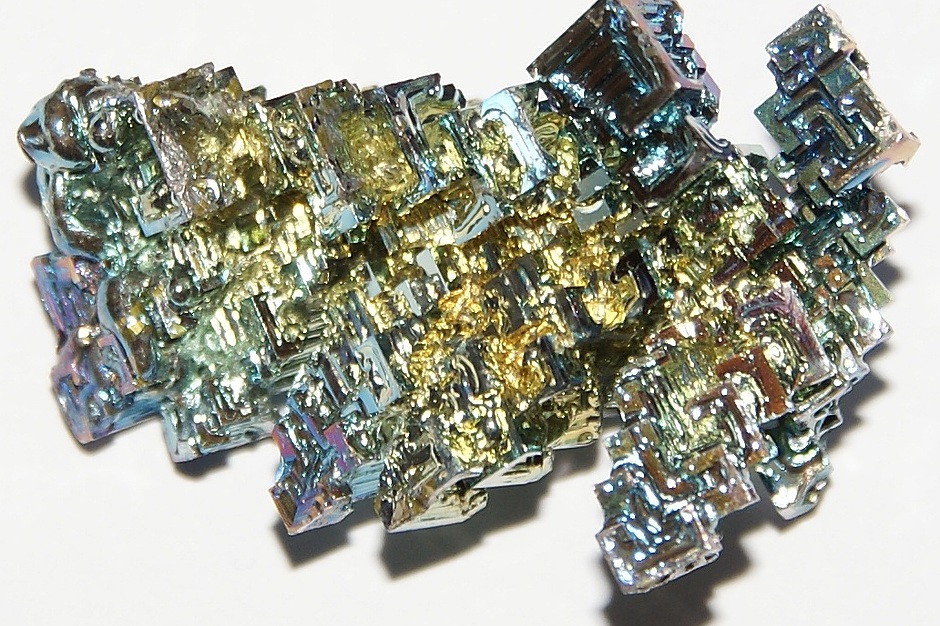
| < | Artificially grown bismuth crystal illustrating the stairstep crystal structure | > |
| Atomic Properties | |
|---|---|
| Electronegativity (Pauling scale): | 2.02 |
| Atomic Radius: | 143 pm |
| Ionic Radius: | 103 pm (+3) |
| 1st Ionization energy: | 703 kJ/mol |
| 1st Electron affinity: | -91 kJ/mol |
| Oxidation States: | -3,3,5 |
| Physical Properties | |
|---|---|
| Standard State: | solid |
| Bonding Type: | metallic |
| Melting Point: | 544 K |
| Boiling Point: | 1837 K |
| Density: | 9.78 g/cm3 |
| Metal/Non-Metal: | metal |
| Main isotopes of Bismuth | ||||
|---|---|---|---|---|
| Isotope | % in Nature | Half Life | Decay type | Decay product |
| 207Bi | synthetic | 31.55y | β+ | 207Pb |
| 208Bi | synthetic | 3.68×10⁵y | β+ | 208Pb |
| 209Bi | 100% | 1.9×10¹⁹y | α | 205Tl |
| 210Bi | trace | 5.012d | β− | 210Po |
| α | 206Tl | |||
| Main ions of Bismuth | ||||
|---|---|---|---|---|
| Name | Ion | Example minerals | ||
| bismuth(III) | Bi3+ | Bismuthinite | ||
| bismuth(V) | Bi5+ | |||
| bismuthide | Bi3- | |||
| Other Information | |
|---|---|
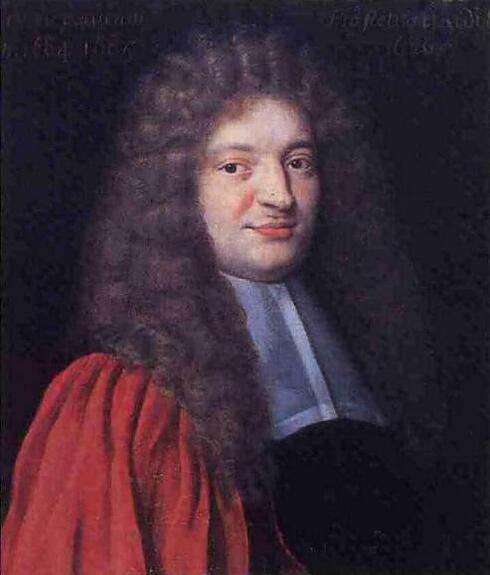
| Year Discovered: | 1753 |
| Discovered By: | |
| Named For: | German: Wismuth - "white mass" |
| CPK color coding: | #9E4FB5 |
| External Links: | WikipediaWebElementsLos Alamos National LaboratoryTheodore Gray's PeriodicTable.com |
| Simple Compounds and Mineral Names | ||||
|---|---|---|---|---|
| Sulfides | dibismuth trisulfide | Bi2S3 | +3 | Bismuthinite |
| tetrabismuth trisulfide | Bi4S3 | Ikunolite | ||
| Selenides | bismuth selenide | BiSe | Nevskite | |
| dibismuth triselenide | Bi2Se3 | +3 | Guanajuatite, Paraguanajuatite | |
| Tellurides | bismuth telluride | BiTe | Tsumoite | |
| dibismuth tritelluride | Bi2Te3 | +3 | Tellurobismuthite | |
| tetrabismuth tritelluride | Bi4Te3 | Pilsenite | ||
| heptabismuth tritelluride | Bi7Te3 | Hedleyite | ||
| Hydrides | bismuth trihydride | BiH3 | +3 | |
| Hydroxides | bismuth hydroxide | Bi(OH)3 | +3 | |
| Fluorides | bismuth trifluoride | BiF3 | +3 | Gananite |
| bismuth pentafluoride | BiF5 | +5 | ||
| bismuth oxyfluoride | BiOF | +3 | Zavaritskite | |
| Chlorides | bismuth trichloride | BiCl3 | +3 | |
| bismuth oxychloride | BiOCl | +3 | Bismoclite | |
| Iodides | bismuth triiodide | BiI3 | ||
| Oxides | dibismuth trioxide | Bi2O3 | +3 | Bismite, Sphaerobismoite |
| Carbonates | bismuth subcarbonate | Bi2CO3O2 | +3 | Bismutite |
| Phosphates | bismuth phosphate | BiPO4 | +3 | Ximengite |
| Arsenates | bismuth arsenate | BiAsO4 | +3 | Rooseveltite, Tetrarooseveltite |
| Vanadates | bismuth vanadate | BiVO4 | +3 | , Clinobisvanite, Dreyerite, Pucherite |
| Molybdates | dibismuth molybdate | Bi2MoO6 | Koechlinite | |
| Tungstates | bismuth tungstate | Bi2WO6 | +3 | Russellite |
| Niobates/Tantalates | bismuth niobate | BiNbO4 | Bismutocolumbite | |
| bismuth tantalate | BiTaO4 | Bismutotantalite | ||
| Silicates | bismuth silicate | Bi4(SiO4)3 | +3 | Eulytine |
| Mineral Diversity of Bismuth | |
|---|---|
| 1. Elements | 2 valid mineral species |
| 2. Sulfides And Sulfosalts | 160 valid mineral species |
| 3. Halides | 5 valid mineral species |
| 4. Oxides | 24 valid mineral species |
| 5. Carbonates | 3 valid mineral species |
| 7. Sulfates | 17 valid mineral species |
| 8. Phosphates, Arsenates, Vanadates | 37 valid mineral species |
| 9. Silicates | 2 valid mineral species |
| Total: | 250 valid species containing essential Bismuth |
| Minerals with the greatest weight % of Bismuth | ||
|---|---|---|
| Native Bismuth | Bi | 100.00 % |
| Sphaerobismoite | Bi2O3 | 89.70 % |
| Bismite | Bi2O3 | 89.70 % |
| Ikunolite | Bi4S3 | 89.68 % |
| Zipserite | Bi5S4 | 89.07 % |
| Sillénite | Bi12SiO20 | 87.81 % |
| Chrombismite | Bi3+16Cr6+O27 | 87.36 % |
| Daubréeite | BiO(OH) | 86.36 % |
| Zavaritskite | (BiO)F | 85.66 % |
| Bismutite | (BiO)2CO3 | 81.96 % |
| Geochemistry of Bismuth | |
|---|---|
| Goldschmidt classification: | Chalcophile |
| Bi3+ is concentrated in residual soils and sediments (less certainty.) | |
| Bi2- forms minerals with Au+. | |
| Bi3- forms minerals with Au+. | |
| Elemental Bismuth in Nature | ||
|---|---|---|
| Found as native element: | Native Bismuth | Bi |
| Elemental Abundance for Bismuth | ||
|---|---|---|
| Crust (CRC Handbook) | 8.5 x 10⁻⁹ | mass fraction, kg/kg |
| Crust (Kaye & Laby) | 4 x 10⁻⁹ | mass fraction, kg/kg |
| Crust (Greenwood) | 8 x 10⁻⁹ | mass fraction, kg/kg |
| Crust (Ahrens/Taylor) | 6.0 x 10⁻⁸ | mass fraction, kg/kg |
| Upper Crust (Ahrens/Taylor) | 1.27 x 10⁻⁷ | mass fraction, kg/kg |
| Sea Water (CRC Handbook) | 2 x 10-11 | mass per volume fraction, kg/L |
| Sea Water (Kaye & Laby) | 2 x 10-11 | mass per volume fraction, kg/L |
| Solar System (Kaye & Laby) | 1.4 x 10⁻⁷ | atom mole fraction relative to Si=1 |
| Solar System (Ahrens) | 1.44 x 10⁻⁷ (8.2%) | atom mole fraction relative to Si=1 (% uncertainty) |
| Element association of Bismuth in the Mineral World | |||
|---|---|---|---|
| This table compares the known valid mineral species listed listed with Bismuth and the other elements listed based on the official IMA formula. Note that unlike other sections on this page this includes non-essential elements. The first data column contains the total number of minerals listed with Bismuth and the element listed for that row. The second data column lists this number as a percentage of all minerals listed with Bismuth. The final data column compares this percentage against the percentage of all minerals that contain the element listed in each row. Click on a heading to sort. |
| Periodic Table | ||||||||||||||||||||||||||||||||||||||||||||||||||||||||||||||||||||||||||||||||||||||||||||||||||||||||||||||||||||||
|---|---|---|---|---|---|---|---|---|---|---|---|---|---|---|---|---|---|---|---|---|---|---|---|---|---|---|---|---|---|---|---|---|---|---|---|---|---|---|---|---|---|---|---|---|---|---|---|---|---|---|---|---|---|---|---|---|---|---|---|---|---|---|---|---|---|---|---|---|---|---|---|---|---|---|---|---|---|---|---|---|---|---|---|---|---|---|---|---|---|---|---|---|---|---|---|---|---|---|---|---|---|---|---|---|---|---|---|---|---|---|---|---|---|---|---|---|---|---|
Default Categories CPK Electronegativity Atomic Radius Lowest Oxidation Highest Oxidation Crustal Abundance Goldschmidt Mineral Species Minerals with Bi Relative Frequency | ||||||||||||||||||||||||||||||||||||||||||||||||||||||||||||||||||||||||||||||||||||||||||||||||||||||||||||||||||||||
| Lead << Bismuth >> Polonium |
| Most widespread minerals containing Bismuth |
|---|
| This list of minerals containing Bismuth is built from the mindat.org locality database. This is based on the number of localities entered for mineral species and is therefore slanted towards minerals interesting to collectors with less coverage of common rock-forming-minerals so it does not give an undistorted distribution of Bismuth mineral species. It is more useful when comparing rare species rather than common species. |
| Name | Formula | Crystal System | Mindat Localities |
|---|---|---|---|
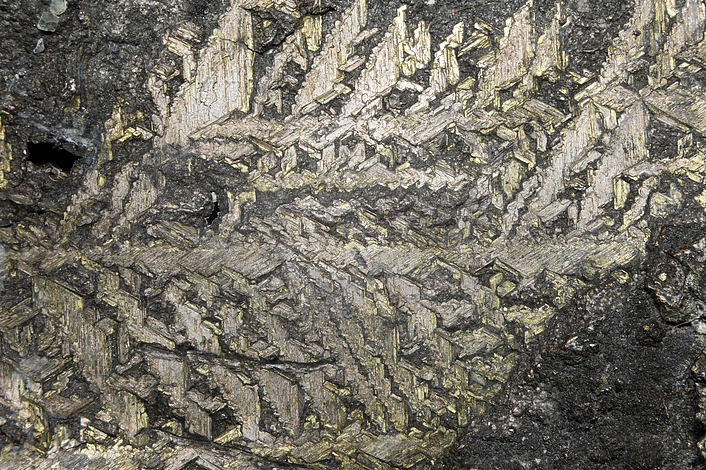
| Native Bismuth | Bi | Trigonal | 2548 |
| Bismuthinite | Bi2S3 | Orthorhombic | 2507 |
| Bismutite | (BiO)2CO3 | Orthorhombic | 909 |
| Tetradymite | Bi2Te2S | Trigonal | 715 |
| Cosalite | Pb2Bi2S5 | Orthorhombic | 456 |
| Aikinite | PbCuBiS3 | Orthorhombic | 450 |
| Wittichenite | Cu3BiS3 | Orthorhombic | 438 |
| Tellurobismuthite | Bi2Te3 | Trigonal | 424 |
| Matildite | AgBiS2 | Trigonal | 367 |
| Emplectite | CuBiS2 | Orthorhombic | 338 |
| Photos |
|---|
| Localities with greatest number of different Bismuth mineral species |
|---|
| Important ores of Bismuth |
|---|
| Name | Formula | Crystal System |
|---|---|---|
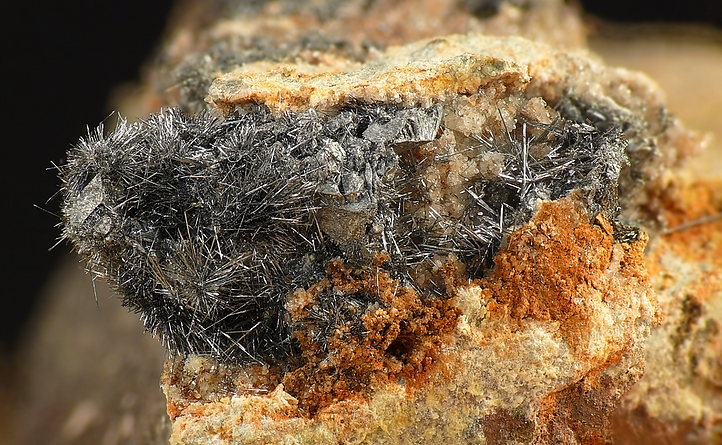
| Bismuthinite | Bi2S3 | Orthorhombic |
| Photos |
|---|