























Principles for a Safe, Peaceful, and Prosperous Future in Space
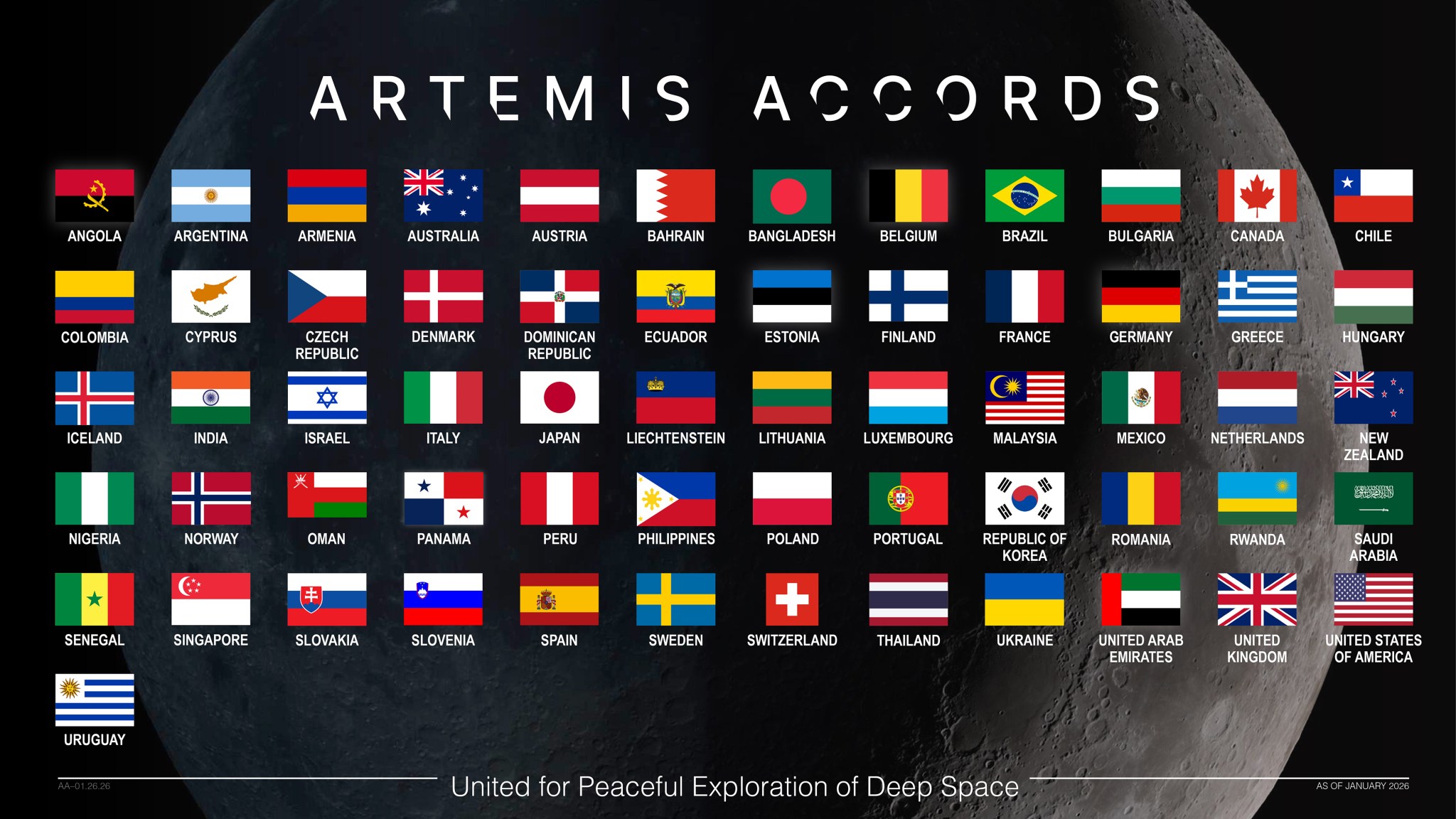
NASA, in coordination with the U.S. Department of State and seven other initial signatory nations, established the Artemis Accords in 2020. With many countries and private companies conducting missions and operations around the Moon, the Artemis Accords provide a common set of principles to enhance the governance of the civil exploration and use of outer space.
The Artemis Accords reinforce the commitment by signatory nations to the Outer Space Treaty, the Registration Convention, the Rescue and Return Agreement, as well as best practices and norms of responsible behavior for civil space exploration and use.


Read the Artemis Accords
(1MB PDF)
Artemis Accords in Translation
(1 MB PDF) (Arabic, Chinese, French, Russian and Spanish)
Artemis Accords Method of Operation
(40KB PDF}
List of the Signatories by Date
(36KB PDF)
Read the Original NASA News Release
NASA, International Partners Advance Cooperation with First Signings of Artemis Accords
Peaceful Purposes

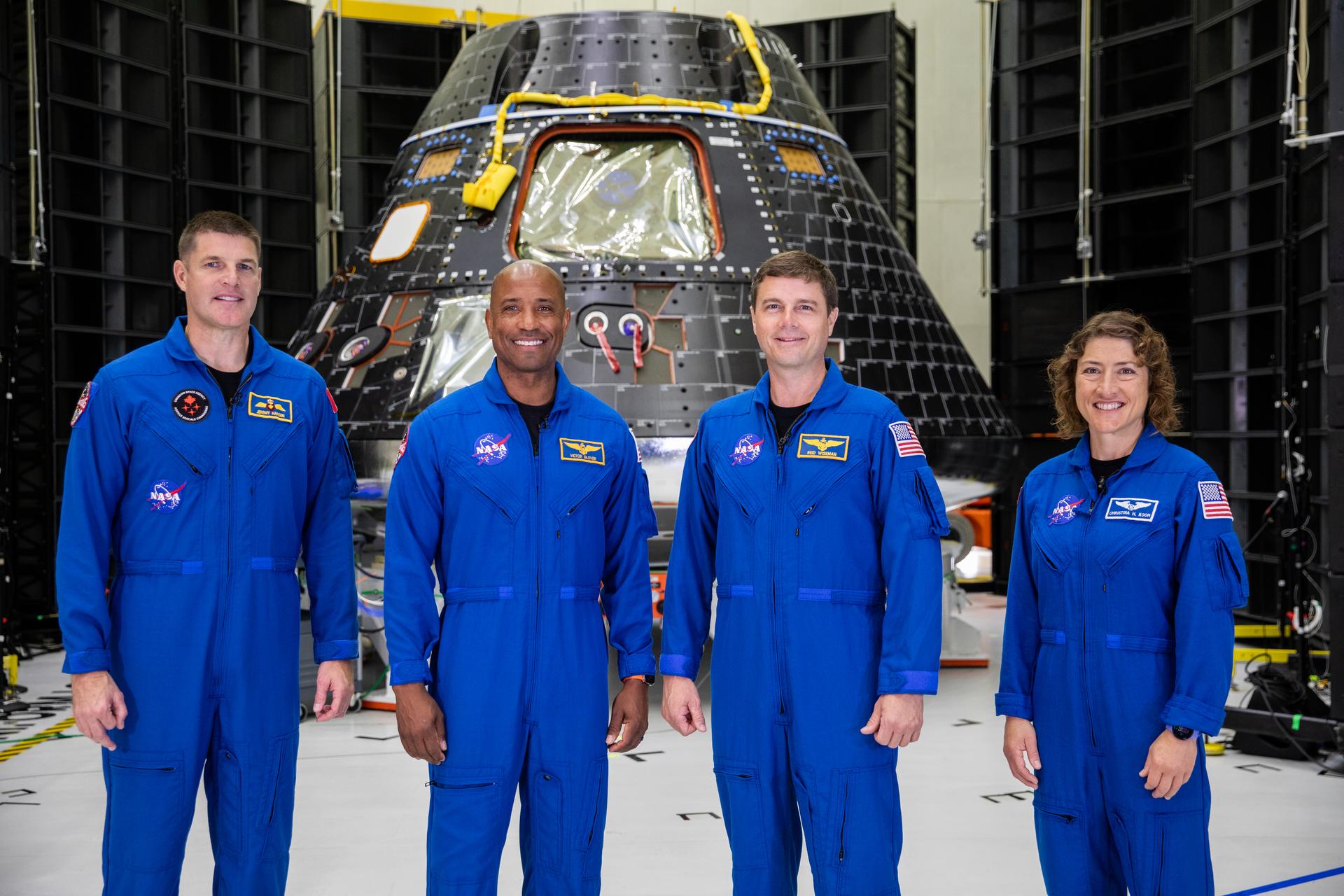
International cooperation in space is intended not only to bolster space exploration but to enhance peaceful relationships between nations.
Therefore, at the core of the Artemis Accords is the affirmation that cooperative activities should be exclusively for peaceful purposes, consistent with the Outer Space Treaty.
Transparency


Transparency is a key principle of responsible civil space exploration, and NASA has always taken care to publicly describe its policies and plans.
The Artemis Accords signatories are committed to upholding this principle by broadly disseminating information regarding their own national space policies and space exploration plans.
Interoperability


Interoperability of systems is critical to ensure safe and robust space exploration.
Therefore, the Artemis Accords signatories commit to use reasonable efforts to utilize current interoperability standards, to develop new standards when necessary, and to follow such standards.
Emergency Assistance


Providing emergency assistance to those in need is a cornerstone of any responsible civil space program.
Therefore, the Artemis Accords signatories commit to taking all reasonable efforts to render necessary assistance to astronauts in distress, and the signatories reaffirm their obligations under the Rescue and Return Agreement
Registration of Space Objects


Registration is at the very core of promoting safety and sustainability in space activities. Appropriate registration of space objects can help to facilitate consultation and coordination, where appropriate, to avoid harmful interference among activities.
The Artemis Accords reinforce the critical nature of registration and signatories commit to coordinate regarding registration for cooperative activities involving space objects.
Release of Scientific Data


NASA has always been committed to the timely, full, and open sharing of scientific data. Artemis Accords signatories commit to the open sharing of scientific data and plan to release scientific results publicly so that people around the world can benefit from the journey of exploration and discovery.
Preserving Outer Space Heritage

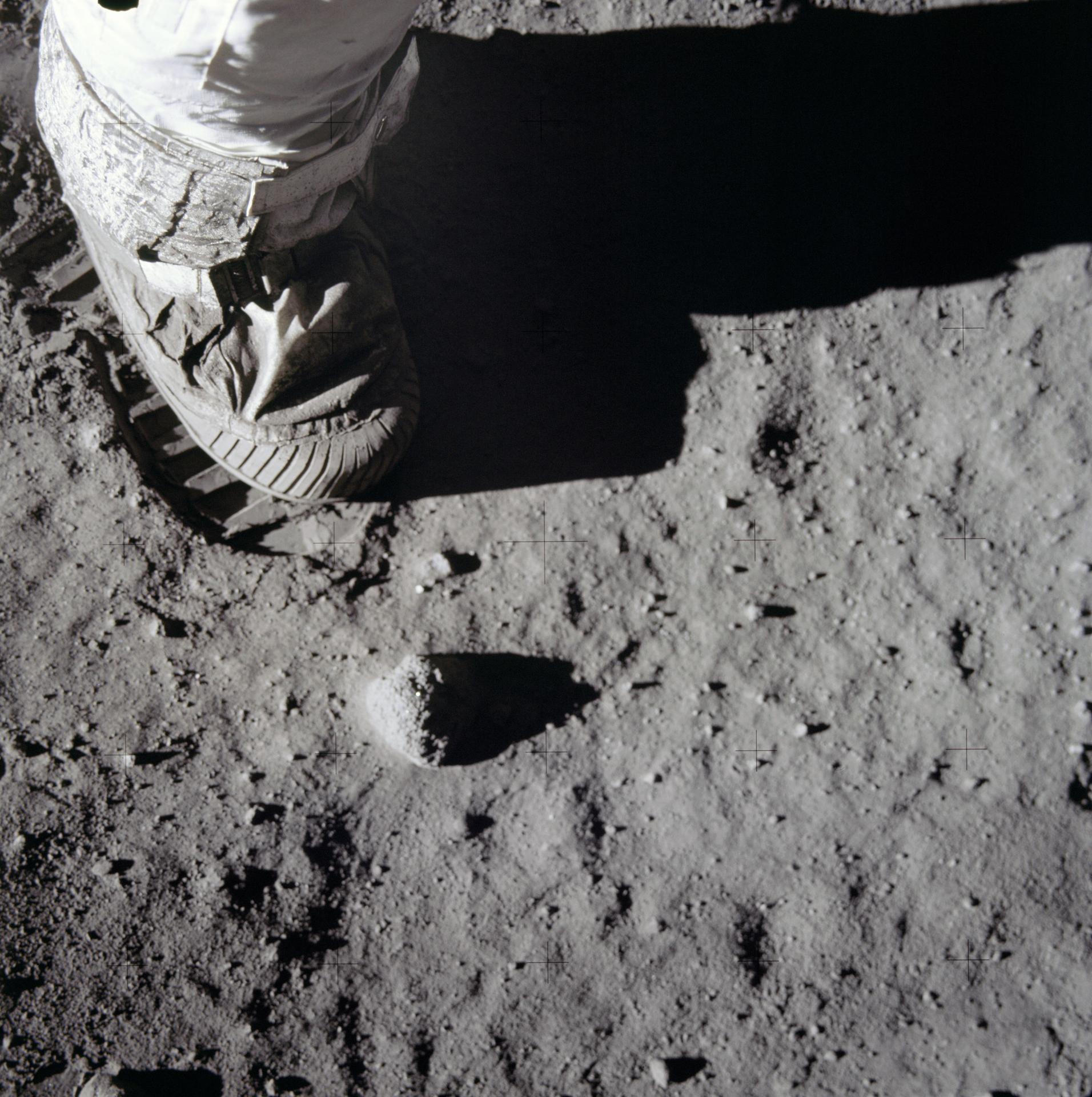
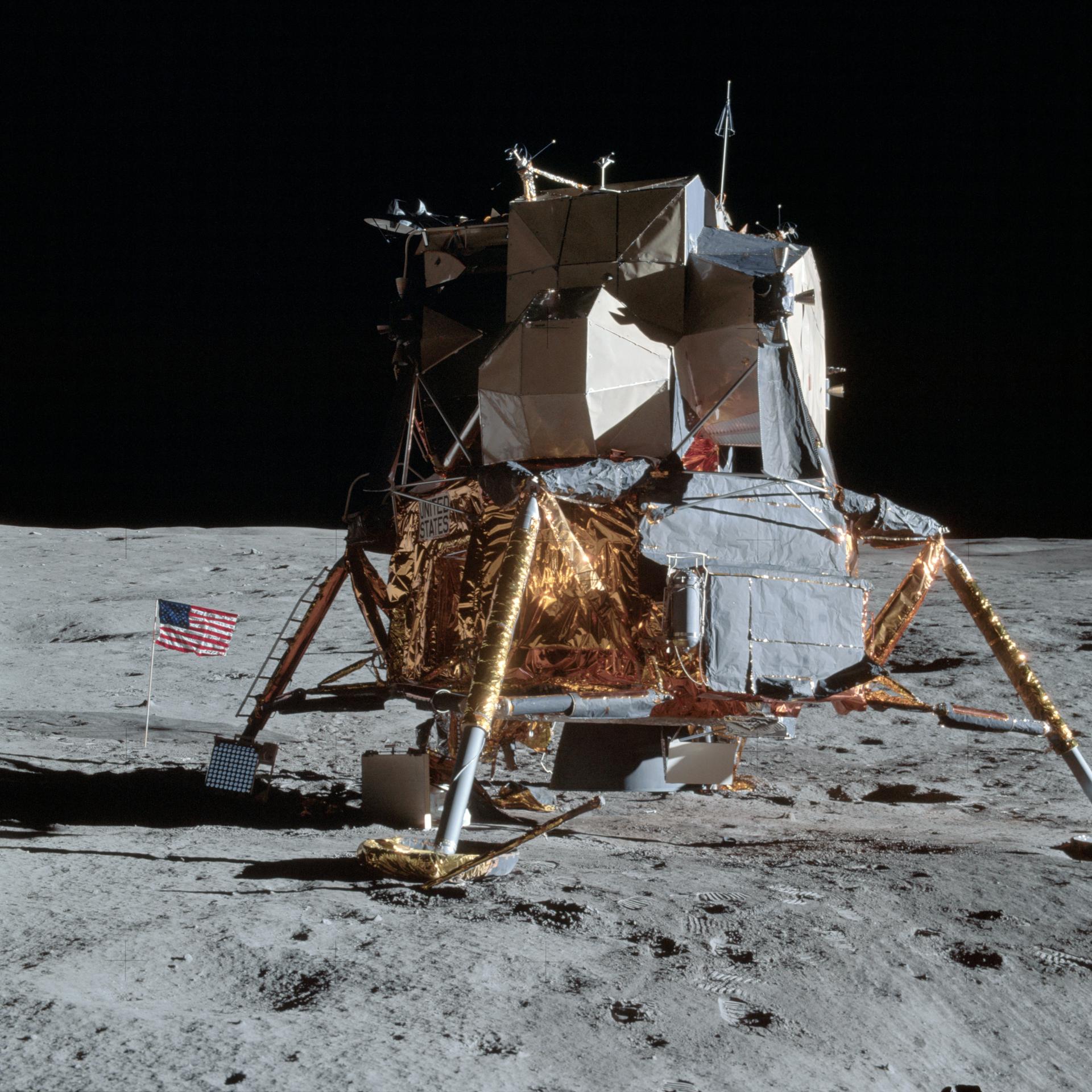
Preserving historically significant sites and artifacts will be just as important in space as it is here on Earth.
Under the Artemis Accords, signatories intend to preserve outer space heritage, including historically significant sites and artifacts.
Space Resources


The ability to extract and utilize resources on the Moon, Mars, and asteroids is critical to support safe and sustainable space exploration and development.
The Artemis Accords reinforce that space resource extraction and utilization can and should be executed in a manner that complies with the Outer Space Treaty and in support of safe and sustainable space activities.
Deconfliction of Space Activities


The Artemis Accords also provide for operational implementation of important obligations the Outer Space Treaty, including those related to due regard and harmful interference.
Artemis Accords signatories will provide public information regarding the location and general nature of their operations. In addition, signatories commit to seek to refrain from any intentional actions that may create harmful interference with each other’s use of outer space. They’ll do so through “safety zones”, in which signatories intend to provide notification of their activities and commit to coordinating to avoid harmful interference. The size, scope, and duration of safety zones will reflect the nature of the operations being conducted based on scientific and engineering principles. Safety zones will be temporary, ending when the relevant operation ceases. The signatories commit to respect the Outer Space Treaty principle of free access in their use of safety zones, as well as the principle of due regard.
Orbital Debris


Preserving a safe and sustainable environment in space is critical for both public and private activities.
The Artemis Accords signatories commit to plan for the mitigation of orbital debris, including the safe, timely, and efficient disposal of spacecraft at the end of their missions.
Latest News
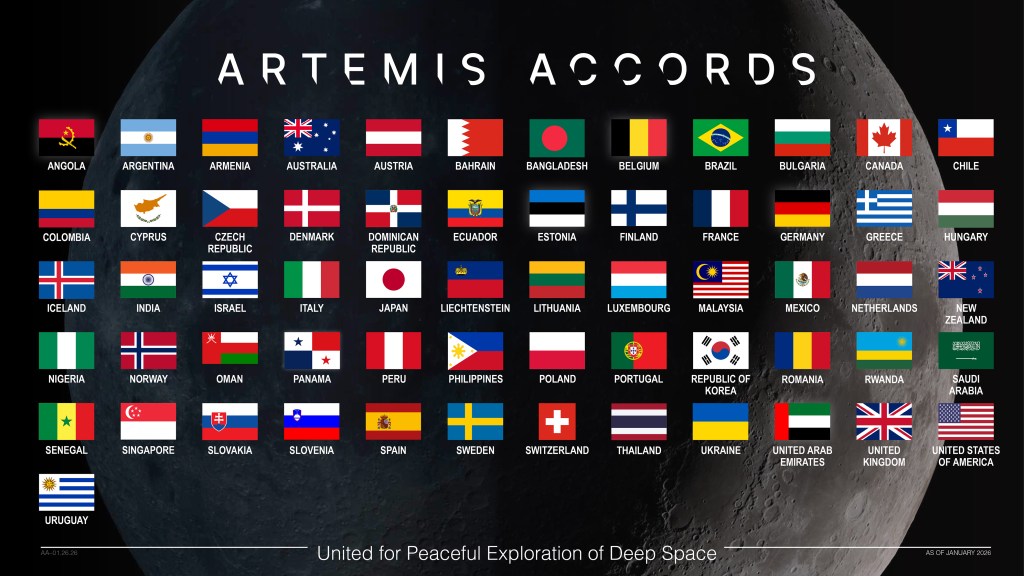
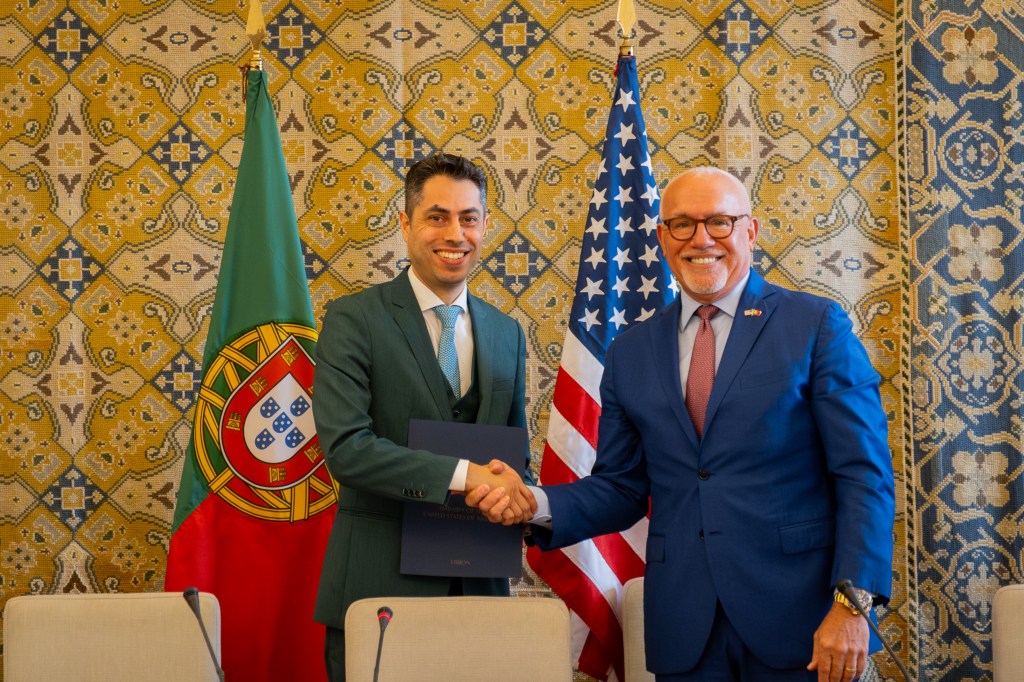


NASA Celebrates Five Years of Artemis Accords, Welcomes 3 New Nations

NASA, International Partners Deepen Commitment to Artemis Accords

NASA signs US-Australia Agreement on Aeronautics, Space Cooperation

NASA Highlights Space Innovation, Exploration at Space Conference