























Space Launch System Infographics
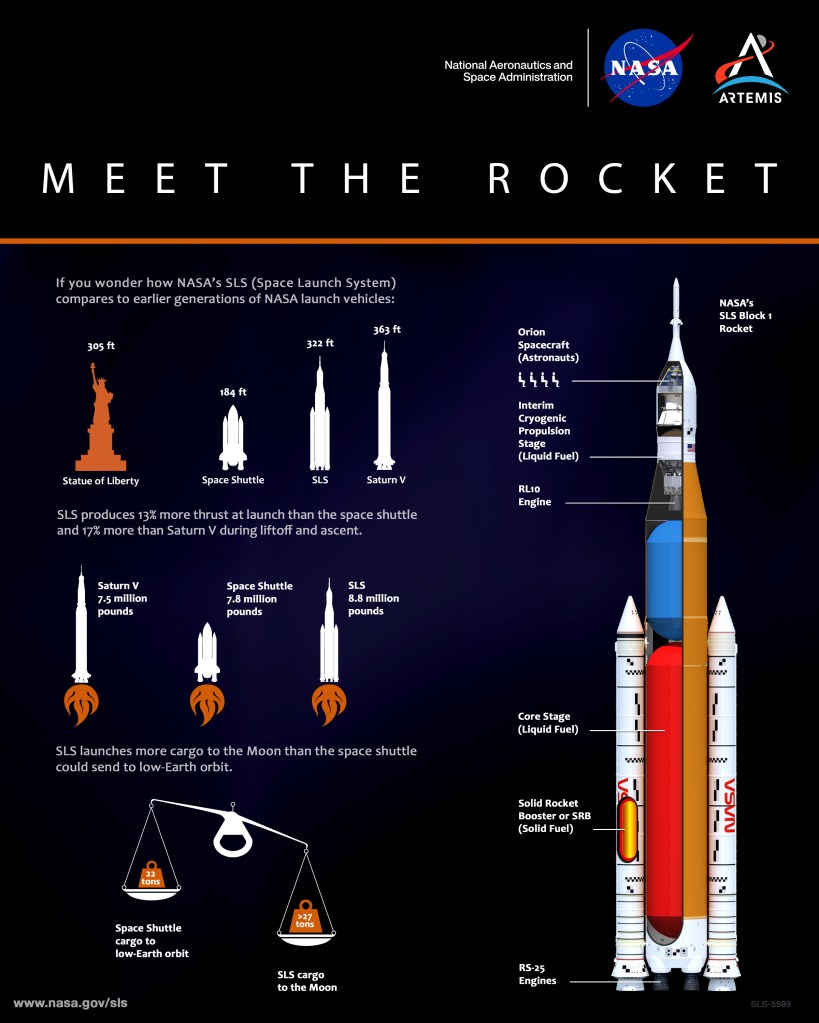
NASA’s Space Launch System (SLS), the most powerful and capable rocket NASA has ever built, will send missions farther and...
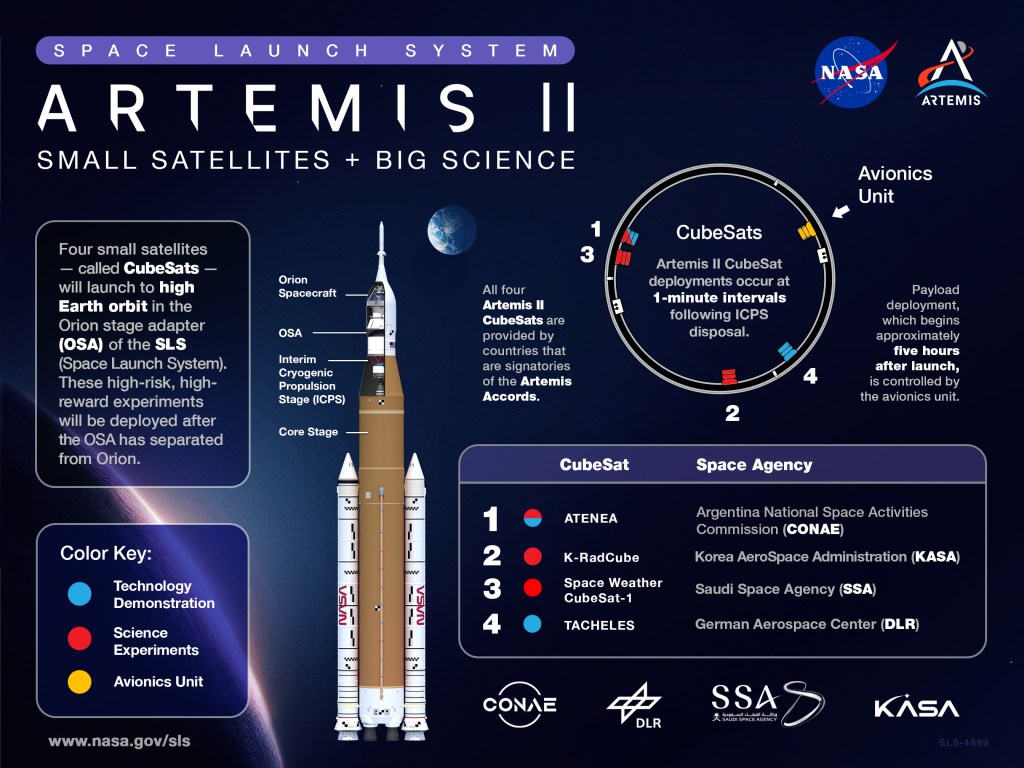
When NASA’s SLS (Space Launch System) rocket launches the agency’s Artemis II mission to the Moon, four CubeSats, or small...
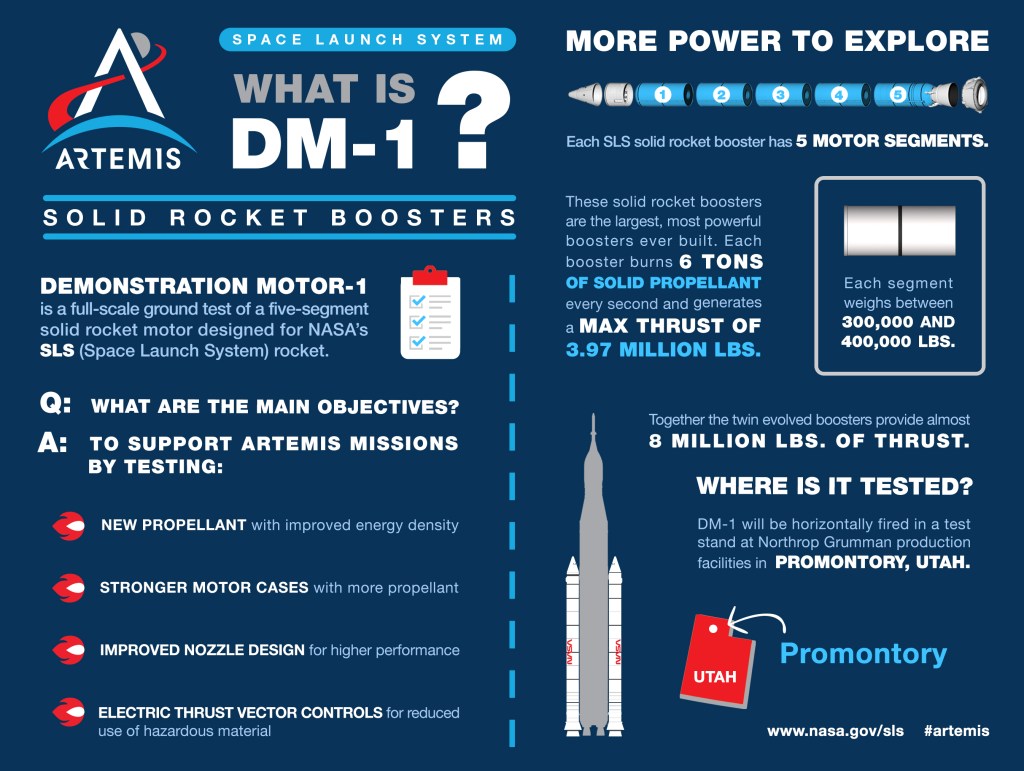
Demonstration Motor-1 (DM-1) is the first full-scale ground test of the evolved five-segment solid rocket motor of NASA’s SLS (Space...
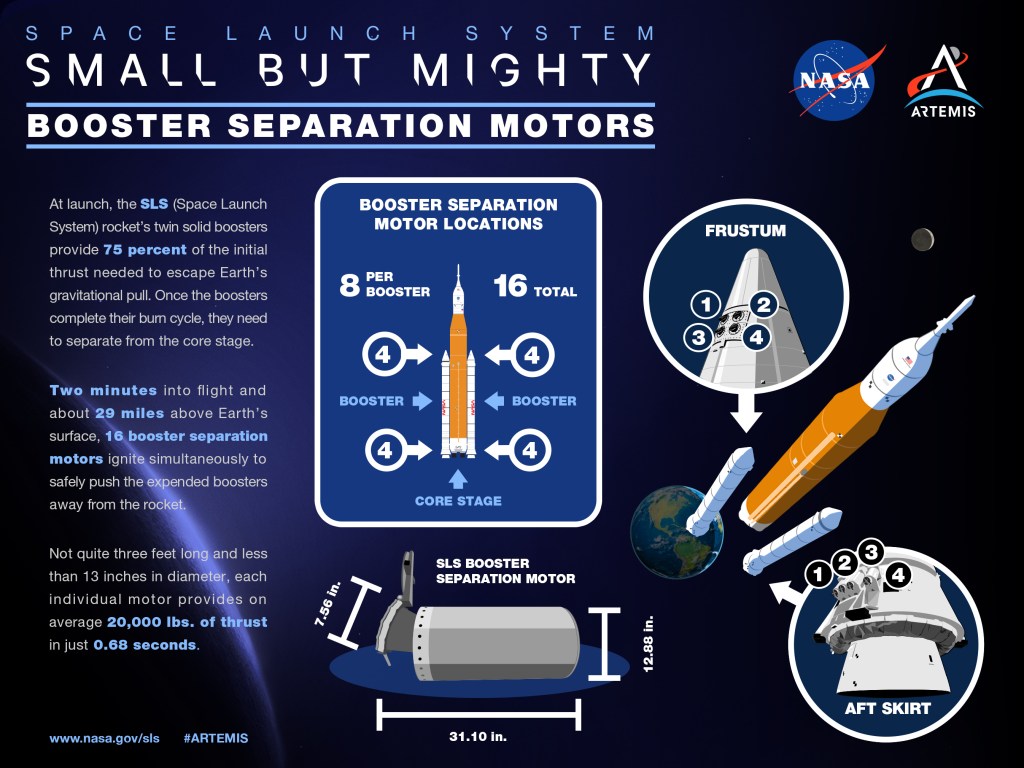
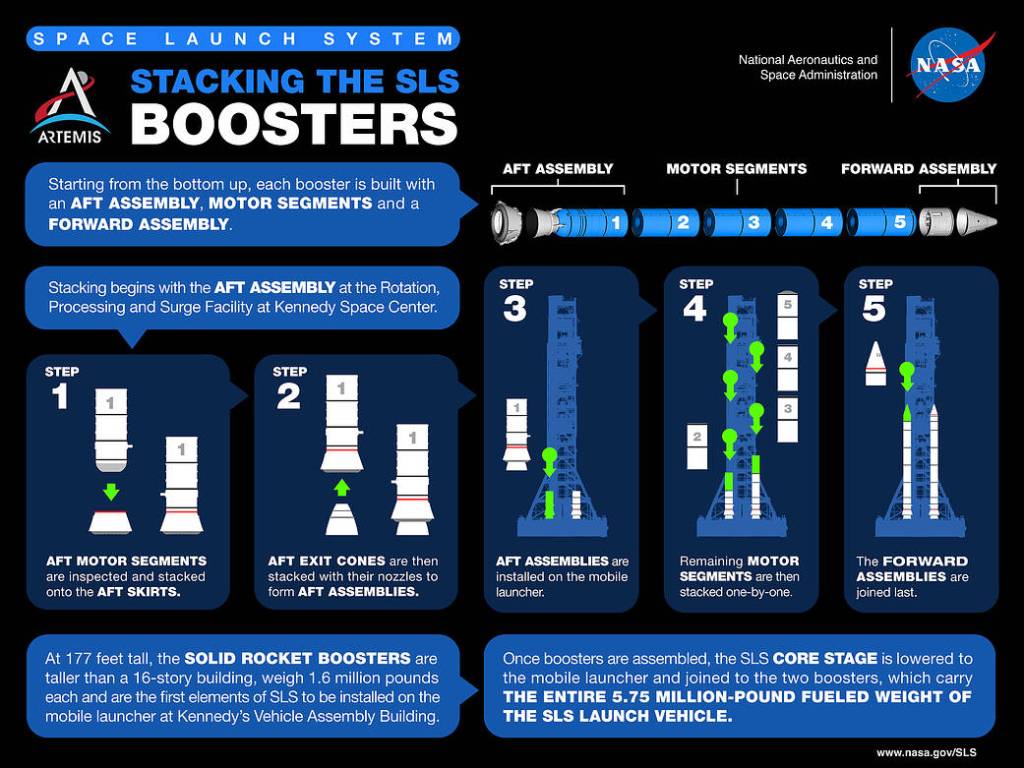
NASA’s SLS (Space Launch System) solid rocket boosters are the largest, most powerful solid propellant boosters to ever fly. Standing...
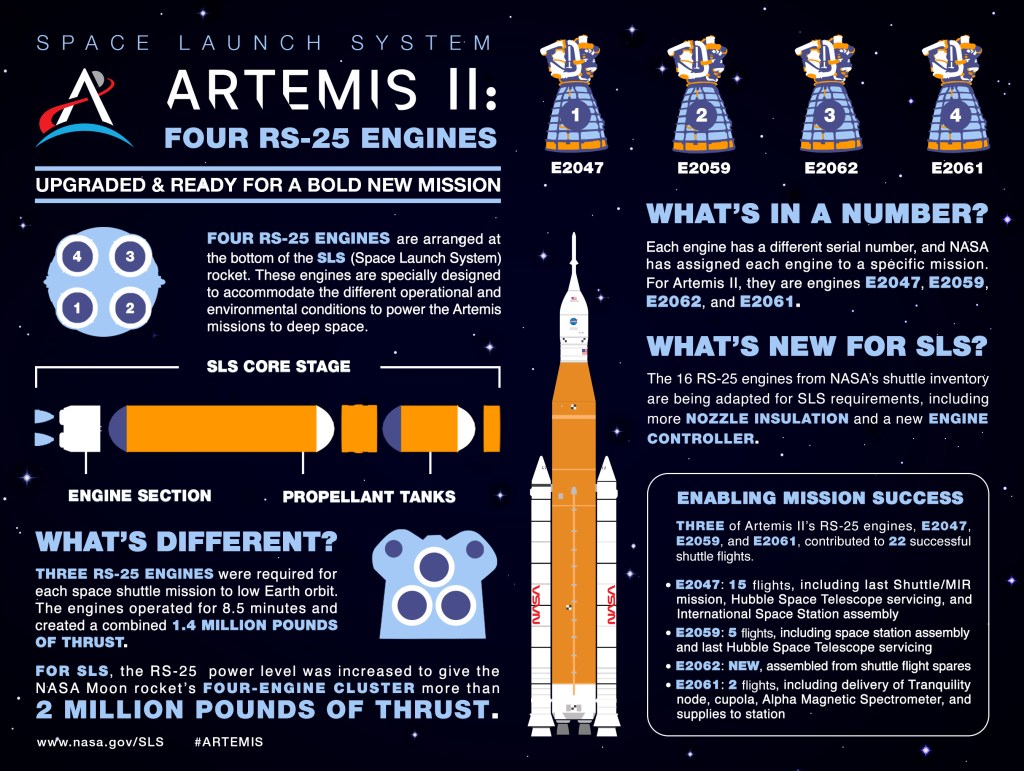
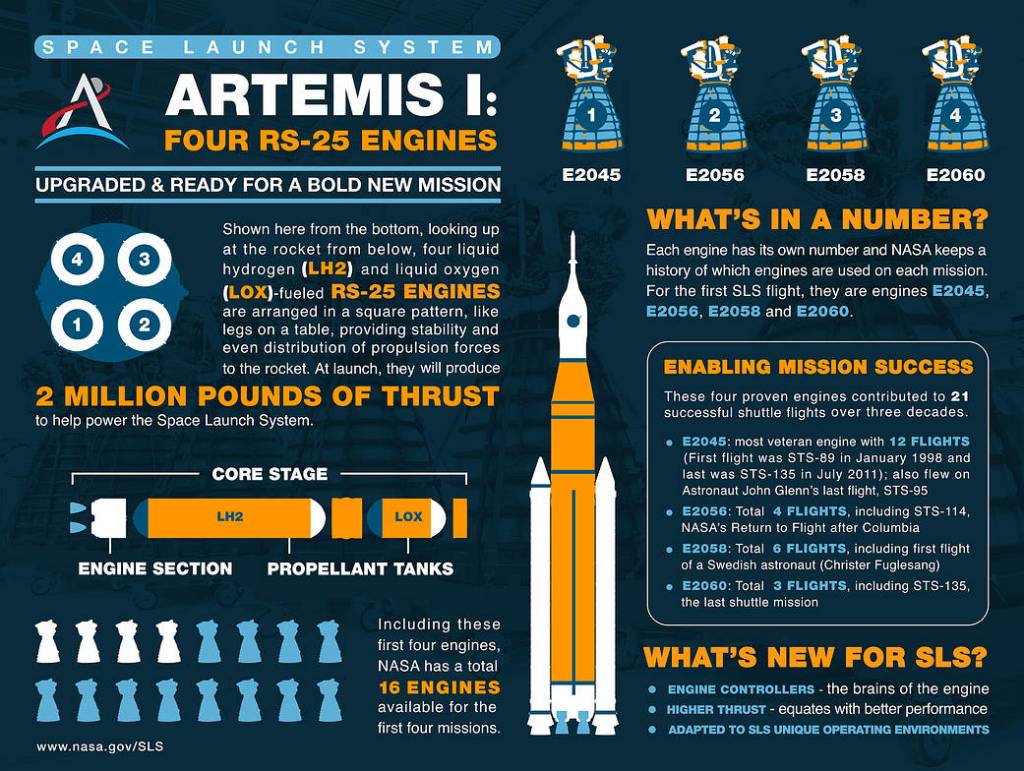
This infographic labeled “Space Launch System Artemis II: Four RS-25 Engines” depicts the four RS-25 engines that are situated on...
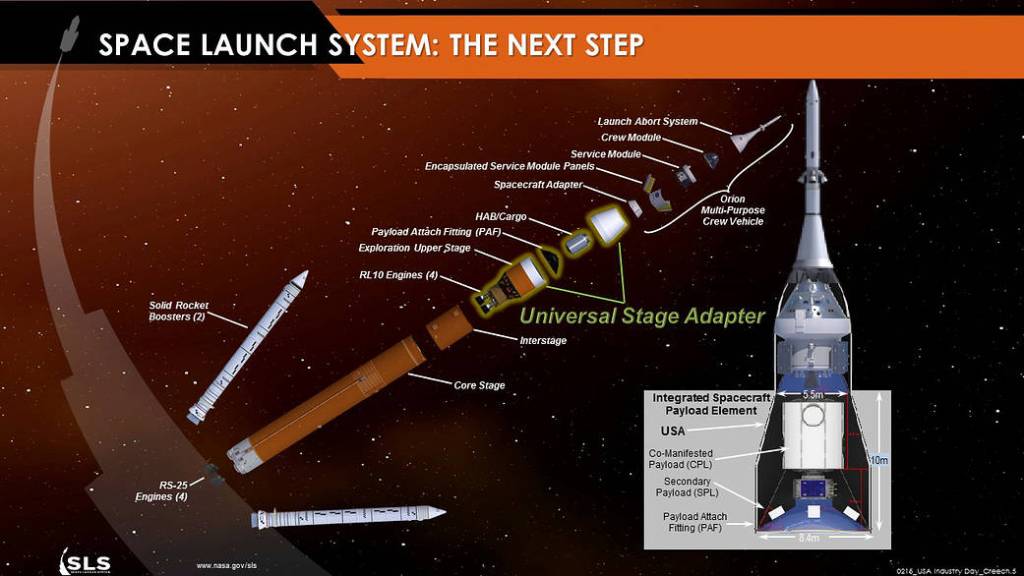
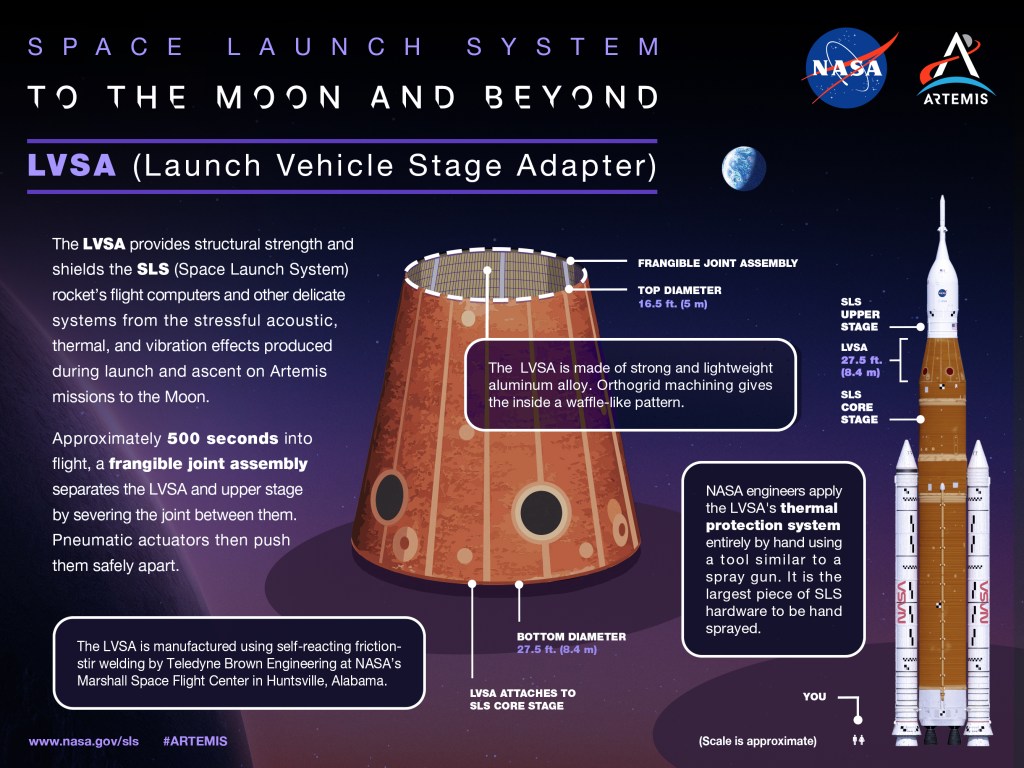
The cone-shaped launch vehicle stage adapter (LVSA) serves as a crucial connector between NASA's SLS (Space Launch System) core stage...
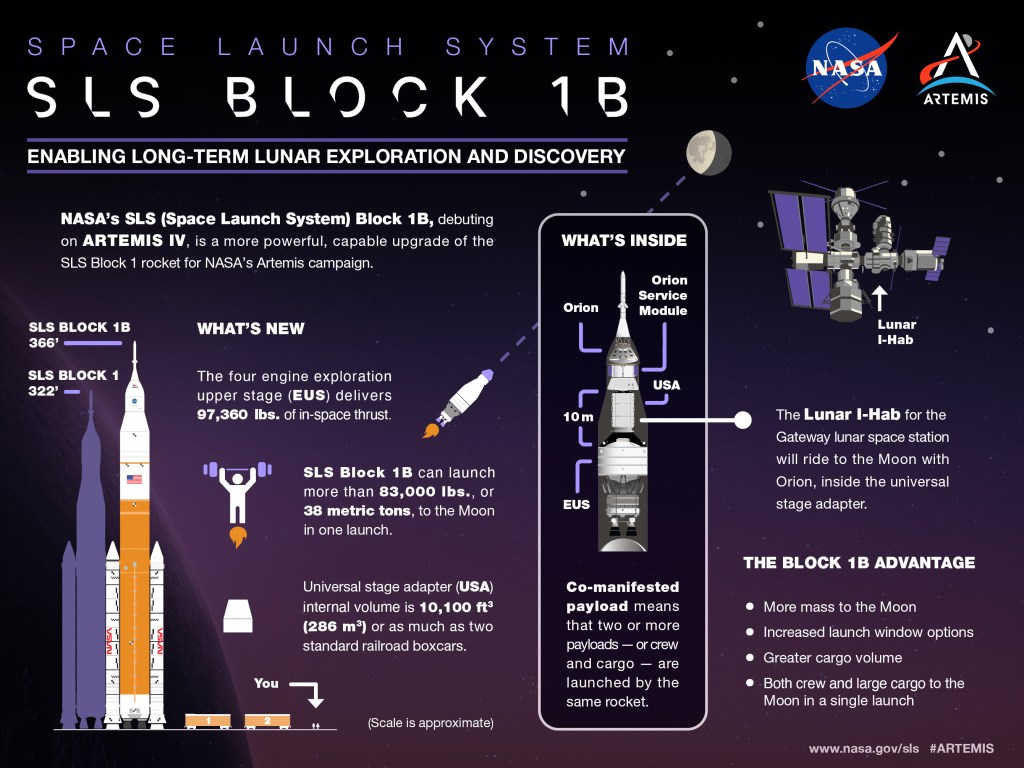
NASA’s SLS (Space Launch System) rocket in the Block 1B cargo configuration will launch for the first time beginning with...
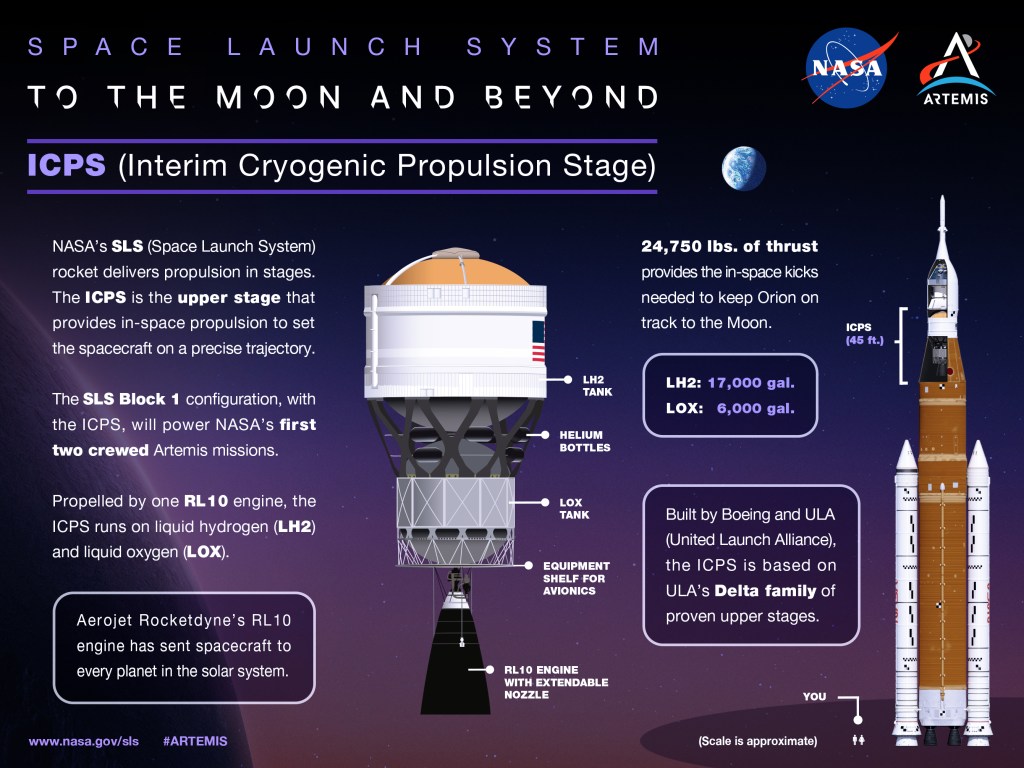
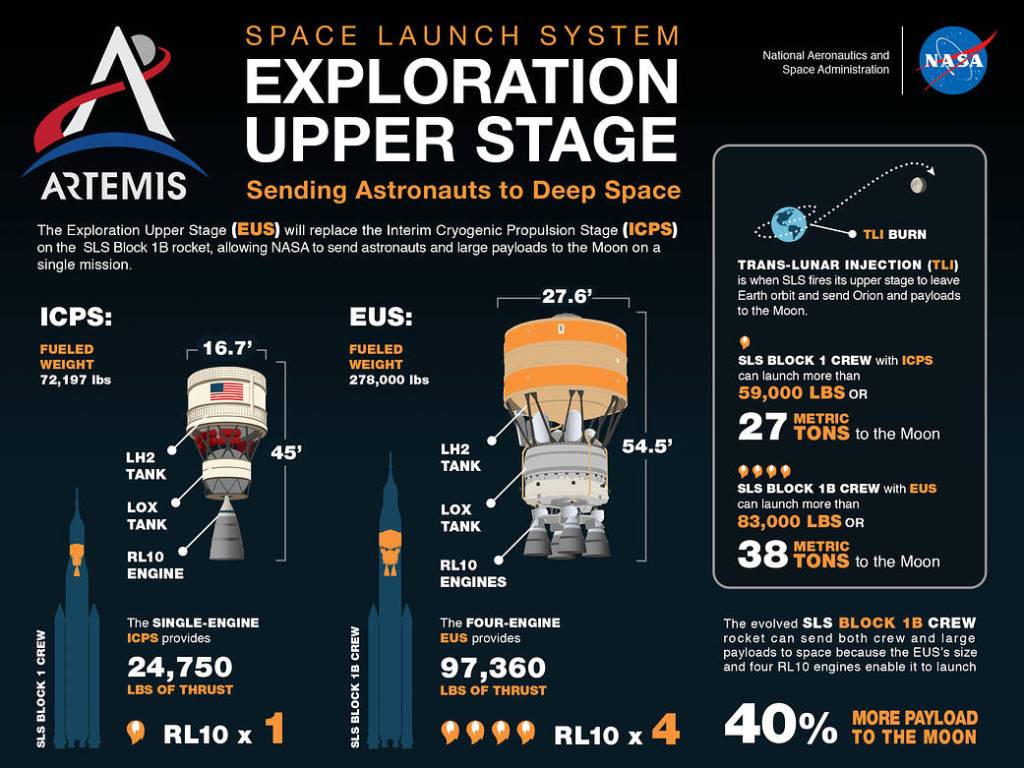
NASA’s SLS (Space Launch System) rocket’s ICPS (interim cryogenic propulsion stage), with its single RL10 engine, produces 24,750 pounds of...
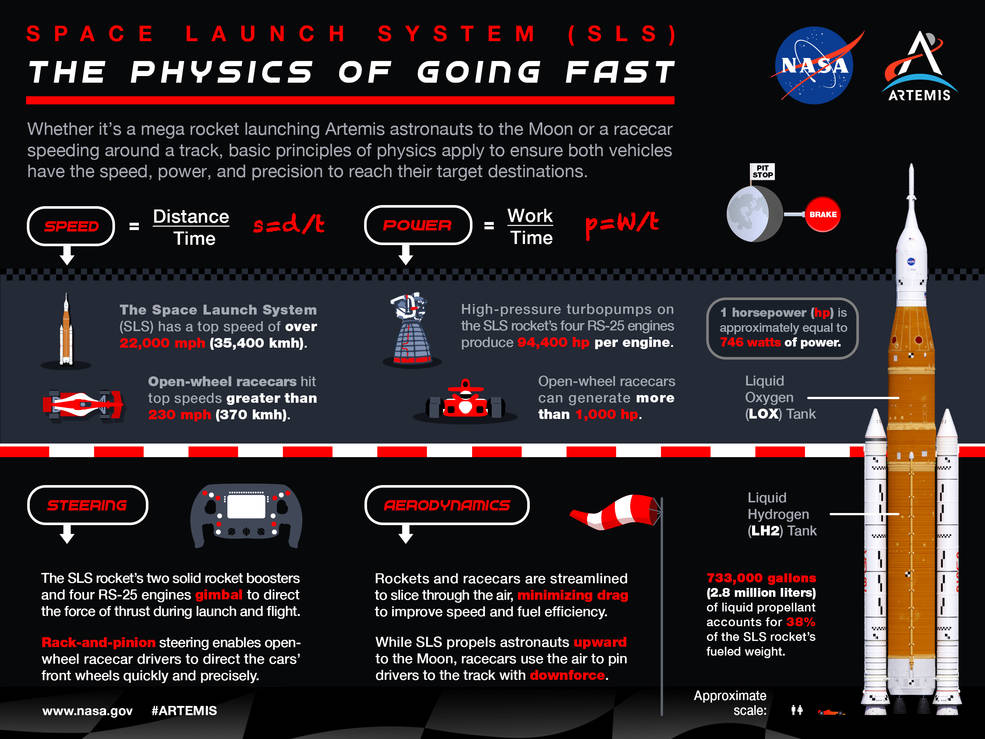
Launching mega rockets like NASA’s Space Launch System beyond low-Earth orbit and driving high-performance racecars around a track require a...
This infographic labeled “Artemis I: Visibility Range” depicts the areas that could potentially spot Artemis I after liftoff. The Space...

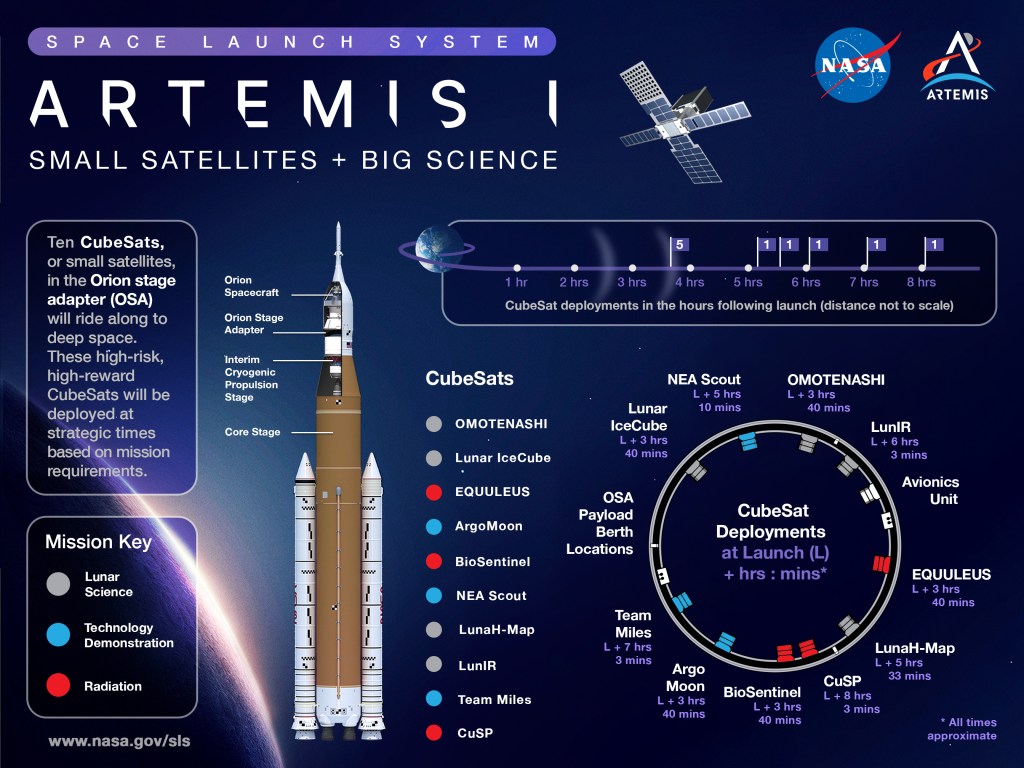
When NASA’s Space Launch System (SLS) rocket launches the agency’s Artemis I mission to the Moon, 10 CubeSats, or small...
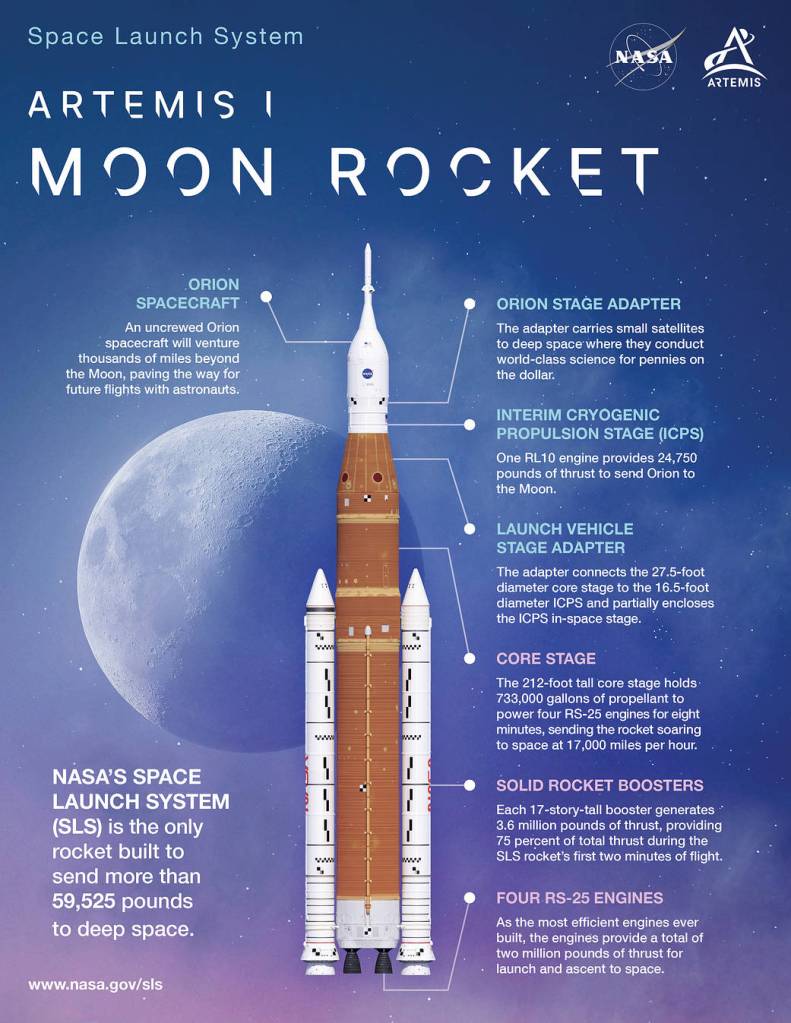
NASA’s Space Launch System (SLS) is the most powerful rocket NASA has ever built. It is the only rocket that...
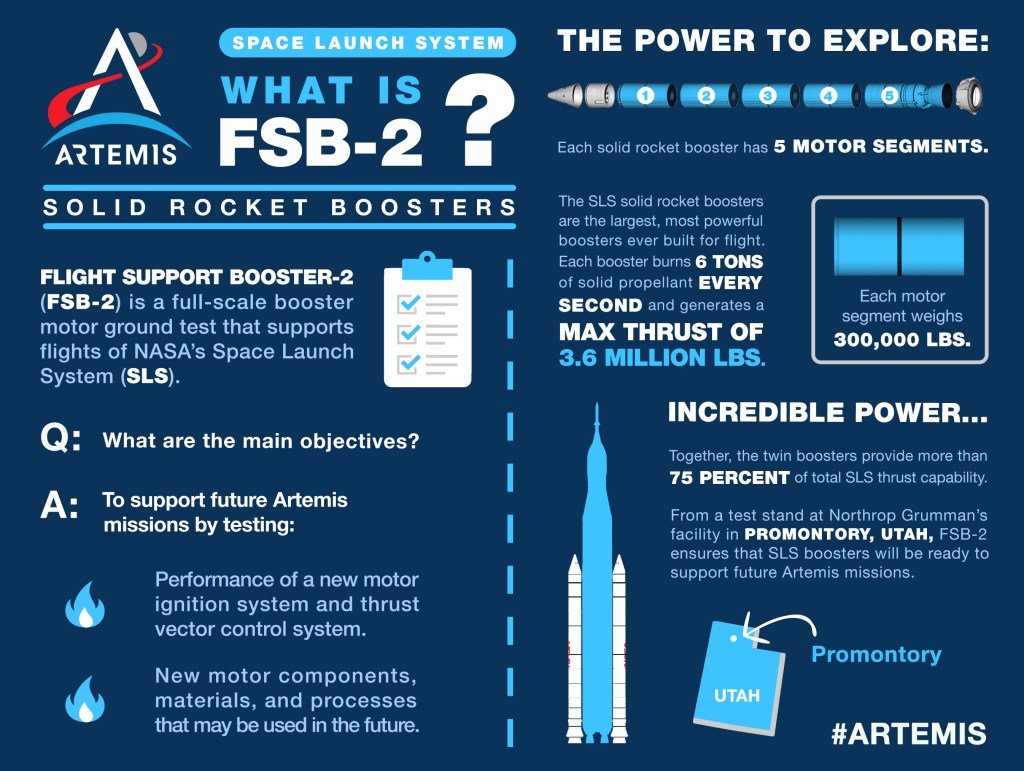
NASA and Northrop Grumman, the Space Launch System (SLS) booster lead contractor, will conduct the full-scale Flight Support Booster-2 (FSB-2)...
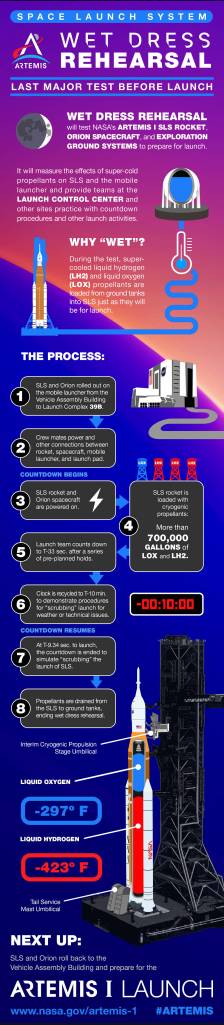
During the wet dress rehearsal, teams at NASA’s Kennedy Space Center in Florida will load cryogenic or super-cold propellants into...
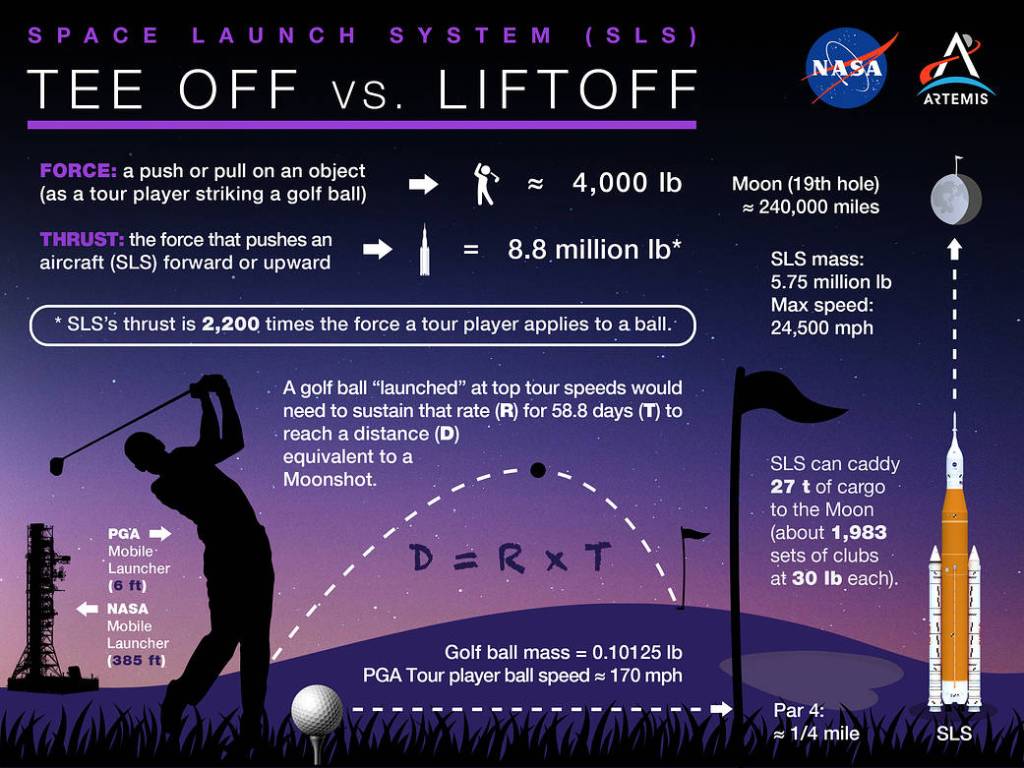
There are similarities between launching a golf ball and sending NASA’s Space Launch System (SLS) rocket on its debut Artemis...
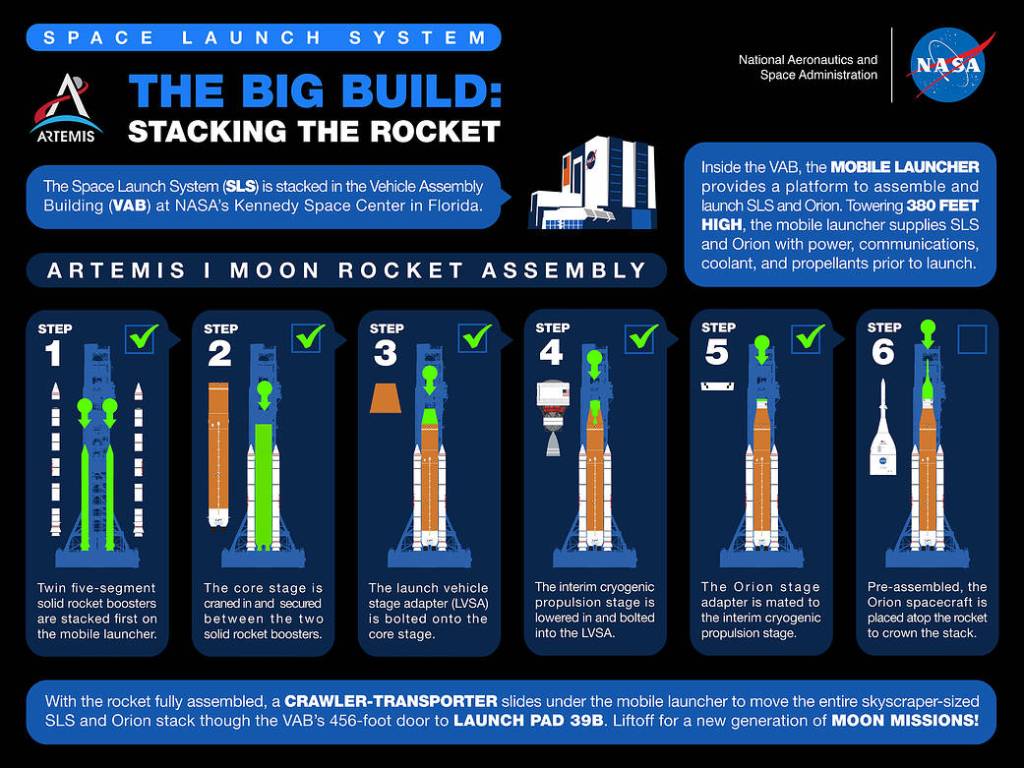
Before NASA’s Space Launch System (SLS) launches the Artemis I mission to the Moon, teams inside the Vehicle Assembly Building...
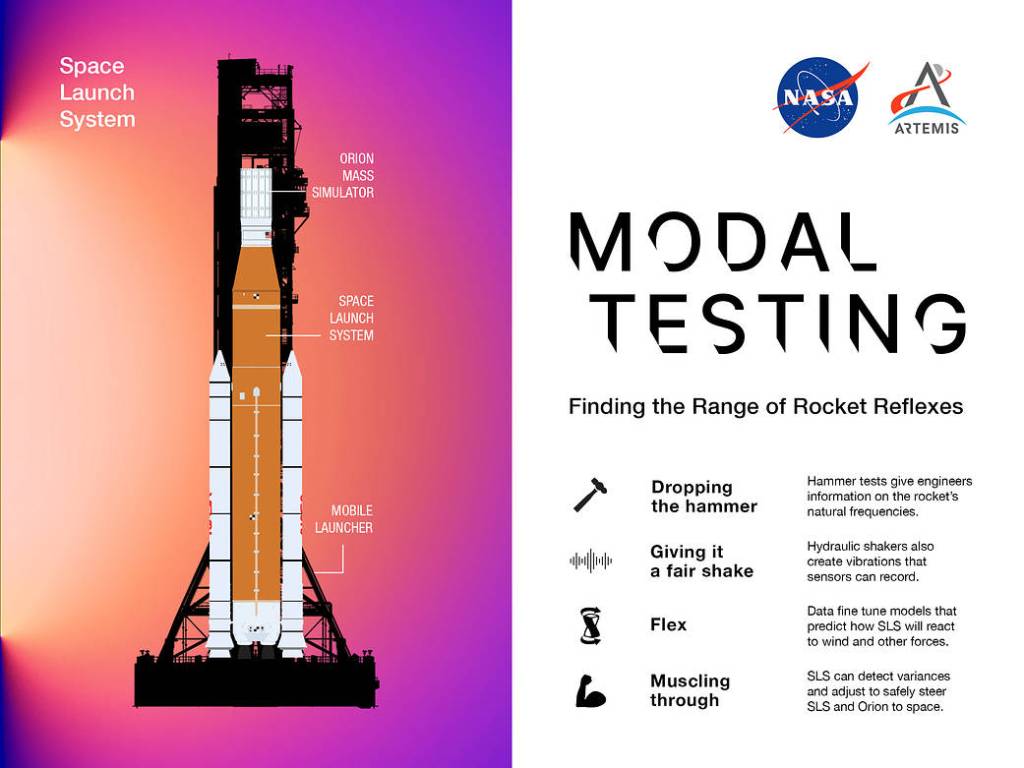
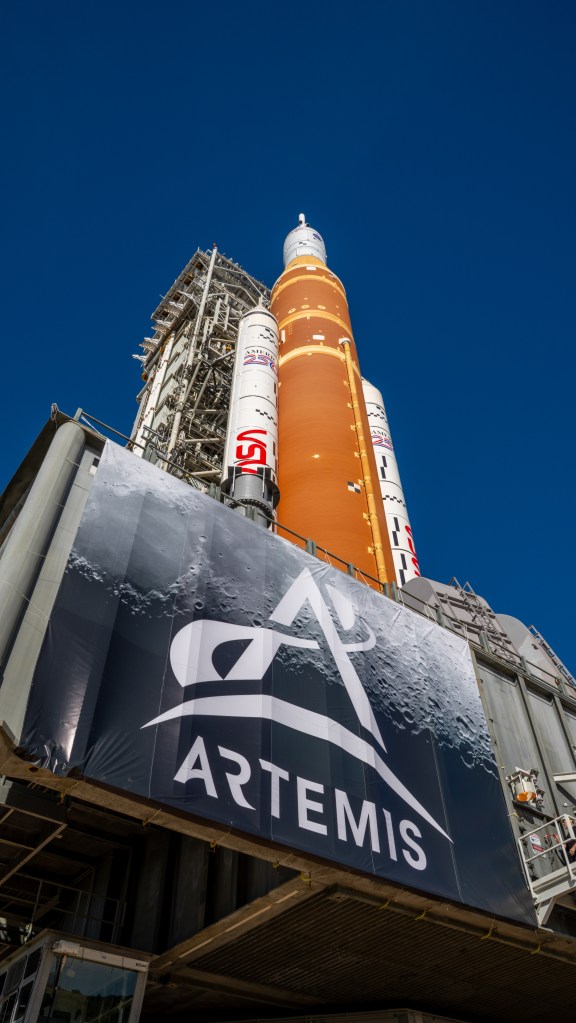
NASA’s Space Launch System (SLS) rocket is on its path to the pad for Artemis I, the first integrated mission...
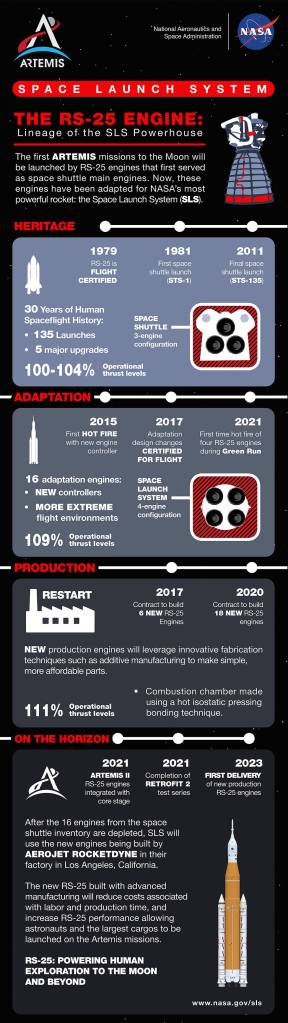
The RS-25 rocket engine, the most high-performance, staged combustion engine in the world, will burn over 700,000 gallons of super-cooled...
NASA’s Pegasus barge charts a course for the agency’s Kennedy Space Center in Florida with the Artemis I core stage...

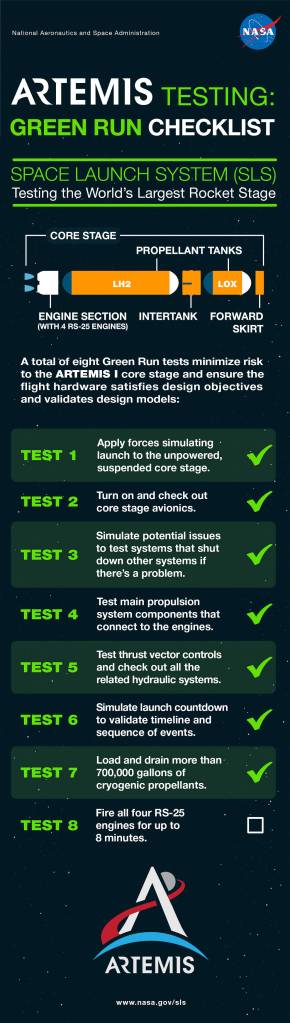
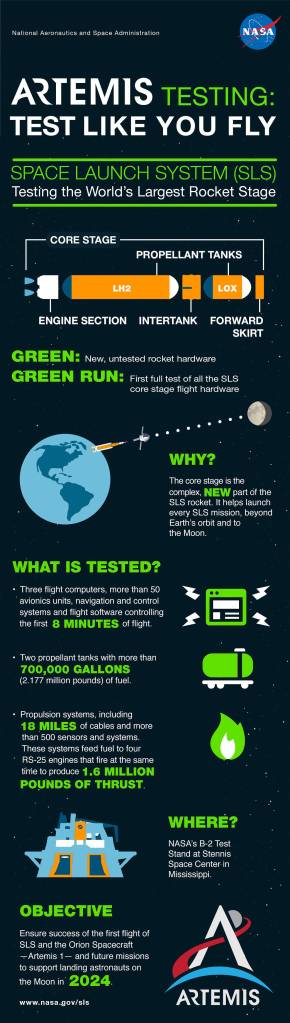
The core stage Green Run test series of NASA’s Space Launch System (SLS) rocket is currently underway. Crews installed the...

NASA’s Space Launch System Program concludes its structural qualification test campaign at NASA’s Marshall Space Flight Center in Huntsville, Alabama,...

Two 177-foot-tall solid rocket boosters help launch NASA’s Space Launch System (SLS) rocket on the Artemis missions to the Moon....
To support future flights of NASA’s powerful Space Launch System (SLS) rocket, NASA and Northrop Grumman, the SLS booster lead...

The core stage Green Run test series of NASA’s Space Launch System (SLS) rocket is currently underway. Crews installed the...
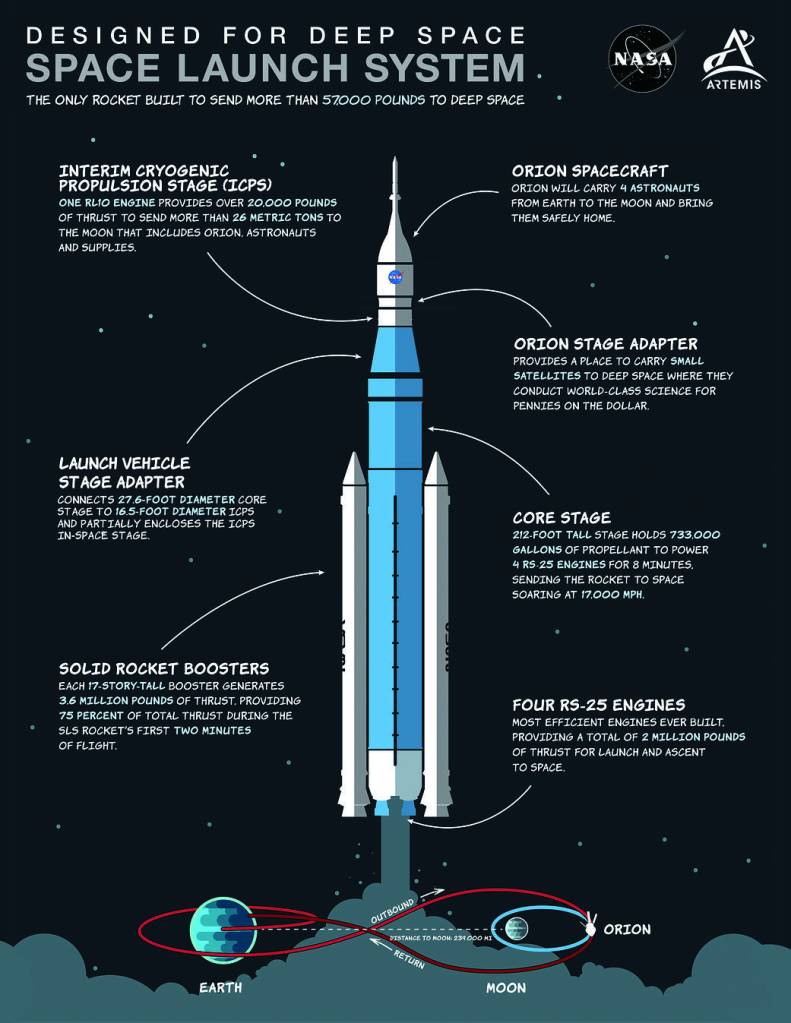
Space Launch System infographic on capabilities for deep space.
At liftoff, the core stage and twin solid rocket boosters fire to propel the rocket off the launch pad send...
Before NASA’s deep space rocket, the Space Launch System (SLS), launches from NASA’s Kennedy Space Center in Florida to send...
On June 11, technicians at NASA’s Marshall Space Flight Center in Huntsville, Alabama, started structural testing on the liquid hydrogen...

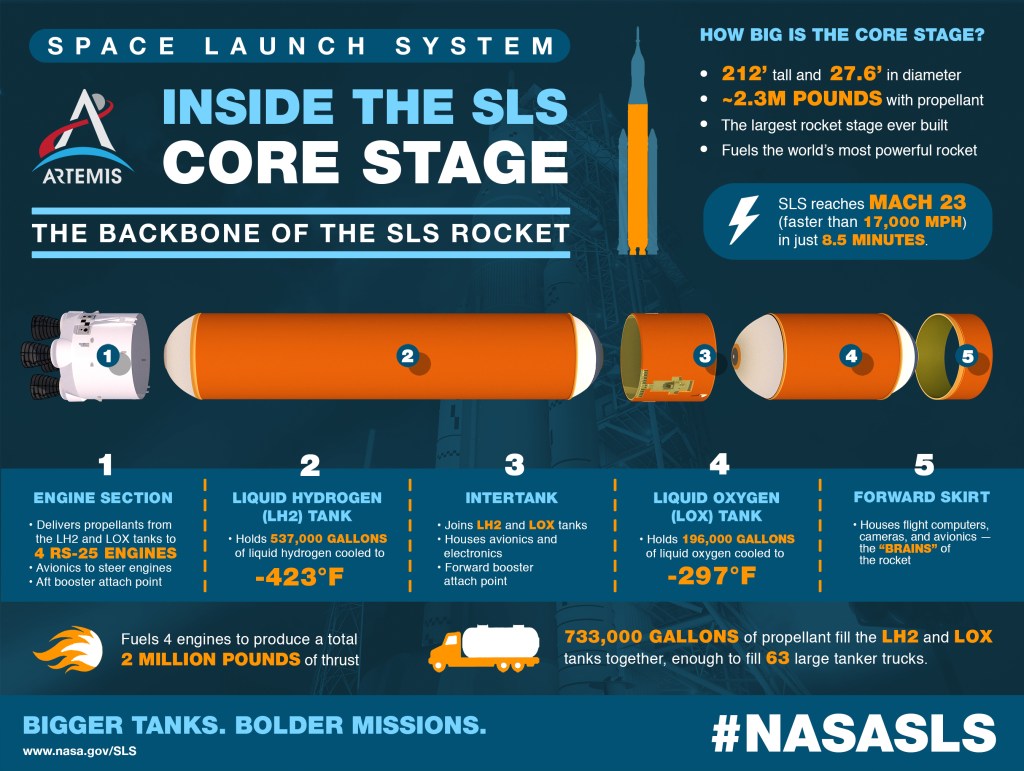
NASA’s new deep space rocket, the Space Launch System, will feature a 212-foot-tall core stage, making it the largest rocket...

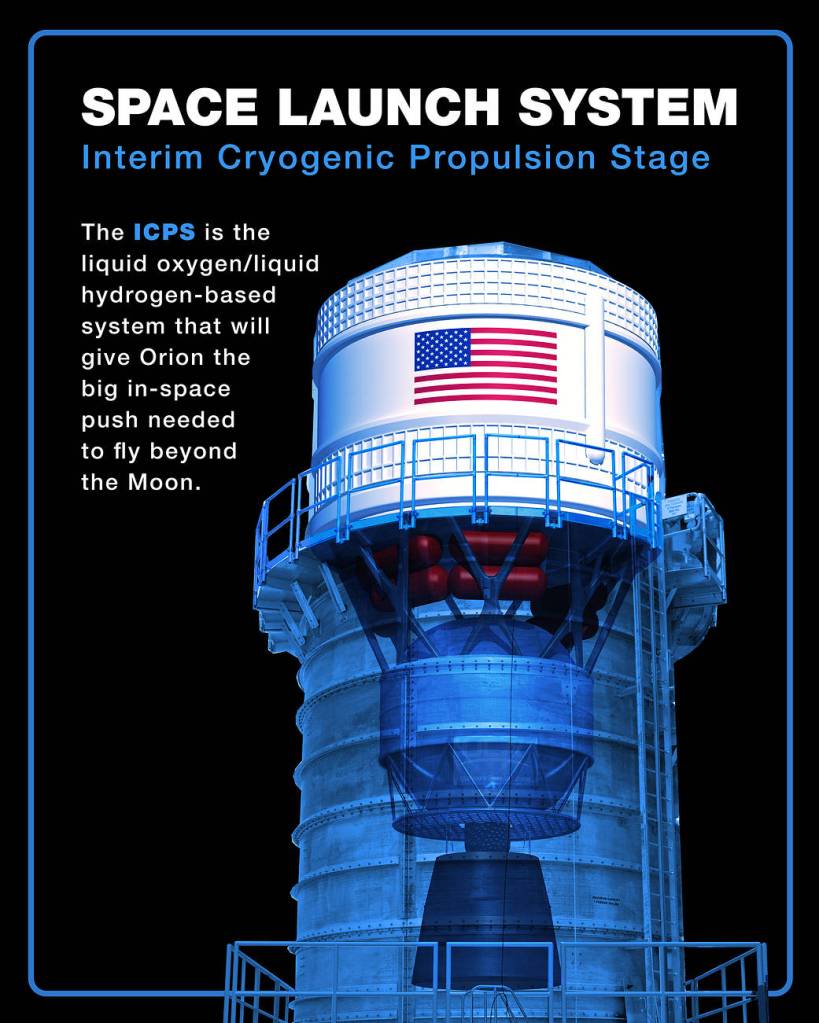
The Interim Cryogenic Propulsion Stage (ICPS) stands suspended in a silo-like structure at NASA’s Kennedy Space Center in Florida. This...
The intertank for NASA's Space Launch System core stage, the 212-foot-tall backbone of the SLS rocket, must undergo testing to...

NASA's new deep space rocket, the Space Launch System (SLS), will launch missions powered by four RS-25 engines, reliable engines...
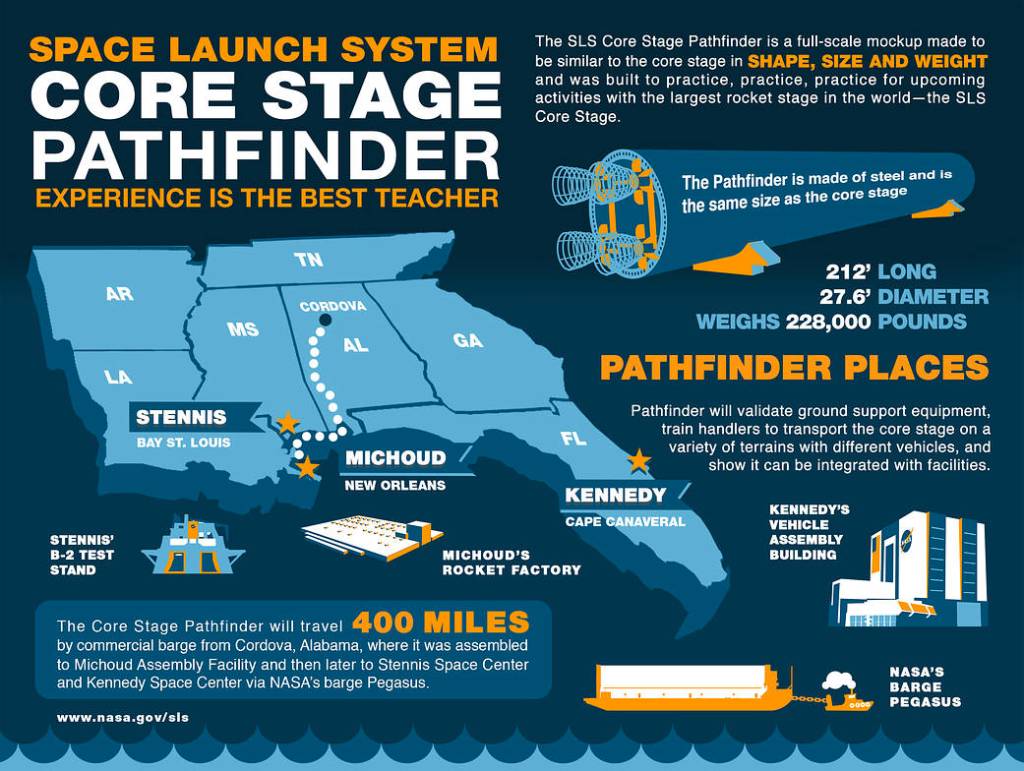
NASA’s Space Launch System core stage pathfinder is a full-scale simulator similar in size, shape and weight to the massive...
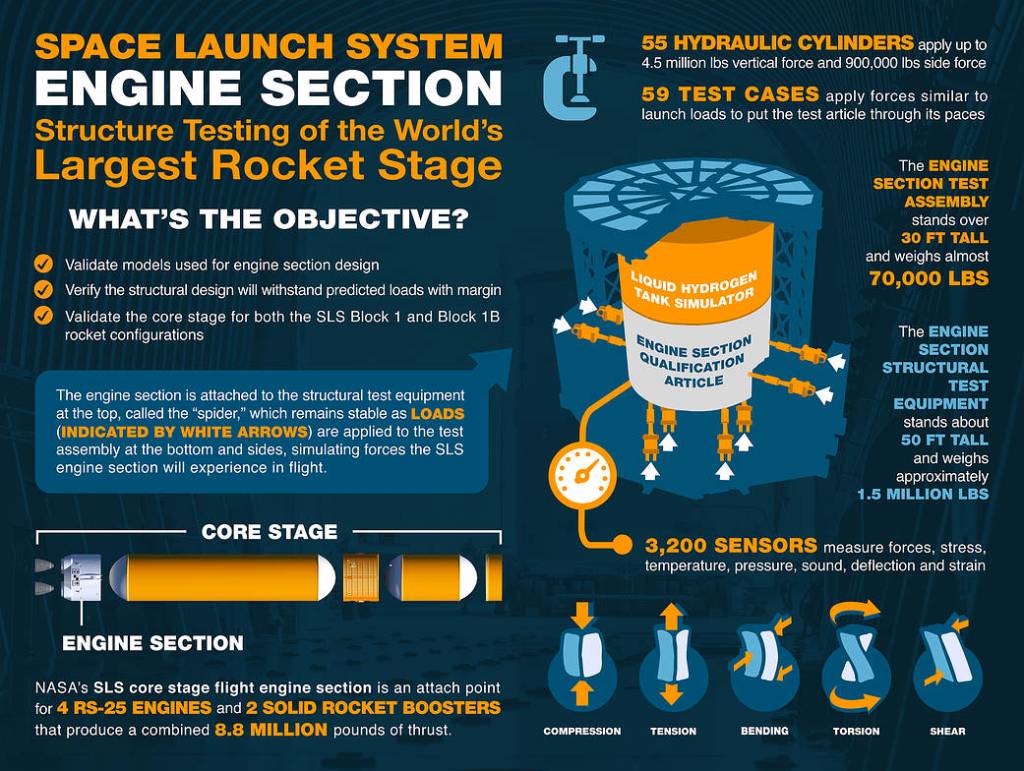
The engine section for NASA's Space Launch System core stage houses the four RS-25 engines that will produce 2 million...
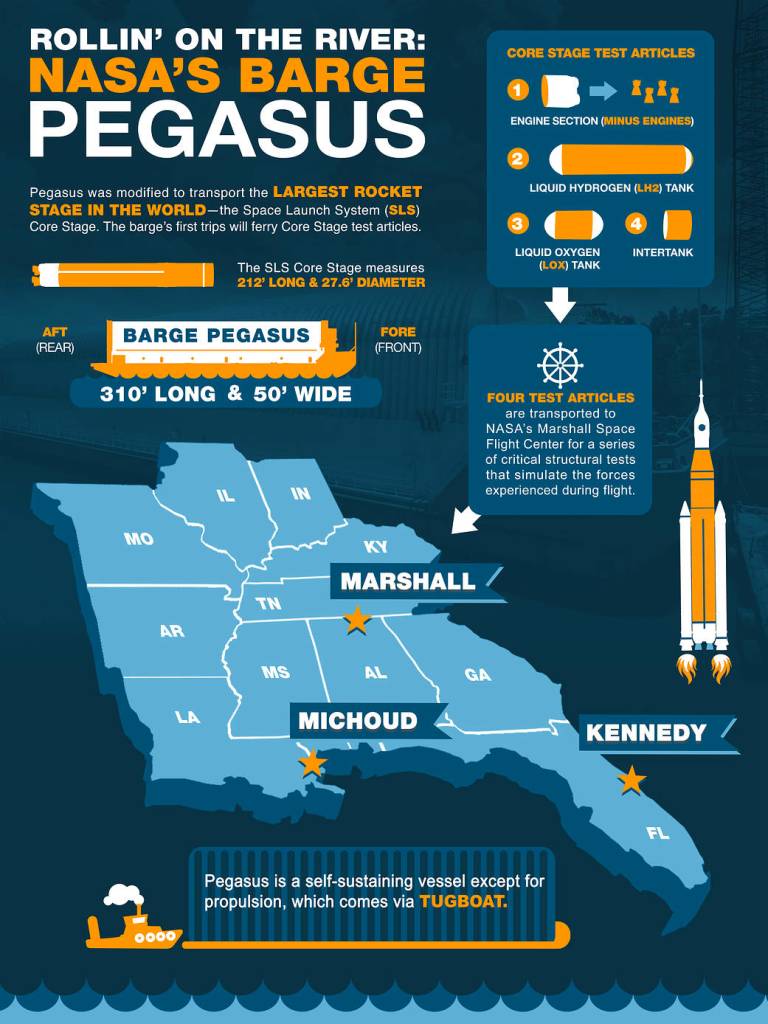
NASA’s barge, Pegasus, will ferry the massive core stage of the agency’s new rocket, the Space Launch System, on journeys...
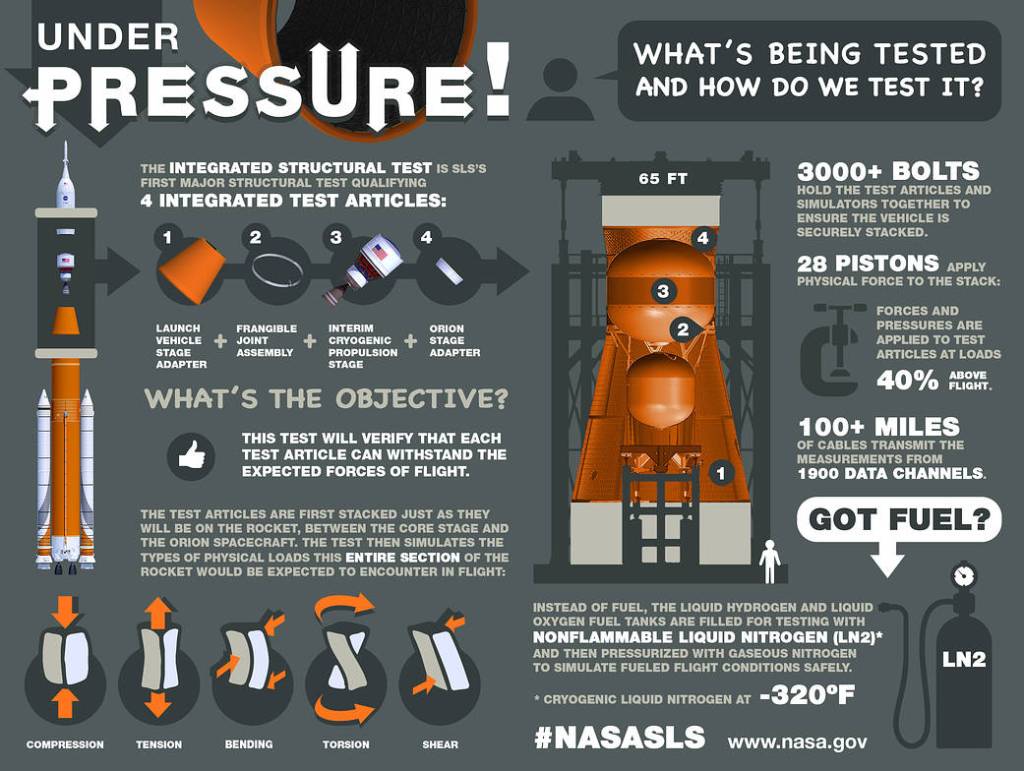
Infographic describing how the Integrated Structural Test puts “pressure” on four qualification articles of NASA’s Space Launch System.
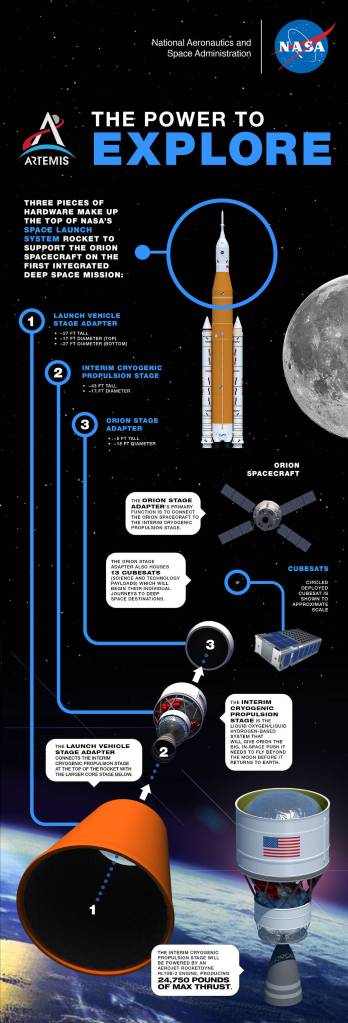
The Power to Explore infographic explains everything you need to know about the 3 important pieces of Space Launch System...
NASA’s Glenn Research Center in Cleveland is leading the design and development of the USA on behalf of the Space...