
























ESC
Orion Artemis II Optical Communications System (O2O)
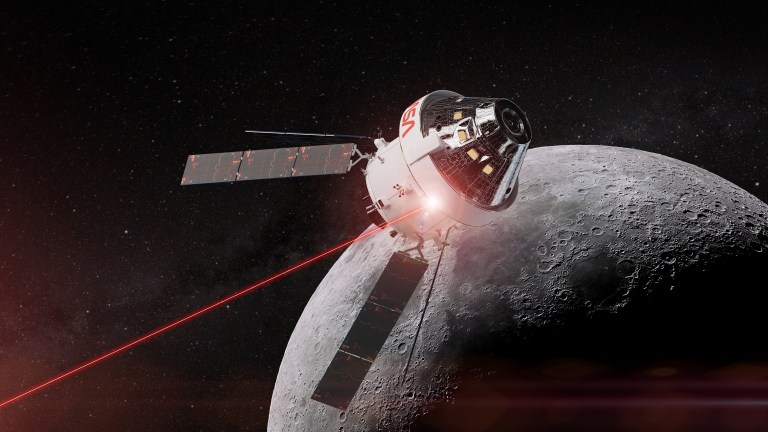
NASA’s next lunar mission, Artemis II, will host four astronauts and test new, cutting-edge technologies, including a laser communications terminal known as O2O.

O2O
Laser communications uses infrared light rather than traditional radio waves to send data to and from space. The infrared light’s higher frequency allows more data to be sent in a single transmission to Earth.
The Orion Artemis II Optical Communications System (O2O) will enable Orion to send back video and high-resolution images. Funded by the SCaN (Space Communications and Navigation) Program and under taken by the Exploration and Space Communications (ESC) projects division, O2O will transmit science data, procedures, flight plans, communications, and be a link between Orion and mission control on Earth at rates up to 260 Megabits per second.
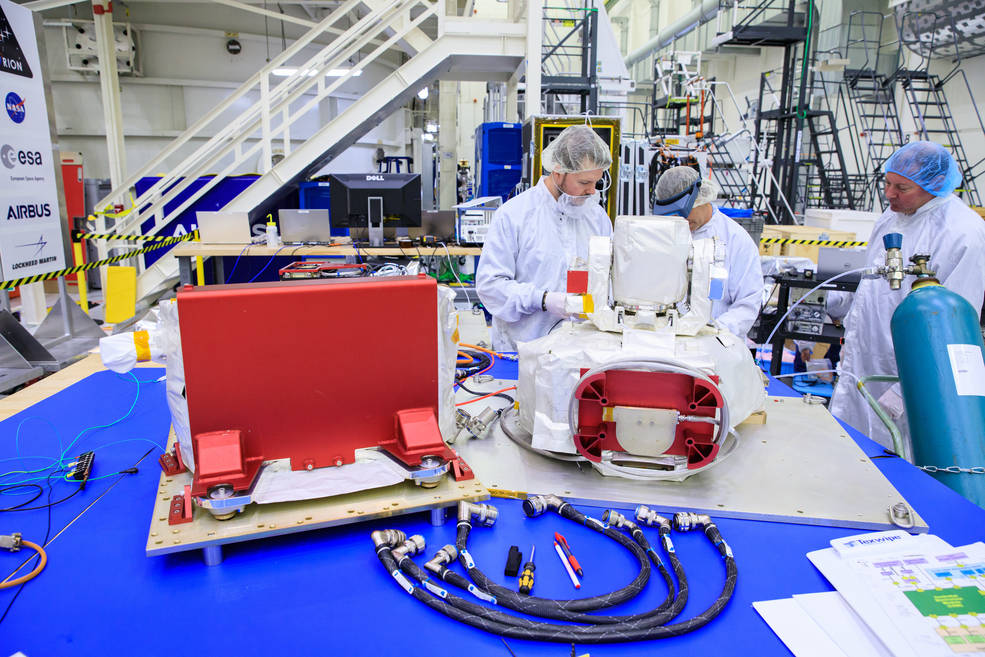
O2O Optical Module
Laser communications systems like O2O provide missions with increased data rates, meaning they can send and receive more information in a single transmission compared to traditional radio wave systems, which most NASA missions use today. More data means more discoveries.
At 260 megabits per second, O2O is capable of sending down 4K high-definition video from the Moon and more. In addition to transmitting and receiving procedures, pictures, and flight plans, O2O will be a link between Orion and mission control on Earth.
What is O2O?
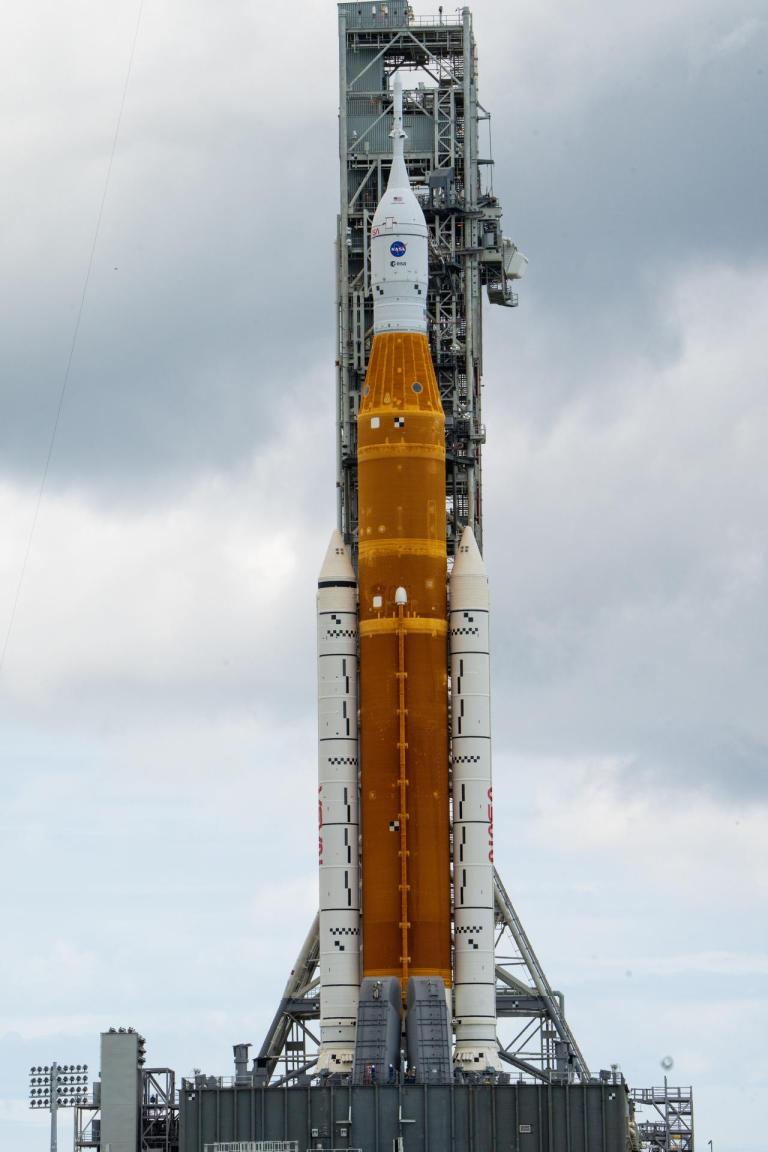
Artemis I marked a new era of lunar exploration.
In 2022, the Artemis I mission made a historic journey around the Moon – testing the Space Launch System rocket and Orion spacecraft for the first time. Upon the launch of Artemis II, O2O will demonstrate the operational utility of laser communications on human-rated missions beyond low Earth orbit. The LEMNOS Pipeline project will make Artemis II one of the first human spaceflight missions to use laser communications operationally. Laser communications' benefits for long-duration human exploration missions are immense. Not only will the new communications system offer increased data rates – enabling vast amounts of data to be transmitted to Earth more efficiently than ever before – but it will enable astronauts to connect with their families and society through 4K video and more.
The O2O payload builds on a legacy of innovative laser communications projects.
Laser communications offers reduced size, weight, and power for terminals. A smaller system leaves more room for science instruments, a weight reduction can mean a less expensive launch, and lower power allows batteries to last longer. These benefits will be crucial for future exploration and science missions where space and power are at a premium.
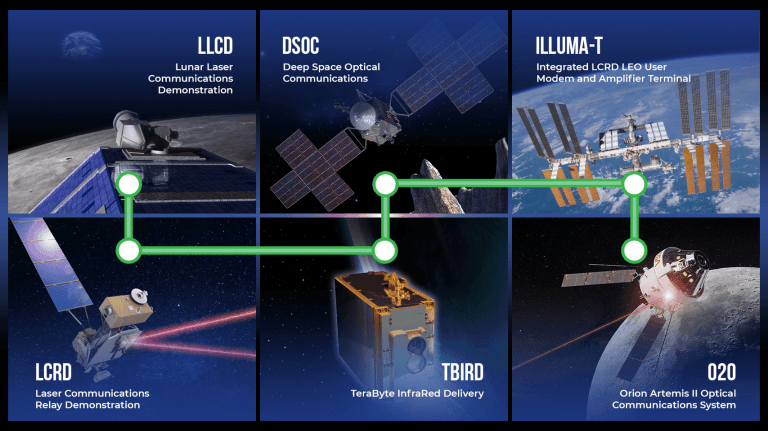
NASA is also demonstrating laser communications systems closer to Earth.
The 2021 Laser Communications Relay Demonstration (LCRD) is the agency's first two-way laser relay system, and is conducting experiments with industry, academia, and other government agencies to refine the technology. The 2022 TeraByte InfraRed Delivery (TBIRD) payload launched to low Earth orbit and is showcasing 200-gigabit-per-second data downlinks– the highest laser communications data rate ever achieved by NASA. LCRD's first in-space user will be the Integrated LCRD LEO User Modem and Amplifier Terminal (ILLUMA-T). ILLUMA-T will be hosted on the International Space Station and show how science missions in low Earth orbit can benefit from laser communications' expedited data transfer.

O2O builds on NASA's history of laser communications demonstrations.
NASA's Lunar Laser Communications Demonstration (LLCD), built at the Massachusetts Institute of Technology Lincoln Laboratory and launched in 2013, had direct applicability to O2O and its successors. The LLCD experiment proved laser communications from the Moon not only possible, but an improvement over existing radio communications systems. Flying as part of the Lunar Atmosphere Dust and Environment Explorer (LADEE) spacecraft, LLCD achieved data rates as high as 622 Megabits per second, six times higher than the best radio communications systems.
Orion Spacecraft
NASA’s Orion spacecraft is carrying humanity to the Moon. Launching atop NASA’s Space Launch System (SLS) rocket, Orion will carry the crew to lunar orbit and safely return them to Earth on Artemis missions. The LEMNOS team is dedicated to ensuring that Orion will carry the Artemis crew and their discoveries safely to the Moon and back on Earth.
Read moreMore about O2O


O2O Resources
NASA’s Next Generation >100 Gbps Optical Communications Relay
Sep 2, 2025
PDF (454.58 KB)
Optical Communications Systems for NASA’s Human Space Flight Missions
Sep 2, 2025
PDF (1.34 MB)