
Most PC products that hit the market are under some level of scrutiny, but most of the time, a lot of them come and go without a terrible amount of discussion. When a product does strike a chord with consumers though, it sticks like old thermal paste, especially if the response is negative. All publicity isn't necessarily good publicity with regard to PC products, and these five designs were so controversial, they'll forever live in the minds of enthusiasts.

5 pros and cons of small-form-factor PC builds
SFF PCs can be a fun way to save space and keep the aesthetic of a room together, but they're not for everyone.
5 12VHP Connector
RTX 40 and 50 series
Starting off with a hot one (pun intended), the 12VHP is more of a standard than a product itself, but since it's so closely tied to the RTX 40 and 50 series cards, it's difficult to ignore. In an effort to streamline power delivery to their cards, Nvidia began using the 12VHP connector starting with the 40 series, and while the standard existed before then, it was only in mainstream use once these cards launched.
Not only did this require a new power cable or dongle to use, but it was also woefully unreliable, causing a string of catastrophic failures to occur on RTX 4090 cards shortly after their release. Slightly bending the connector or not seating it fully would be the primary reason suspected for these failures. Now, normal PCIe 6 and 8-pin power connectors can and do melt, but their failure rate seems to be a lot lower under normal operation. The same string of melting events would occur with the release of the 5090 as well. Nvidia are running these GPUs very close to the higher end of what the 12VHP cable is rated for, and combined with a poorly designed connector, you get melted plastic and a lot of unhappy customers.

Why doesn’t Nvidia stick to 8-pin PCIe cables?
Nvidia's 12VHPWR woes still exist, making everyone think why not use 8-pin cables like before?
4 GTX 970
Misrepresented memory bandwidth
The GTX 970 was a fairly positively reviewed card at launch. It was lauded for its value, low temps and great efficiency, but that would all come crashing back down on Nvidia shortly after release. The total usable VRAM buffer was reported as 4GB, but after users complained that the cards would never go over the 3.5GB threshold, things became suspicious. As it would turn out, Nvidia had been misreporting the specs of the 970, and it didn't just come down to VRAM. ROPs and L2 cache were also misreported and were changed before release.
The result was heavy backlash and eventually a class action lawsuit, which would result in a settlement wherein Nvidia would have to pay buyers of the GTX 970 $30, which was the amount they agreed represented the delta in performance that consumers thought they would be getting when they made their purchases.

3 reasons why right now is the worst time to upgrade your GPU
Waiting just a little while longer will pay dividends for your future GPU upgrade
3 NZXT H1
A very real fire hazard
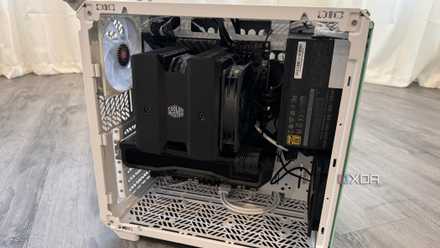
NZXT have been a household name in PC hardware for a long time, and with their H1, they made their foray into ITX small-form-factor PC cases. Its small size was impressive, and it resembled a router more than a PC case in its overall footprint. Included in the case was a PCIe riser that allowed for the graphics card to be installed vertically, as is required for cases of this size and shape.
Unfortunately, this riser, manufactured by NZXT themselves, was faulty. And it wasn't just a little bit faulty, it was very faulty. Mounting of this riser was done using a metal screw to fix the PCB to the case, but NZXT failed to include the proper shielding on these screw holes, so if a user were to remove and reattach this riser, they would wear away some of the PCB. This, combined with the way NZXT wired the riser itself, can result in a 12V short circuit to ground, which can cause a fire. NZXT attempted to fix this issue by providing nylon screws that wouldn't cause a short, but eventually the case was formally recalled.
Don't forget these 5 things before building a small form factor PC
An SFF PC can be an exciting project, but keep these things in mind before you start building one
2 2013 Mac Pro "Trash Can"
A rather comical design for a computer
The 2013 Mac Pro was a long-awaited refresh to Apple's Pro lineup of computers. Unofficially dubbed the "trashcan" by fans and critics alike because of its black, cylindrical appearance, it sported an Intel Xeon E5 and could be configured with up to Dual AMD FirePro D700s, which gave it really impressive specs for a workstation. The trashcan nature of the Mac Pro was due to Apple's thermal design choices, relying on a single fan to pull air through the top of the chassis.
Unfortunately, after release, Apple went back to neglecting the Mac Pro and the rest of its Pro lineup, leaving it mostly dormant until the release of the next Mac Pro. You could actually purchase one of these all the way up until 2019, when Apple completely redesigned it and took a much more conventional approach to not only the look of the device, but its upgradability as well.

I built a Mac Pro for under $300 and it's better than Apple Silicon in these 4 ways
Apple Silicon is fantastic, but this Intel Mac still beats modern ones in a few key situations.
1 Intel's Raptor Lake Architecture
Degradation so bad, it's almost funny
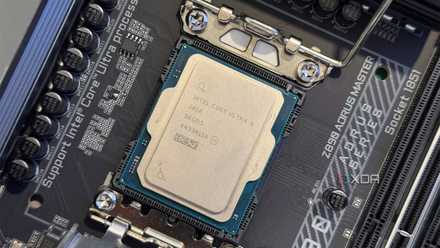
Raptor Lake was at the heart of Intel's 13th and 14th Gen processors. Upon release of the 13th Gen, reception was generally positive, garnering compliments for its gaming prowess and decent prices. It did struggle thermally, and this would continue to be a theme throughout Raptor Lake's lifespan.
Shortly after the release of the 14th Gen CPUs, which were a refresh of the previous 13th Gen, reports began to surface of users facing random crashes and shutdowns under certain kinds of load on the K SKU of CPUs. What was initially attributed to GPU drivers was later confirmed by Intel to be an issue with their processors. While they were never recalled, the issue was discovered to be related to the permanent degradation of a specific component in the silicon, exacerbated by heat and voltage. XDA's own Adam Conway had his 14th Gen i9 deteriorate so much that he could no longer use his computer.
4 ways buying an Intel Core Ultra 200 CPU makes sense
Arrow Lake isn't all bad and here are some ways it may make more sense than AMD Ryzen 9000.
Not all bad designs are created equal
Most of the time, a poor design choice might hurt the user experience in a rather minor way. Things like the trashcan Mac Pro are quite harmless, but the worst bad designs are the ones that are so fundamentally flawed that they don't function as they should under normal use. Whether it's a cheap PCIe riser or a failing component buried deep within a tile of silicon, hopefully these mistakes have been learned from.