
There's nothing quite like a strong nostalgia trip, especially for those of us who have been involved with tech from an early age. I still vividly remember the days of toying around with my dad's beige PC tower and mashing the keys on his Logitech MX Duo. That experience was so novel at the time, it will be forever etched into my memory. The functionality of these old relics obviously doesn't hold up today, and some of these aesthetics definitely didn't age well, but I don't care. Here are 6 PC aesthetics from the 2000s that I'll forever miss.

Here's how to build yourself a killer PC with old and used parts
Scouring for bargain deals and putting together a killer PC is almost a lost art
6 SLI and CrossFire
Something about all that rugged metal gets me going
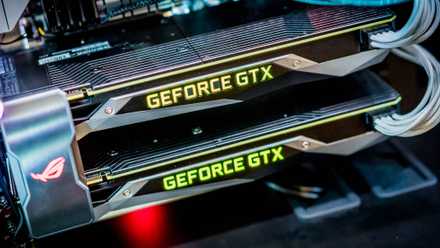
What's cooler than a single graphics card? Two of them! Despite the technical faults, SLI and CrossFire were truly a sight to behold. There's something about having multiple GPUs working in tandem that will never fail to impress me. Unfortunately, multiple GPU solutions are just not practical for consumer use. NVIDIA killed SLI with the launch of the RTX 3090, and they were 100% justified in doing so. It was riddled with bugs from the day it launched, and support was too inconsistent for it to garner mainstream adoption. Still, purely on an aesthetic level, SLI and CrossFire had a swagger that is tough to match with a single GPU.
How SLI and CrossFire devolved from amazing technologies to dead in the water in just two decades
SLI and CrossFire were all the rage back in the day. But as single GPU setups became more prominent, these cool interfaces faded into oblivion
5 UV Lights
Who needs RGB when you can have UV
The PC industry is now obsessed with everything RGB. Once we figured out we could put these LEDs into essentially anything that also takes in power, it was game over. When we transitioned into the RGB-era, one aesthetic that became a casualty was UV lighting. There was a time when the coolest thing you could do to your PC was paint things with UV-reactive paint, and put a UV-A light inside. Why did we ever let this die? Hardware manufacturers, hear me out. Put some UV accents on your stuff, and I would be the first customer in line.

Do you care about RGB?
Being honest, as a gamer, I've always associated the high-tech RGB look of a gaming PC as being the gamer look, but I realized recently that I don't really care for it. Yeah a flashy keyboard looks cool and a PC with bright spinning fans is neat to look at, but I don't hugely care either way. My PC is under my desk anyway, and aside from when I'm typing at night, I don't really care about lighting on my keyboard at all. Even then, a regular backlight would do just fine for me.
4 Beige everything
Bring back the beige
I'm a huge sucker for that classic, rather drab, beige that PC manufacturers carried well into the 2000s. It's definitely an acquired taste, especially for those who didn't grow up around it. PCs cases nowadays primarily follow a monochromatic color scheme, which I don't mind, but nostalgia's grasp on me is as firm as can be. I just wish there were a beige option for my favorite modern case. Give me a "special edition" beige-colored modern case, and I'm sure you'd see a long list of pre-orders from those like myself.
3 Dual-socket platforms
Who needs efficiency when you can have two CPUs on one board
Dual-socket boards obviously have great utility for those using them in a server application, such as the X99 board seen in the photo above. However, once upon a time, Intel and AMD were locked into a battle to see who could pack the most cores into one system, and not to be outdone by the Red Team, Intel worked with board partners to release multiple consumer-grade boards that supported server-grade CPUs. This tapped into a niche market to say the least, but boards like the EVGA Classified SR-2 and Intel's own D5400XS were meant for enthusiasts and gamers who had an E-ATX-sized hole burnt into their pockets. These were not meant for the average person.
EVGA not only went out of their way to use a server chipset, they also enabled support for non-ECC server memory, meaning you could use RAM meant for gaming. You could squeeze some impressive performance out of these systems at the time. Don't get me wrong, these systems were an exercise in nothing else but saying "because we can" and were not practical in the least. Nobody buys server hardware for gaming anymore, and that's definitely for the best. The cost of these setups was eye-watering, but, similar to the SLI and CrossFire situation, there's something about the vibe of two CPUs on one board that will never quite be matched today.

5 things you should know before buying a cheap X99 motherboard for your server PC
It's easy to find X99 motherboards at bargain rates. But there are a couple of caveats to establishing a home lab using these inexpensive boards
2 Fun 5.25" bay devices
Everything from extra ports to cigarette lighters
The 5.25" bay was once used exclusively for components like the CD and DVD drives, but once those were beginning to become obsolete, there was a period where they still came with most PC cases on the market. This created the great 5.25" bay accessory gold rush. You want a fan controller on your front panel? You got it. A little drawer for your knick-knacks? Absolutely. To give you an idea of how desperate we were to use that extra space, Thermaltake released an accessory called the Xray, featuring a beverage holder and a cigarette lighter, akin to one you'd find in a vehicle made in the 2000s. Towards the end of the 5.25" bay era, we saw some more practical accessories, like adding USB ports and SD card readers, but it still wasn't enough to save them from becoming obsolete.

4 technology trends for PCs in 2025
One thing you can always count on when it comes to PCs is new trends to follow every year
1 Exposed copper
Not commonly seen in builds today, and it's a shame
As the PC industry matured and manufacturing technology improved, we started seeing less bare metal in our rigs, and I think that's lame. Of course, you can still find the shiny stuff within PCs, but there's something about the shine of copper specifically that I love. Bare copper heatsinks for CPUs and their chipsets have a very classy look to them, but we've moved on towards aluminum fins and nickel plating, burying the copper's appearance even further. Occasionally, you'll see the odd heat pipe or exposed copper plate peeking through, but it's just not the same.

Is a stock cooler enough in 2024?
It all depends on your CPU and what you do with it
A stroll down memory lane
Like many hobbies, PC building has gone through its various ebbs and flows, but these aesthetic trends are baked so heavily into my upbringing that they'll forever hold a special place in my heart. Some of these should stay resting where we buried them, but I wouldn't mind digging up a few of these trends for a retro build down the line, just for a bit of fun.