
DirectStorage was heralded as a "game-changing" technology four years ago. Intended as a direct link between the storage and GPU, it claimed to dramatically lower loading times, reduce CPU overhead, and boost the bandwidth available to the GPU. Over time, we saw some of these claims come to fruition in a handful of titles, but by and large, DirectStorage joined the ranks of revolutionary PC innovations that disappeared from the consumer consciousness. Due to developed struggles with GPU decompression and API restrictions, DirectStorage hasn't fulfilled its promise, at least not yet. However, as game developers optimize newer titles for faster SSDs, DirectStorage will undoubtedly affect which SSD specs consumers value the most. Gen5 SSDs may finally make sense for gaming, and drives with high-end controllers and DRAM cache could further boost overall performance.

4 reasons it's finally worth considering a PCIe 5.0 SSD
With Crucial's announcement of the P510 Gen 5 SSD, I'm more convinced than ever that 2025 is the year to switch to PCIe 5.0.
Sequential speeds will finally be worth it
Gen5 SSDs going mainstream may be closer than ever
While Gen5 SSDs took sequential transfer speeds to unprecedented heights — high-end models touch 15,000 MB/s — gaming didn't care much. We've seen Gen5 sequential speeds fail to reduce loading times more than what a Gen4 or even Gen3 SSD does. Gaming has always depended on random speeds instead, which haven't seen a drastic improvement on PCIe 5.0 SSDs. All things considered, Gen4 NVMe SSDs have been the sweet spot for gaming PCs, providing a great mix of peak performance and affordable pricing (at least before the current AI-induced DRAM crisis). With DirectStorage, however, the SSD bandwidth assumes greater importance than ever for gaming. And it's directly linked to the blazing-fast sequential speeds of Gen5 SSDs.
High-end modern games involve tons of heavy texture files that need to be uncompressed from the storage before they can be rendered by the GPU. Today, almost every game heavily involves the CPU and RAM in the rendering pipeline. DirectStorage allows the CPU to take a backseat by handling I/O requests and transferring the decompression responsibilities to the GPU. The RAM is still part of the pipeline, but its role is relatively reduced. DirectStorage enables the GPU to leverage all the extra bandwidth of high-speed NVMe storage to not only accelerate asset decompression but also improve performance. Hence, you get the dual benefit of faster loading times and greater FPS. The blazing-fast sequential speeds of Gen5 SSDs may not directly improve gaming performance, but the higher throughput will start to deliver real benefits when developers are able to improve the implementation of the DirectStorage API.

5 things you need to know about DirectStorage on Windows 11
DirectStorage aims to transform gaming performance on Windows 11, but how do things stand right now?
Controller quality and heat management will be essential
DirectStorage won't be easy on your SSD
When DirectStorage becomes mainstream in games, we will see significantly more parallel requests coming from newer titles. Your SSD will start to experience a higher degree of stress than ever due to the massive throughput requested by the GPU, making the controller more important than ever. A high-end controller will be able to sustain parallel requests and high queue depths without stalling the entire pipeline. With the GPU communicating with storage more directly, you can't afford a budget controller becoming the bottleneck. A quality controller will ensure that latency remains minimal, and the storage keeps up with the high throughput required to meet the GPU's demands.
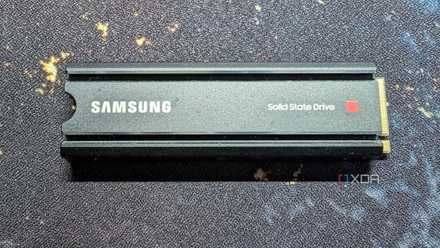
Another component of your drive that will become essential to sustained performance will be the cooling hardware. Many Gen5 SSDs already demand overkill coolers to keep themselves from thermal throttling. If you don't run too many productivity workloads on your Gen5 drive, you probably haven't encountered performance penalties due to throttling. However, DirectStorage could change that as newer games start to hammer the SSD with more parallel requests. Your drive's cooler, combined with your PC's airflow, could play a much bigger role than ever in gaming performance.
5 signs your NVMe SSD might actually need a heatsink
You better notice the signs before your SSD starts cooking (in the worst way)
DRAM SSDs will have an edge
For sustained performance
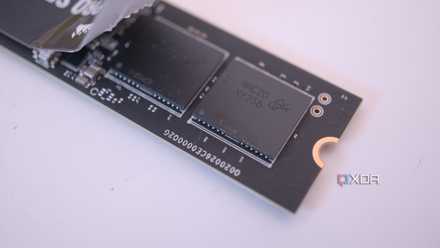
The kind of workload DirectStorage will create on your SSD will make a dedicated DRAM cache a highly coveted feature. SSDs without DRAM cache use a part of the system's RAM as a Host Memory Buffer (HMB), but they are prone to slowdowns when hammered with multiple requests simultaneously. DRAM cache ensures your SSD knows exactly where to look when fetching game assets during GPU requests, so there's no waiting around. DRAM cache is used to store the mapping tables that keep track of your data, helping the SSD controller read the NAND cells without being forced to hunt for the data during an I/O call. Many newer Gen5 drives forego DRAM cache to keep costs low, but you may want to opt for a DRAM SSD to ensure predictable sustained performance in the future.
Crucial T700 NVMe SSD
- Storage capacity
- 1TB, 2TB, 4TB
- Hardware Interface
- PCIe 5.0 (x4) NVMe 2.0
- Brand
- Crucial
- Transfer rate
- Up to 11,700MB/s (read), 9,500MB/s (write)
- TBW
- 600 (1TB), 1200 (2TB), 2400 (4TB)
- DRAM
- 1GB (1TB), 2GB (2TB), 4GB (4TB) LPDDR4
The Crucial T700 PCIe Gen5 NVMe SSD is one of the fastest solid-state drives on the planet, with up to 11,700MB/s reads and 9,500MB/s writes on the 1TB capacity, increasing to 12,400MB/s reads and 11,800MB/s writes on the larger capacities.
Here's why your NVMe SSD feels worse than a SATA SSD
Some NVMe SSDs can perform slower than quality SATA SSDs in certain workloads
DirectStorage may finally make high-end Gen5 SSDs worth it
Gen5 SSDs have been pointless for gaming ever since they came out. If DirectStorage becomes mainstream in the near future, it could leverage the high bandwidth of Gen5 drives for better gaming performance. The specs that will gain more importance, aside from sequential speeds, will be the controller quality, cooling capabilities, and the presence of DRAM cache. We may still be far away from DirectStorage making high-end SSDs count for something, but we're firmly on the way.