
It's not always that the PC hardware industry is graced with game-changing technologies that disrupt the status quo. Most of the time, we go through the motions, waiting for the next CPU, GPU, or platform launch as generational improvements stagnate and real-world impact stops impressing anyone. Every once in a while, however, the industry comes up with a seemingly futuristic innovation that feels like the next big thing. The technologies I intend to discuss in this article fell short in more ways than one, but for a brief moment, they were the most exciting things anyone talked about. In a different timeline, things might have turned out differently, but in our reality, these innovations failed to stick around.

5 next-gen PC hardware innovations I'm excited about
The CPUs, SSDs, and RAM of the near future could be radically different
DirectStorage
Direct to oblivion
Technically, DirectStorage is still the future, but it has been exactly that for around four years now. Microsoft released the DirectStorage API back in March 2002, so developers could formally utilize the technology in game development. The primary idea behind DirectStorage was a more direct link between the GPU and storage, minimizing the role of the CPU in the rendering pipeline. Instead of game assets being decompressed by the CPU and then routed to the GPU, DirectStorage made GPU decompression possible, accelerating game loading times and improving GPU performance. It specifically targets high-speed NVMe SSDs, so users with SATA SSDs and HDDs won't see major benefits. However, even four years later, only a handful of games support DirectStorage, with Forspoken, Ratchet & Clank: Rift Apart, Marvel's Spider-Man 2, and Assassin's Creed Shadows being major examples.
DirectStorage has had a bit of an implementation problem, especially on PCs. Developers have struggled to deliver universally positive results, with games like Ratchet & Clank: Rift Apart performing better without the feature. GPU decompression has been particularly challenging as developers find it hard to program games around it. It's been mostly crickets for DirectStorage as far as the community is concerned. Everyone expected the feature to gain widespread adoption by 2024 or 2025, but we all know how that panned out. For now, DirectStorage appears to be yet another innovation lost in the cracks.

5 things you need to know about DirectStorage on Windows 11
DirectStorage aims to transform gaming performance on Windows 11, but how do things stand right now?
Intel Optane
Completely optional
Intel Optane was a curious product. Intended as a bridge between blazing-fast RAM and relatively slower NVMe SSDs, it utilized 3D XPoint instead of NAND flash for a massive performance benefit over SSDs. While Gen5 SSDs had a latency of around 50–100 microseconds, "Intel Optane Memory" beat that handily with its 10-microsecond latency. Plus, it also trumped SSDs in endurance, offering around 60 drive writes per day (DWPD) compared to the 0.3–1 range seen on most SSDs. In 2017, Intel's Optane positioning wasn't clear, since the company marketed the drives as 16GB or 32GB cache memory modules. Most desktop users weren't impressed, since high-capacity NVMe SSDs were already fast enough for most people — a revolutionary but tiny cache drive didn't quite cut it.
Intel also restricted the Optane hardware to its own high-end CPUs, slashing its addressable market significantly. To make matters worse, the price was around 5–10 times higher than that of sufficiently fast NVMe SSDs. Even when Intel changed Optane's positioning to an SSD replacement, users couldn't justify the price premium. Eventually, Micron exited the partnership in 2021, skyrocketing Intel's manufacturing costs and forcing the company to shutter the business a year later. Optane drives were a radically different approach to storage, but the high production costs, positioning problems, and lack of enough real-world benefits ensured the technology died an early death.

Intel's discontinued alternative to SSDs could have been great
It didn't succeed in the past but it would disrupt the market today
3D gaming
It died and was resurrected as VR
Manufacturers have always been trying to make gaming more immersive, and 3D was the new fad in the late 2000s. I say "fad" with the power of hindsight, but back then, 3D TVs and monitors genuinely felt like the next big thing. Avatar had just come out, and manufacturers launched a bunch of 3D displays around 2010. Nvidia's 3D Vision was the stereoscopic gaming kit that was driving the PC gaming side of this supposed revolution, thanks to the ability to introduce 3D capabilities for any Direct3D game. From manufacturers and developers to gamers, everyone expected 3D to herald a new age of gaming immersion.
However, 3D gaming was more problematic than immersive. The limited capabilities of expensive 3D TVs and monitors meant subpar resolutions and refresh rates once the 3D overhead had done its magic. Nvidia's 3D Vision glasses were bulky and tiring, 3D content was limited, and the performance penalty was too much. Even 120Hz LCD screens couldn't overcome the innate problems with stereoscopic 3D technology. By 2013, it was clear that 3D gaming wasn't going to take off, and manufacturers shifted focus to 4K, OLED, and VR technologies. By 2019, Nvidia ended support for 3D Vision, making it the last nail in the coffin of 3D gaming. Glasses-free 3D made a comeback a few years ago, but it's too soon to tell if it's a 3D revival or yet another gimmick.
The 6 worst PC hardware trends that rightfully disappeared
Some of the worst PC hardware trends had their time in the sun, and then got their deserving place in PC history
Multi-GPU gaming with SLI/CrossFire
The peak of high-performance gaming
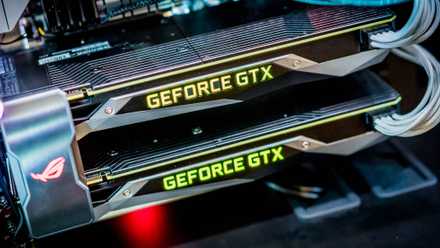
While SLI and CrossFire enjoyed a decade-long popularity, the era of multi-GPU gaming came to a screeching halt by the Pascal era in the mid-2010s. For an enthusiast gamer in the 2005–2015 era, it would have seemed impossible to imagine a future where multi-GPU setups became extinct. These dual, triple, and even quad-GPU setups gave you major bragging rights. They represented the peak of high-performance gaming as people chained together multiple graphics cards using Nvidia's SLI or AMD's CrossFire technologies. SLI had existed since the late 90s as a feature introduced by 3dfx, but it truly became popular after Nvidia acquired the company and rebranded SLI in the mid-2000s. ATI (later acquired by AMD) introduced its own counterpart in CrossFire, and we were off to the races.
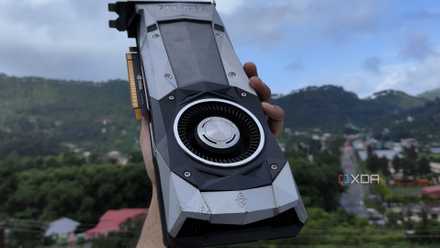
However, the processing benefits of multi-GPU gaming couldn't withstand the sands of time as single graphics cards became more powerful by 2016. Nvidia's GTX 10 series still supported SLI, but high-end cards like the GTX 1080 Ti made multi-GPU setups obsolete. Gamers could simply skip the massive power demands and microstuttering issues in favor of a powerful and stable single-GPU setup. By the time the RTX 20 series was announced, Nvidia ditched SLI in favor of NVLink, which mandated expensive bridges to connect two graphics cards.
There weren't many gamers lining up for multi-GPU setups, and developers didn't find it worthwhile to optimize games for SLI/CrossFire to prevent bugs and glitches. By the end of the 2010s, both Nvidia and AMD effectively ended support for multi-GPU gaming, and what was once considered the natural evolution of high-performance graphics became a mere footnote in its history.
Could multiple GPU gaming make a comeback?
It's unlikely, but there's a world where multiple GPU gaming makes a comeback thanks to modern APIs.
Dual-GPU graphics cards
What could go wrong?
Just like multiple graphics cards working in tandem, dual-GPU graphics cards (two GPU dies on the same PCB) pushed the boundaries of what graphics cards could do. Unfortunately, they also suffered from similar performance downsides and impracticalities. Just like multi-GPU technology, dual-GPU graphics cards also peaked in popularity between 2005 and 2015. The Voodoo2 by 3dfx in 1998 was the first multi-GPU graphics card, packing not two but three chips on a single PCB, but the real battle began when Nvidia and AMD entered the fray. Over ten years, they fought to outdo each other by launching multiple dual-GPU cards. Some were worth considering over single-chip cards, while others made no sense, financially or otherwise.
Due to the inherent challenges in sharing rendering and VRAM responsibilities between two different GPUs, dual-chip graphics cards ran into microstuttering and reduced effective VRAM. Besides, the rapid development of single-GPU options, specifically the RTX 20 series cards, meant that the days of dual-GPU cards were numbered. By 2014, cards like the GTX Titan Z and Radeon R9 295X2 were nothing more than power-guzzling behemoths that made no sense for gaming setups. Stacking multiple GPU dies on a single PCB to boost overall performance might have seemed like an airtight strategy, but single-chip options quickly pulled ahead. And that ended the age of dual-GPU graphics cards.

4 reasons why the dual-chip graphic card trend died
Dual-chip graphic cards used to be the pinnacle of technology. What happened?
Technical superiority isn't enough for adoption and longevity
Many of these innovations were technologically superior to pre-existing alternatives, but they ended up being commercial flops. A lot of things have to go right for a new technology to gain widespread adoption and ecosystem buy-in. Without that, no amount of investment or marketing can make it succeed. Some of these technologies could make a comeback in the future, but only if they can justify themselves against current options.