
Summary
- Acrylic side panels on PC cases were prone to scratches and looked cheap; tempered glass was better in almost all areas.
- Older Molex and IDE cables were replaced by SATA connectors due to being flimsy, clutter-prone, and more difficult to manage.
- XL-ATX motherboards and 3D monitors never really took off due to poor adoption.
- Intel's seven-year run with its 14 nm process node was notorious for churning out CPUs with minor year-over-year gains.
PC building, as we know it, has existed since the late 1980s, so we've had almost 40 years worth of innovation in this space. DIY enthusiasts using modular components to build their own PCs has been a thing for so long that we don't give it a second thought today. So, it's easy to forget some of the PC hardware trends that weren't as well-received as others.
Covering each of the "worst" PC hardware trends isn't possible in a single article, so this will be a subjective list with no real ranking between the picks. The trends you despised might not all be featured here, but I bet you'll agree that the ones I discuss here have all taken their rightful place in PC hardware hell.
5 disappointing PC hardware realities that just won't change
For seasoned members of the PC community, some harsh realities haven't changed in a long time
6 PC cases with acrylic side panels
A weird look, and voila — 3 new scratches
Unlike most modern PC cases, transparent side panels weren't always a given in older models. It was fairly common to have boxy cases with a few holes or vents on the side panels for air to get through. Then, acrylic side panels introduced a whole other dimension to designing your custom PC, with a renewed focus on the esthetics of your build. Cases with these panels lasted for a long time, thanks to their popularity and durability.
Acrylic panels looked cheap and were extremely prone to scratches, both during shipping and cleaning.
However, they had a big problem that was solved by tempered glass side panels. Acrylic panels looked cheap and were extremely prone to scratches, both during shipping and cleaning. If you were someone who had to open and close the side panel often, your side panel would have had tons of scratches by the time your brand-new PC was a week old.
Tempered glass cases solved this by being less scratch-prone, clearer, and (later) even more durable and cost-effective.

4 ways manufacturers innovated to create the modern PC case
We look back at all the times PC case makers innovated in the competitive space.
5 Molex and IDE cables
Do you remember the dark ages?
It wasn't that long ago that Molex and IDE connectors were quite common in PCs. If you built PCs in the 2010s and before, you would remember using pin-and-socket Molex cables (AKA mustard-and-ketchup) to power your hard disks, CD/DVD drives, fans, and some other components. Molex connectors were almost universally hated for being flimsy and requiring a lot of effort to connect properly. They were fortunately replaced by SATA connectors.
SATA came to the rescue again, as IDE was phased out in favor of simpler and easier-to-manage SATA cables.
Similarly, IDE cables were these long and wide connectors used for hard drives and CD/DVD drives. They were fine for the most part, but when you tried to connect multiple components to a single chain or use too many cables, it soon became a major issue. Either your HDD and optical drive wouldn't work on the same IDE chain or the jumble of IDE cables would hurt the airflow inside the case and ruin the look of the build.
SATA came to the rescue again, as IDE was phased out in favor of simpler and easier-to-manage SATA cables.

Should your next PC power supply be fully modular or not?
Fully modular PSUs have a lot of great features but aren't always necessary for your PC builds.
4 XL-ATX motherboards
Good luck finding a case for one

The ATX standard has been around forever. It was introduced around 1995 and has been the standard for motherboards and cases to date. While you might remember additional motherboard form factors like mATX, mini-ITX, and even E-ATX, there was another one that existed briefly back in 2009-10. The XL-ATX form factor for motherboards was introduced by EVGA, and even Gigabyte and MSI launched their XL-ATX cases.
It was difficult to find a case that fit these motherboards back then. It didn't last for long, at least as a mainstream standard.
Curiously, XL-ATX didn't have any standard dimensions, and everyone was free to produce whatever colossal motherboard they wanted. Motherboard manufacturers already had existing standards for sizes larger than the standard ATX, but they ignored them in favor of this divergent form factor. It was difficult to find a case that fit these motherboards back then. It didn't last for long, at least as a mainstream standard.
You might still find XL-ATX motherboards on the market, but without any standards to adhere to, they're not something used by most PC builders. You're better off sticking with the best motherboards for your next PC build.

6 old and obsolete PC parts that you may have forgotten
Some of these served us well, while others not so much.
3 3D monitors
Stop making 3D monitors happen
You might have heard Samsung announce a new glasses-free 3D gaming monitor a few days ago. Acer also announced a similar model last year under its SpatialLabs View line of monitors. However, manufacturers have been trying to push 3D monitors way before this new wave of 3D displays. We don't know how the market will receive the second coming of 3D monitors, but we are painfully aware of what happened the last time.
They were awfully expensive and awkward to use due to active or passive glasses. The image quality took a hit, and there was almost no 3D content for them to make sense.
Both 3D TVs and monitors suffered from a series of problems. They were awfully expensive (and never really got cheaper), and awkward to use due to active or passive glasses. The image quality took a hit, and there was almost no 3D content for them to make sense. By the mid-2010s, it was clear that 3D displays for mainstream consumers weren't going to take off.
Nvidia killed 3D Vision in 2019, and the category gracefully exited from stage left, never to be heard from again, until now. We don't know if glasses-free, high-resolution 3D is indeed the future, or if it belongs to headsets like the Apple Vision Pro, but as of today, we can certainly say that 3D monitors for PCs are among the worst trends that never quite materialized.

4 mistakes to avoid when buying a gaming monitor
There are important things to consider before purchasing.
2 Blower-style GPUs
They managed to overstay their welcome
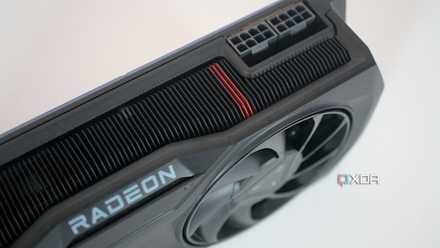
Until recently, graphics cards with blower-style coolers were mostly a mainstay of the founder's edition cards from both Nvidia and AMD. Whether it's the extremely popular GTX 1000 series or the RX 5000 cards, there was no escaping blower coolers, unless you got yourself an AIB model. The problems with blower coolers were multiple — they got way too loud under high loads, and even after that, ran hotter than open-air (AIB) coolers.
Open-air cooled graphics cards can achieve higher clock speeds, have more overclocking potential, and run cooler and more silent.
If you're using a compact SFF case, a blower-cooled card might be the better option as it exhausts most of the heat outside the case. However, for most mid-tower and full-tower cases with enough fresh airflow, there is no reason to go blower-style.
Starting with the RTX 2000 series in 2018 and the RX 6000 series in 2020, we haven't seen blower-style coolers on the founder's edition cards, except maybe the coolers on the RTX 3000 FE cards, which might be considered half-blowers. Open-air cooled graphics cards can achieve higher clock speeds, have more overclocking potential, and run cooler and more silent. I, for one, am glad that blower cards haven't made a comeback.

8 worst GPUs of all time
There are bad GPUs, and then there are GPUs that we'll never forget because of how disastrous they were.
1 Intel's 14nm+++++ CPUs
What no competition does to a guy
Intel's 14nm process node run is legendary, if for nothing else than sticking with it for around six straight years. While not a "trend," this deserves to be mentioned because from the 5th Gen Broadwell to the 11th Gen Rocket Lake lineup, Intel's 14nm underwent more optimizations than we have generations of Ryzen processors to date.
Consumers had no option but to buy what Intel was pushing for years, and even after AMD's comeback with Ryzen in 2017, Intel took 4 more years to shift to a 10nm node with Alder Lake.
AMD wasn't doing as well as it is today, so Intel had little motivation to innovate around the manufacturing process. The company faced troubles readying its 10nm node for years, but the lack of competition definitely played a role in the delay. Consumers had no option but to buy what Intel was pushing for years, and even after AMD's comeback with Ryzen in 2017, Intel took 4 more years to shift to a 10nm node with Alder Lake.
Even today, the 13th Gen and 14th Gen Raptor Lake processors are still based on Intel's 10nm node, whereas AMD's Zen 5 has moved on to 4nm and 3nm nodes.
Post that, Intel has produced some of the best CPUs available, but the 7-year slump before Alder Lake had already hurt the company big time. Even today, the 13th Gen and 14th Gen Raptor Lake processors are still based on Intel's 10nm node, whereas AMD's Zen 5 has moved on to 4nm and 3nm nodes.
The ongoing CPU instability and crashing woes have further hurt the brand, and we're all looking forward to some healthy competition when Arrow Lake desktop CPUs launch later this year, especially seeing the underwhelming performance of the Ryzen 9000 CPUs.

6 worst Intel CPUs of all time
If you look throughout Intel's history, you'll find tons of awful CPUs, many of which would have caused financial ruin for any other company.
Which PC hardware trends will join this list in the future?
You might not have lived through most of these PC hardware trends, but every generation has a few contenders that are ripe for a list of this kind. Maybe Intel's refusal to make its sockets last more than a generation or two will be at the top, or Nvidia's stingy VRAM problem will end in the next few years, so we can add it to the list.