
Buying peripherals for your home network can be a bit of a challenge when you’re just starting out and aren’t sure what you may need in your setup. With network switches being one-time purchases that can last for decades instead of needing to be replaced once every year, you'll have to be extra cautious when grabbing one for your computing setup. So, here are the most essential aspects you should be on the lookout for when picking up a network switch.

5 reasons your home needs a network switch
Wi-Fi is becoming the dominant networking type, but you still should think about using a network switch to wire up as many of your devices as possible
6 VLAN support
Better security and easier classification
VLAN, or Virtual LAN, is a feature that lets you split your home network into multiple logical (or virtual) instances, similar to virtual machines. While it’s typically found on the more expensive managed switches, the ability to create VLANs has a couple of benefits for the average user.
For instance, IoT devices are infamous for their security flaws, which can allow hackers to break into your home network. Relegating them to a separate VLAN and setting custom firewall rules for them can help bolster your network’s security. Likewise, grouping similar devices into virtual networks can make managing their network rules a lot less tedious.
3 reasons you should you be using VLANs on your home network
Virtual LANs are excellent for creating the perfect network.
5 Port count
Extra ports for all your networking needs
When you’ve just started building your computing setup, you may not need more than four RJ45 ports. But as your computing paraphernalia starts piling up, you may find yourself running out of Ethernet connections.
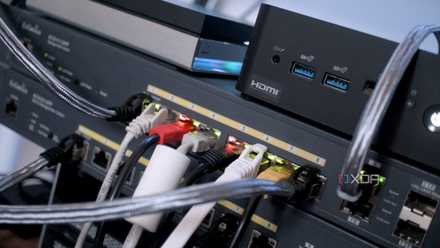
Of course, the number of RJ45 ports is only part of the equation. Certain devices may require SFP/SFP+ connectivity, and if you’re running a particularly complex home lab, it might be worth looking into switches with more uplink ports, as they’ll allow you to chain multiple switches.

6 devices you can plug into your Ethernet port
It might not occur to you, but you can connect many devices to your PC using its Ethernet port
4 PoE support
An easy solution to your cable management woes
For those who run multiple SBCs, surveillance cameras, and other devices that can be powered over an Ethernet connection, it’s a good idea to grab a switch that supports PoE technology. Besides reducing the number of cables running around your house in half, PoE-compatible switches also help you monitor the devices they power and even let you remotely control them.

4 reasons you should set up Power over Ethernet for your home lab
If your home lab is jam-packed with multiple smart devices, you might want to invest in PoE provisions
3 Network speed
No, 1GbE isn’t an option in 2024!
Most of the budget switches you’ll find will feature 1GbE or 1 Gigabit Ethernet speeds. Although 1G Ethernet was enough a few years ago, 2.5GbE (or even 5GbE) connections are a lot more useful in 2024. Sure, you may not need the higher bandwidth and speeds when streaming media from your NAS, but you’ll start to see bottlenecks once you get into the more advanced virtual machine workloads.
Not to mention, all-SSD NAS enclosures have started to grow in popularity, and 1G Ethernet isn’t fast enough to keep up with the high-speed NVMe drives. With most switches requiring you to shell out a fortune, you might want to grab one with some high-speed ports now to avoid regretting your purchase later down the line.

When do you need a 10GbE network card?
Installing a 10GbE network card can definitely boost the bandwidth of your home server. But is a 10GbE NIC really worth it for the average user?
2 Managed vs unmanaged
Do you need advanced features or simplicity
Once you know how many ports you need and other physical features of your network switch, the other big decision is whether you need a managed or unmanaged switch. Unmanaged switches are the easiest to explain, as they plug in to your existing router or switch to extend how many ports it has. They don't tend to have any software features, so they're easy to extend your wired network with, but they also lack advanced features that you might want, and they add a little more computing overhead to your router as the router does the routing and network address allocation, etc.
Managed switches work much like routers, with a management UI that's always accessible from the local network but can also be cloud-based. The software running on them can do many useful things, from built-in QoS, prioritizing channels at will for the best performance where you need it, and things like remote troubleshooting so you don't have to be on-premises to fix things.

4 reasons you should buy an unmanaged switch
If you want to extend your network and add more devices, an unmanaged switch could be a great idea.
1 Other things to keep in mind
You might not need these but they're important to make note of
While most of the things you want to look at when choosing a network switch are fairly self-evident, there are a few considerations that you'll want to hunt in the spec sheets. If you're upgrading a large network with many users, you'll want to know how many users the switch can support, because you don't want anyone to not be able to access the network when they try. It's also important to check throughput for the same reason, and even more important to check when you're planning on running packet inspection or other security tools in real-time.
And while we're on the subject of security, that depends on the threat model you or your company uses, and where the switch is going to be installed. Unmanaged switches are secured by having robust security policies on the other devices that connect to them, or things like lockable port covers so physical access doesn't mean an attacker can get onto your network. Managed switches can have more security features, like packet inspection, the ability to shut down parts of the network to thwart active threats, and ways to reinstall your settings if an attacker manages to wipe them.

How to protect your home network with a Raspberry Pi firewall
Here's how you can configure a network-wide firewall with your Raspberry Pi
Choosing the perfect switch for your networking needs
These are the major features you should always seek out in a network switch, though there are some other aspects worth mentioning. If the electricity rates in your area are particularly high, the switch's power efficiency becomes an important consideration. And while it's of less importance for home use, security is an important consideration for most network setups in the professional world, so you'd want something that has both physical and software security features.