
Summary
- Single-board computers are affordable, compact, energy-efficient, and suitable for almost any DIY project.
- Even without a specific project in mind, purchasing an SBC can be a gateway to learning, building, and creating new things.
- The abundant community support and vast array of parts make SBCs an exciting platform for learning and experimentation.
Single-board computers are small circuit boards that have all the basic computing functionality you’re used to bundled into a small form factor and made available for a fraction of the cost of traditional laptop or desktop computers. Although SBCs have been around since the 70s, their popularity has soared over the past 20 years, thanks to the introduction of the Arduino (technically a single-board microcontroller) and the Raspberry Pi.
If you’re pondering whether you should buy an SBC, you probably fall into one of two camps: people who have an idea for something they want to make, and those who don’t. No matter which camp you’re in, we’re here to push you over the edge, so you can start creating something.

Best Raspberry Pi alternatives
The Raspberry Pi is just one of many great single-board computer options available for a variety of projects.
Why buy an SBC if you already have a project in mind
Many people jump into the world of SBCs because they have something they want to build, like a robot or a weather station or a drone. Deciding whether you should buy one off of Amazon or build it yourself can be a difficult decision. Here’s why I think you should choose an SBC over other alternatives.
Affordability
SBCs are relatively cheap. If your project requires a computer, SBCs are an affordable alternative to a full-sized desktop or laptop computer. The cheapest SBCs cost between $15 and $30, and even the most modern SBCs from Raspberry Pi and Orange Pi only cost around $100. At those prices, it may be worth it to you to DIY your project instead of paying someone for a pre-built solution.
Small size
The smallest SBCs are about the size of a stick of gum, and even the more powerful versions are typically no larger than a credit card. This means they can be put in out-of-the-way places to quietly do their jobs, or they can be fit into small form factors that won’t take up a lot of space. If you’re building a VPN for your home network, do you want to use an old laptop that will take up room next to your router, or a credit card-sized computer that can be put somewhere more discreet?
Low power consumption
The low power draw of SBCs makes them a great choice for builds that need to be on all the time, like a NAS or Pi-hole. An SBC-powered NAS will use less than half the power of a NAS you would buy off of Amazon. The low power requirements of an SBC also mean that it’s easy to make your projects portable by adding a small power supply, something that isn’t possible with a traditional computer.

Best Raspberry Pi VPN in 2024
Find the best Raspberry Pi VPNs with apps for Linux to protect your internet connection and change your IP address
Why buy an SBC if you don’t have a project in mind
You don’t need to have an explicit idea of what you want to do to justify buying an SBC. You could just have a curious mind or an innate desire to see what all the hype is about.
Buy an SBC if you enjoy making things
For many people, there is an intrinsic pleasure in making something. There are many ways to scratch this itch, but few have as low a cost of entry as SBCs. You can buy a Raspberry Pi Zero with Wi-Fi, Bluetooth, and HDMI for around $20 and get finished making something, like a network-wide ad blocker, in an hour.
If you fancy building something more complex — and you’re willing to put in the work — you can use an SBC to build everything from submarines and drones, to AI-powered voice assistants and time-lapse cameras. The limit on what can be done with an SBC has yet to be discovered, especially as newer and more powerful models are released each year.
Even better, thanks to the growth of the maker community and the popularity that SBCs enjoy, finding parts for your projects is easier and more affordable than ever. Companies like Arduino, Elegoo, and Waveshare make dozens of specialized sensors, motors, displays, and interfaces purpose-built to be used by hobbyists and available at reasonable prices.

How to set up a Raspberry Pi web server
Want to configure your own web server without spending a fortune on expensive hardware? Here's how you can do so using just your Raspberry Pi
Buy an SBC if you enjoy learning things
Single-board computers are the perfect platform to learn how computers work. Working with SBCs can serve as a preparatory step before building a proper desktop computer. The Raspberry Pi was explicitly designed to be a low-cost tool to introduce children to the concepts of computer science.
Raspberry Pi OS comes pre-installed with all the tools you need to start programming in C, C++, Python, and Scratch, so it’s an ideal tool to start your programming journey. Likewise, the exposed nature of all SBCs and the array of GPIO pins, make SBCs an ideal tool to understand the basics of computer hardware. Even better, you can tinker with the whole package without having to worry (much) about breaking it. If you make a fatal change to a system file, you can just reflash the OS and start over. A similar error on a Windows machine could result in a four-hour process of reinstalling your OS.
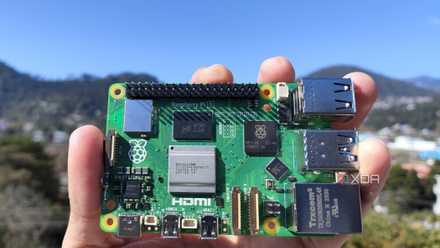
Is the Raspberry Pi 5 or a cheap Windows 11 mini PC the best budget computer?
With the Raspberry Pi 5 costing more than older models, a cheap mini PC might actually be a better budget computer.
Are there any good reasons not to buy an SBC?
Not if you’re on XDA! If you don’t care about computers or technology and aren’t interested in how it works, then you don’t need an SBC. On the other hand, if you are interested in technology and building things and figuring out how they work, there isn’t really a good reason not to buy one. Here are eight easy projects to get you started.