
Why would a company, especially in the cutthroat hardware segment, willingly make a last-generation offering a better deal than it was before? The very foundation of AMD's latest move to support FSR 4.1 on older hardware raises this question.
Naturally, it can be argued that Team Red wants more people to opt into its ecosystem that's locked horns with Nvidia in more ways than one. But as a consumer hardware manufacturer, they also want consumers to opt for the newer offerings that carry a tangible advantage over last generation's hardware. So, why now? There are a few possible theories, each of which I find equally likely. However, none of them point to the fact that it's an act of sheer goodwill.
The community forced AMD's hand
Simply by getting there first, and showing it is possible
When AMD launched FSR 4 alongside the RDNA 4 GPU lineup, all signs pointed towards the fact that it was a hardware-exclusive feature built around FP8 accelerators that only the best and the latest RX 9000 series cards could deliver. Now, for new customers, this was clearly intended to drive upgrades, and sure enough, for a while, it did. At least until the August 2025 source code leak revealed that an INT8 implementation of the latest upscaler already existed for older Radeon cards.
In a matter of weeks, unofficial tools such as OptiScaler made it possible to leverage AMD's flagship upscaling on hardware that wasn't supposed to have anything to do with it, including those with RDNA 2 and RDNA 3 architecture. This undoubtedly put AMD in the middle of a rather embarrassing predicament. Now, what other option did Team Red have besides releasing, in an official capacity, what the community had already proven was possible?
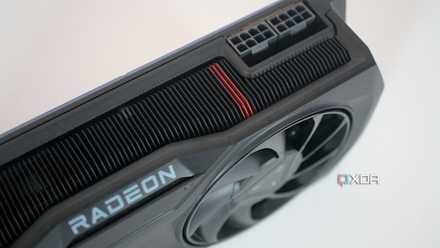
AMD locked FSR 4 behind new GPUs, but older cards can run it anyway
Nvidia proving to be better than AMD at legacy support was not on my 2026 bingo card
Team Red knows that there's an ecosystem war coming
Reclaiming market share isn't going to be just about making better hardware
Besides the obvious community-driven push, there also seems to be a longer game in play, and it goes a little beyond simple reputational optics surrounding the announcement. Over the past decade, Nvidia has meticulously built a software ecosystem around its hardware that is so deeply entrenched in experience to an extent that the hardware itself has become secondary to it. Think of DLSS, CUDA, NVENC, and the Game Ready Driver program. Every single one of these features adds another reason for users to stay within Nvidia's orbit, regardless of what the competitors are doing with their silicon. FSR was a direct response to DLSS, but the hardware adoption of Radeon has always been miles behind the GTX and now RTX cards.
Perhaps AMD believes the FSR 4.1 backport can change that. By integrating the users running RDNA 2 and RDNA 3 cards into the same ecosystem, AMD will effectively widen the pool of users running a version of FSR that can go head-to-head against DLSS, and by doing so, give developers a strong reason to treat it as a first-class integration.
The trade-off is reasonable. Although this can potentially undercut the exclusivity that was meant to sell RDNA 4 hardware, AMD seems to have made the calculated decision that being better positioned in the ecosystem war matters more than protecting a single generation's revenue.
AMD's position in the handheld market is hard-earned
And they would prefer to keep it
There's no way to rationalize any decision AMD makes without taking into account the handheld PC market. After all, if there's one segment where AMD's dominance is both undeniable and strategically non-negotiable, it's this one. Every major handheld that is currently available on the market, from the Steam Deck to the ROG Ally, runs on AMD silicon.
Save on Gaming Gear: Deals on Headsets, Controllers
If the math isn't adding up, consider the position the handheld market finds itself in. The DRAM crisis has effectively stopped hardware refresh cycles dead in their tracks at the moment, and standalone manufacturers aren't able to ship next-generation devices at sustainable price points. The Steam Deck saw a $240 markup just this week, and other major handhelds are more or less in a similar position. In this environment, the only meaningful performance uplift AMD can offer current-generation handheld owners and consolidate its position with OEMs is through software, and FSR 4.1 offers precisely that. Withholding it from devices that need it the most would have risked alienating the very OEMs whose handheld strategies are built around AMD's APU ecosystem, and keeping those relationships intact is worth considerably more to Team Red than whatever RDNA 4 upgrade revenue the backport might have displaced.
But there's one more thing
Each of the theories I have presented frames AMD as merely reacting, either to community pressure, to Nvidia's ecosystem, or to a handheld market it can't afford to lose. There's a fourth possibility worth considering, and that sort of recontextualizes the other three. The rise of UDNA, which is the unified architecture reportedly merging AMD's consumer gaming and compute divisions, suggests that Team Red may have been simply positioning for a much larger ecosystem play than the RDNA 4 cycle implies. If that's where this is heading, it's rather consistent with the decision to bring FSR 4.1 backport to older cards now. The only difference it makes is that the move shifts from being reactive to proactive in setting up a foundation for this new ecosystem.