
It's no secret that at any given time, companies like AMD and Nvidia are working on multiple generations of GPUs, not just what we think of as the next in line for release. With the release of RDNA 4 GPUs, AMD got a lot of things right, but they're already planning on moving away from the RDNA architecture. Moving away from what seems to be a formula just beginning to pay dividends might sound odd, but AMD's UDNA is poised to be so much better than RDNA 4, and here's why.
Challenging Nvidia's CUDA is a must
AMD wants more of the productivity market
Winning over the PC gaming market isn’t difficult. Release something competitive at a low enough price, and most consumers will be willing to overlook a few shortcomings. The RX 9000 series still struggles with ray tracing and has had some price hiccups, but all-in-all, it has been a successful launch for AMD, setting them up well for future releases. Unfortunately, the 9000 series doesn’t move the needle that much in terms of productivity.
Many productivity workloads rely heavily on CUDA acceleration, which is exclusive to NVIDIA graphics cards. Attempting to do the same kind of work without CUDA is significantly slower, and for many working professionals, simply isn’t an option. When CUDA was integrated by Nvidia almost 2 decades ago, it was with the intention of using all the same base microarchitecture for all of their GPUs across the stack. AMD want to do the same thing with their GPUs, and it starts with UDNA.

5 real reasons why no one buys AMD GPUs
AMD has remained the better value option for years, so why doesn't it get more love from consumers?
Say goodbye to split development time
Everyone working under the same architecture is better
Since AMD left behind the GCN architecture in 2019, they split their graphics division into two camps: RDNA and CDNA. RDNA being the gaming-focused division and CDNA being compute-focused. This split was inspired by the potential for optimizations you could make to each sub-architecture without the need to muck around with the other, but overall, this just made things more difficult for AMD.
By unifying their GPU architecture, they're no longer splitting development time between the two, allowing them to push towards a much more functional model for both gamers and developers. CUDA doesn't really help gamers that much, but improvements seen in the AI and workstation side of things could bleed over to technologies like FidelityX Super Resolution, which is already making big strides. Having a unified architecture is what allowed Nvidia to integrate things like Tensor cores into their GPUs, so a similar approach from AMD might just be what they need to reach that next level of performance.

3 reasons why AMD finally used AI for FSR 4
AMD's FSR 3 wasn't far behind the competition, but FSR 4 needed sweeping changes for truly impressive gains
Launches are still shaky for AMD
They nearly got the price very wrong for RDNA 4
As we've continued to witness over the last couple of weeks, the RX 9000 series launch certainly did not go off without a hitch. AMD's decision to delay the launch of the cards was undoubtedly influenced by seeing Nvidia's announcement of the RTX 50 series and its pricing, and it wasn't the wrong choice. By all accounts, the pricing scheme for the RX 9070s is competitive, but as a result of delaying the launch to mull over pricing, many consumers have been experiencing some funny business around getting their cards from online retailers.
Retailers that had already received stock of cards at a higher price were inspired to sell them for much higher than the announced MSRP. This kind of price stutter can't happen again if they truly want to further capitalize on Nvidia's mistakes, and capture more of the GPU market. Regardless of who is actually responsible for the horrible online shopping experience, the buck stops with AMD to some extent.
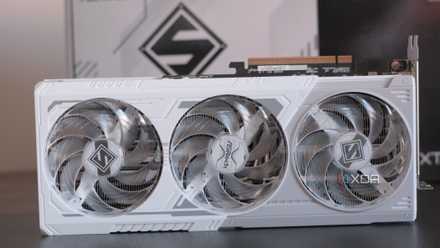
AMD's Radeon RX 9070 XT is the most exciting GPU to launch in years
It's here. It's brilliant. Go and buy one.
Thankfully, it's not a difficult problem to solve
There's no better feedback than an actual launch
Before launching the RX 9000 series GPUs, AMD were reportedly asking tech YouTuber Hardware Unboxed for their thoughts on pricing for GPUs. Getting community feedback like this is exactly what they should have been doing the whole time, and shows AMD is maturing in their approach to pricing. I think we've truly turned a corner, and with UDNA, hopefully they continue that trend. The strategy of "Nvidia minus $100" just doesn't work, and instead of practicing insanity, they opted to actually poll for feedback from outlets.
Additionally, AMD has been working closely with Sony for the development of the PS6 and its hardware. It's been confirmed that they've been working closely with Sony on FSR as well, further adding credence to the theory that UDNA is a true generational leap from RDNA 4, rather than just a lateral move.
AMD has a long road ahead of them
RDNA 4 was just the beginning. For AMD to really start to claw back GPU market share, they need to secure some of the folks buying cards for productivity tasks. CUDA has a stranglehold on the workstation sector, but UDNA is the first step in a long journey for AMD. Gamers won't be left behind either, as the benefits of a unified architecture will undoubtedly spill over into technologies like FSR, which continue to improve substantially.