
No other PC component attracts as much attention and fanfare as graphics cards. Every GPU launch is preceded by a flurry of rumors and leaks, and proceeded by endless coverage, analyses, and criticism. Amid this entire hype, manufacturers do their best to confuse the consumer by marketing features that have little to do with actual performance.
Not every consumer spends their days consuming every GPU breakdown and benchmarking video, so they end up believing in some harmful GPU myths. GPU manufacturers, and even other companies, bank on these myths to convince you to buy the latest thing they're selling, even if it doesn't make a meaningful difference to your gaming experience.
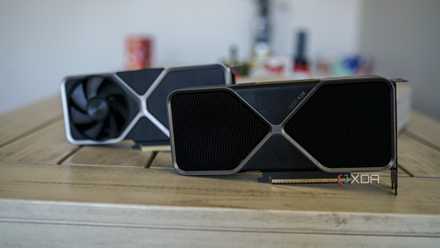
6 rules of thumb PC newbies should know about the GPU market in 2025
AMD & Intel are back in the game, and advertised prices are a scam
5 PCIe 5.0 is necessary for modern GPUs
Not even close
The PCIe interconnect has seen a lot of changes over the years, evolving to the PCIe 5.0 standard we see today on the latest graphics cards. While the maximum bandwidth available to your graphics card on, say, a PCIe 3.0 slot is much less than that on a PCIe 5.0 slot, the actual performance difference in games is in the range of 1–4%. That's what you lose out on by not paying more for one of the newer motherboards sporting a PCIe 5.0 slot.
Even your new RTX 50 or RX 90 series GPU, which supports PCIe 5.0, will run flawlessly, and without any real performance loss, on a PCIe 4.0 or PCIe 3.0 slot. Many creators and publications have debunked the fears of GPU bottlenecking due to older PCIe slots, but motherboard manufacturers continue to market PCIe 5.0 GPU connectivity prominently. Someone building a new gaming PC will likely get PCIe 5.0 support on the motherboard they pick, but there's no point upgrading your existing PC only for this feature.
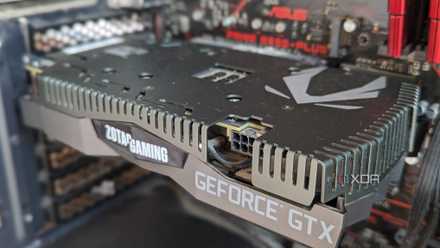
4 reasons PCIe 5.0 still doesn't matter for most people
If you've been wondering whether your GPU uses PCIe 5.0 or you want an SSD that supports it, here's why it doesn't matter.
4 More VRAM means more performance
Only when you need it
The whole discourse around insufficient VRAM on Nvidia GPUs has brought much-needed attention to this matter, but as a side effect, many consumers now believe that more VRAM automatically guarantees more FPS. It's true that if your GPU runs out of VRAM, you'll likely run into stutters, incomplete textures, and crashes, but only if your GPU is fast enough to need more VRAM at your target resolution.
A weaker GPU like, say, the RTX 3060 is meant for 1080p gaming, and will likely never need the full 12GB of VRAM it has available. Inversely, GPUs like the RTX 3070 that are capable of pushing high FPS at 1440p will be bottlenecked due to their small framebuffer. Even high-end GPUs like the RTX 4070 Ti and RTX 4080 Super lack enough VRAM for the level of raw performance they're capable of — 12GB and 16GB, respectively, aren't enough by any means for these cards.
This myth enables GPU manufacturers and AIB vendors to market larger VRAM numbers on low-end cards to make them seem more powerful than they are.

5 ways more VRAM doesn't always mean more FPS
Extra VRAM isn't a magical solution for more FPS
3 Higher-end AIB models are significantly faster
Cooler and better-looking, maybe
There's a popular belief that the more expensive GPU models from AIB vendors are somehow "better" than the low-end variants or the reference cards from Nvidia or AMD. Manufacturers like Asus, MSI, Zotac, and Gigabyte make it seem that their higher-end models are somehow faster than the lower-end models. Of course, they need to market various models differently due to differences in cooling solutions, designs, and some extra features, but this often jumps the line into the performance department.
In terms of real-world FPS, a reference card or cheaper AIB variant performs almost the same as these expensive AIB variants. The single-digit or roughly 5% FPS difference isn't remotely worth spending $100 or $200 more on a fancy AIB model. Just buy one of the cheaper models from whichever brand you trust, or get the reference edition from Nvidia or AMD if it's available in your region.
Nvidia RTX 5070 Founder's Edition
- Brand
- Nvidia
- Cooling Method
- Dual-fan
- Interface
- PCIe 5.0 x16
- Memory
- 12GB GDDR7
- Power
- 250W
- CUDA Cores
- 6,144
The RTX 5070 Founder's Edition is a mid-range GPU from Nvidia, providing the best of ray tracing and DLSS technologies at a relatively affordable price, if you can find one in stock.

7 critical points to remember before buying a gaming GPU
Buying a graphics card for gaming is hardly a simple endeavor, so here's everything you need to remember
2 You need overkill PSUs for high-end GPUs
Your 90-class GPU doesn't need a 1600W PSU
Thanks to the unbridled thirst for power shown by modern GPUs, consumers have started believing that they need to buy overspecced power supplies to support high-end GPUs. While it's true that GPUs like the RTX 4090 and RTX 5090 sport TDPs of 450W and 575W, respectively, you can get away with a high-quality 1000W PSU for either of those cards. Even pairing the RTX 5090 with, say, the Core Ultra 9 285K will be fine on a 1200W power supply.
Still, many consumers are rushing to buy 1600W PSUs for relatively modest builds, believing that the higher wattage and more features of those units will somehow make their gaming rigs safer. Protecting your PC with a quality power supply is of the utmost importance, but you don't need to believe in the marketing efforts of PSU manufacturers. Most people buying a new PSU don't need more than a 1000W power supply, and that's not going to change any time soon.

5 reasons you won't need a 1600W PSU any time soon
1600W power supplies are overkill for almost everyone
1 Every gamer is dying to use ray tracing
It's not as sought-after as Nvidia might think
Nvidia brought real-time ray tracing to its GPUs in 2018, and things have never been the same since. The company might have pushed gaming graphics forward, but it demanded a huge ray tracing tax from consumers for the same. Even when many gamers couldn't care less about ray tracing, Nvidia continues to market its GPUs with a heavy focus on ray-traced visuals. A huge section of gamers today simply wants decent raw performance at affordable prices.
The instances where ray tracing makes a game look truly breathtaking can be counted on two hands. Still, the perception of ray tracing in the market continues to enable Nvidia's price-gouging practices. AMD might be doing better with GPUs like the RX 9070 XT, but the RX 90 series pricing should have been even lower. The fact that enabling ray tracing without upscaling and frame generation makes a game practically unplayable speaks volumes to the technology's still-nascent nature.

Is ray tracing even worth it in 2025?
Ray tracing is over 6 years old now, but it's still pointless for the majority of gamers
Protect yourself from GPU myths
FOMO is real, especially when new and improved GPUs are launching all around you. However, it's important to compare new products to existing ones, assess your gaming needs, and decide whether the cost per frame makes sense for you to upgrade. Often, consumers get swept up in the marketing hype surrounding new GPUs, and spend more than what they need to. Once you see through the smoke and mirrors of manufacturers trying to leverage common myths to sell you overpriced stuff, you'll make better buying decisions.