
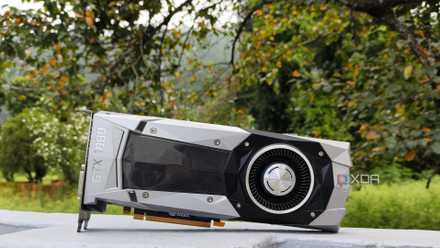
When my brother and I were building a budget gaming PC for him back in December 2020, in the thick of the pandemic, we were about to settle on a GTX 1660 Super. Just before that, however, we found a listing for a pre-owned RTX 2070 Super. The price was attractive, and frankly, better than any other listing we could find, so we decided to stretch our budget and build a seriously powerful rig instead. What followed was a series of bad luck, wrong decisions, and the lesson that you should always do your homework before buying any used component.
5 scenarios when buying used PC hardware is a bad idea
Used PC components can be great value, but some situations are worth walking away from
I failed to test the card properly
Some things were out of our control
Yes, I know that's a cardinal sin when dealing with used components, but you need to understand our situation. This was bang in the middle of the first wave of COVID, and most of the old rules didn't apply. Meeting the seller in person was easier said than done, but we still managed to do it by choosing a friend's place where we had a system we could use as a test bench. Lockdown restrictions were still in effect, so we didn't have the luxury of time when meeting the seller and testing the card.
Both the seller and I were in a hurry to get back home, so we only ran some preliminary tests on the RTX 2070 Super, concluded nothing was wrong, paid the guy, and went our separate ways. We finally had the main component for my brother's PC, so we built the rig, and launched Cyberpunk 2077. The game ran okay(ish) at 50–60 FPS at 1080p ray-traced settings (paired with a Ryzen 5 1600), with frequent dips into the 40s, but we could finally play Cyberpunk 2077!
Around a year later, however, the RTX 2070 Super suddenly gave out when my brother launched Dying Light 2 Stay Human for the first time. The moment he turned on ray tracing in the settings, the screen went black, and the game crashed. After a reboot, the GPU started flashing artifacts on the screen, and the Device Manager displayed "Error Code 43". It was a tough pill to swallow — the RTX 2070 Super was, in all probability, dead and done.
4 reasons you must build a PC with all used parts at least once
At least once in your life, you must build a PC only with used parts for an invaluable and memorable experience
I didn't have the safety net of a long warranty
The gamble that didn't pay off
When we first got the used GPU, we only ran Cyberpunk 2077 for around 30 minutes, before my brother decided he would finish his backlog before giving the game the time it deserved. So, before Dying Light 2, the GPU never really got stressed enough to reveal any underlying faults. Now, I don't know whether the seller used it for mining (which was huge in 2020), concealed other faults, or it was just our bad luck. We didn't have any warranty left that could have come to our rescue.
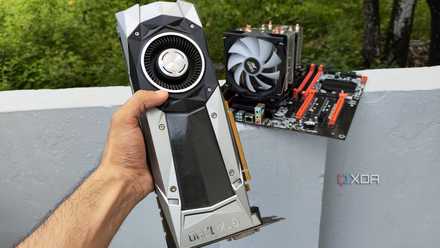
We knew that the card only had a few months of warranty remaining when we bought it, but we took a gamble anyway. It failed, and now we had a seemingly dead GPU that we had to attempt to revive on our own. I disassembled the card, cleaned it properly, replaced the thermal paste and pads, and even flashed a new BIOS, but nothing worked. Even when we got the PC to use the GPU as the display adapter, it promptly crashed the moment we launched a game.
Not testing the card rigorously was my first mistake; buying one without a sufficient warranty was the second.

5 PC components that are safe to buy used to save you money
Tread carefully while chasing deals in the used PC components market.
In the pandemic market, it was too great a deal to let go of
Some lessons were learnt
We were on the lookout for a decently priced RTX 20 series GPU for a few weeks, and the deal we finalized was a good $100 cheaper than all the others. It wasn't "too good to be true", so we didn't have a reason to doubt it at the outset. The seller seemed genuine, shared a lot of images and benchmarks beforehand, and agreed to meet at our friend's place. All the signs were positive, but we still shouldn't have made the mistakes we made.
Besides, we had a self-imposed deadline to build the PC before my brother's birthday. The urgency and temptation made us less thorough than we usually would have been. Buying a pre-owned GPU outside of platforms like eBay is always riskier, but there are ways to minimize the risk. The RTX 2070 Super did work for over a year before kicking the bucket, so it wasn't like it was a total waste. Still, my brother had to switch to my old GTX 1660 Ti as a stop-gap for months before he built his dream rig with the RTX 4070 Ti and Ryzen 5 7600X.

Here's how to build yourself a killer PC with old and used parts
Scouring for bargain deals and putting together a killer PC is almost a lost art
Used PC hardware can be great if you vet the right deal
Vetting a pre-owned component listing is critical if you want to avoid the headache that comes with a faulty component. Warranties don't always transfer from the seller to the buyer, and not every stress test can uncover hidden faults with a component. The used GPU I bought wasn't stress-tested properly, and had only a few months of warranty left, so it wasn't exactly a great call on my part. The price was good, and it was a powerful GPU at the time, but those reasons alone shouldn't have been enough.