
Plex has been my default recommendation and media server for years now, especially for families. I've talked at length before about how I moved from Jellyfin to Plex, which is the opposite of what a lot of people do. However, Plex is what I trust when I'm setting something up for people who just want to press play and not think twice about what's happening behind the scenes.
But after spending real time revisiting Jellyfin as I set it up for a friend's house, and even using it over the course of a weekend, I came away more than a little surprised. I still don't think it has dethroned Plex for the average user, but the gap I once considered massive... isn't anymore.

3 key features where Plex still has the edge over Jellyfin — for now
Jellyfin is starting to catch up with the self-hosting giant, though.
Plex still feels effortless in all the ways that actually matter
It's been my go-to app for families for years now
I've defaulted to Plex for a long time now, and it has as much to do with its feature list as it has to with friction, or its lack thereof. Plex is one piece of software that feels like it was designed with the assumption that the person using it doesn't care how it works. As someone who often has to moonlight as tech support for two families across three households, I think that's exactly the point.
Setup for Plex remains straightforward, and my favorite feature, remote access, feels baked into the very experience instead of being bolted on. Sharing your library, too, remains as simple as sending an invitation and adding a friend to the family list. I don't even have to explain port forwarding, reverse proxies, or why something works on one TV but not another. It just works across devices, phones, TVs, and consoles. Even more importantly, though, it works consistently.

Cutting-edge Jellyfin features
Trivia challenge
Think you've kept up with Jellyfin's evolution? Put your media server knowledge to the test.
Which SyncPlay feature, added to Jellyfin, allows multiple users to watch content simultaneously in sync?
What major overhaul did Jellyfin introduce to modernize its web interface in recent years?
Which official Jellyfin mobile client was released to provide a native experience on Android and iOS?
What is Swiftfin, the community-developed Jellyfin client?
Which subtitle format support was notably improved in Jellyfin to better handle complex typography and styling?
What hardware acceleration method did Jellyfin add support for to improve transcoding on Intel GPUs?
What feature did Jellyfin introduce to allow users to manage and track their media progress across multiple devices?
Which major plugin capability was formalized in Jellyfin to allow community developers to extend server functionality?
Your Score
Thanks for playing!
This consistency was once something I'd never have paid for out of my own pocket, but as I grew older, I realized it matters way too much to me now, especially as the de facto tech support for the household, who also happens to have very little free time. So when my parents open an app, I don't want them wondering whether today is the day something breaks, because if it does, it also means an hour or two of my time going into video calls, asking them to hold the phone straight. Plex has always delivered that Netflix-like comfort with its familiar interface, predictable behavior, and, thankfully, no surprises. It removes decision fatigue in a way that is hard to quantify until you've had to troubleshoot the alternative.

I couldn’t get Plex remote streaming to work until I made this simple fix
It was easier to fix than I thought.
Jellyfin has quietly fixed most of the reasons I avoided recommending it
This is where my opinion started to shift
A year ago, I wouldn't have hesitated to recommend Plex as a no-brainer if someone asked me what to set up for their family. Jellyfin definitely wouldn't have entered the conversation, since it just wasn't "there" yet. Now, after using it over a long weekend while setting it up for a friend's house, my opinion has changed more than I expected. The biggest shift is that Jellyfin now feels more complete than ever. Its app ecosystem may still not be as extensive as Plex, but it's genuinely good enough for most real-world setups. It has Android TV covered, phone covered, and browsers, too, obviously. The number of scenarios where you hit a hard wall while using Jellyfin has dropped significantly.
Then there's the fact that hardware transcoding, offline downloads, and other features like multi-user support are all here, and they're not behind a paywall, unlike Plex. Jellyfin is now a fully capable media server that just happens to also be free and open-source. The app is more responsive than I remember, too, and once everything is set up correctly, playback is stable enough that you're not constantly second-guessing it.
I can't pretend that it's just as effortless as Plex, because it isn't. You still need to be a bit more involved, especially regarding remote access. However, that same involvement doesn't feel like a barrier so much as a one-time investment. Jellyfin isn't something I'd want people away from anymore, and it's something I'd seriously consider recommending. After all, I did, in fact, go with Jellyfin instead of Plex to set it up on a new network.
It's not hard to recommend, but it's not completely seamless, either
Where I've landed after actually living with both
Even after all this, Plex still holds its ground where it matters most to me. Remote access is smoother with Plex, the app experience is more consistent, and the entire ecosystem feels like it has been sanded down to eliminate friction at every step. When you throw in the fact that I'm managing multiple households, and don't want to constantly think about my setup, that polish genuinely goes a long way. However, Jellyfin no longer feels like a compromise at all.
Of course, setting up the latter does take more effort. And you do run into the occasional quirk depending on the device, but once you're past that initial hurdle, the day-to-day experience is close enough that most people won't notice the difference. In return, you get something free, private, and fully under your control. That's a reasonable trade-off, and it once felt steep.
With all that said and done, I'm still sticking with Plex for my own setup, largely because I value that last bit of convenience. I have everything dialed in already across three houses and four families, and even more importantly, I've had a lifetime pass for more than a year now. For someone just getting into self-hosting, however, I'd recommend Jellyfin, especially if they're willing to spend a little elbow grease and time up front.
- OS
- Windows, macOS, Linux
- Individual pricing
- Free, $6.99/month, $250/lifetime
Plex is the premier home media server software for replacing your streaming subscriptions.
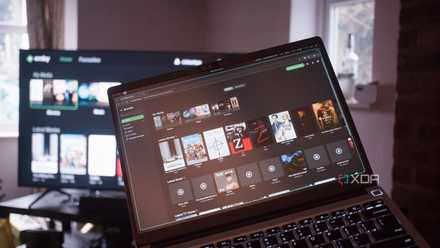
I switched to Emby, and it's way better than Plex and Jellyfin... in some ways
Plex to Jellyfin to Emby.
What should newcomers use — Jellyfin or Plex?
If you're completely new to self-hosting and want to take your first step, perhaps by repurposing any old devices into media servers, Jellyfin is absolutely the way to go. It doesn't hide its best features, which are also essential to media streaming, behind a paywall. I might be staying put for now, since my entire setup is tuned exactly how I like it, and more importantly, my Plex setup works without asking anything from me.
At this stage, the convenience is hard to walk away from. And yet, Jellyfin now has me considering that I could.
Jellyfin is no longer the scrappy alternative you recommend while also mentioning a laundry list of caveats. It's stable, capable, and it's definitely usable in the kinds of real-world scenarios that used to expose its weakness. The gap is by no means gone, but it's small enough that your priorities now matter more than the software itself. But if you're just starting out, or even thinking about switching, I don't think choosing Jellyfin means you’re settling anymore.