
Plex didn’t become a default name in self-hosted media by accident. It earned that spot by being the option you could recommend to almost anyone, including people who don’t want to learn new words like “transcoding” or “reverse proxy.” For years, the biggest barrier to switching away from it wasn’t the server; it was the client situation on the house’s biggest screens. When your TV platform doesn’t have a clean, native app, the best features in the world stay trapped behind friction.
Once Jellyfin is sitting next to the usual streaming apps, the question becomes ‘Do I like this better?’
That’s why Jellyfin showing up on Samsung TVs is a bigger deal than it looks at first glance. Samsung sells a lot of televisions, putting Tizen OS is in a lot of living rooms rather than just a niche corner of the smart TV universe. Jellyfin has always had the “power user” glow, but it also carried a lingering asterisk: you can do it, but you might have to work for it. Removing that asterisk changes the competitive math.
Jellyfin does hardware transcoding for free, and Plex wants $250 to match it
Jellyfin gives you free hardware transcoding, while Plex charges $250 for the same capability. The value gap keeps growing.
A rare opening in the living room
Samsung support changes Jellyfin’s entire pitch
Jellyfin’s story has always been simple: your media, your server, your rules. The problem was that the last step, the one that matters most to normal people, often got messy. You could build a beautiful library and tune your server like a race car, then hit a wall when it was time to actually watch something on the big screen. When the TV experience feels like a workaround, even the most principled “Plex alternative” pitch starts to wobble.
Samsung changes that because it’s the platform people already own. It’s also the platform used by the least-technical person in the home, which means the tolerance for weird steps is near zero. Once Jellyfin is an app you can find, install, and open like anything else, it stops being an enthusiast project and starts being a household option. That move alone forces Plex into a new kind of competition.
There’s also a subtle psychological shift here that matters. People don’t like migrating their media brains unless they feel pushed, because watch history and “where was I” habits become part of the routine. Plex has benefited from that inertia for a long time, even when users complain about changes they don’t like. Jellyfin landing on Samsung TVs doesn’t create the push on its own, but it makes the exit door visible.
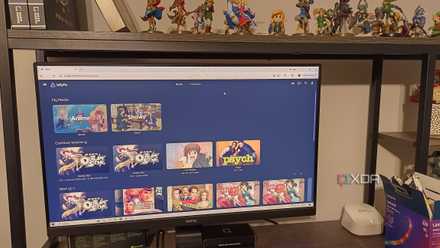
I've been using Jellyfin for quite some time, but enjoying it on my living room TV always required a third-party app. For ease of use, I have Infuse Pro on my Apple TV. With Jellyfin releasing a native app for Tizen OS, my Samsung smart TV can now stream from my Jellyfin server without me needing to go to my Apple TV.
The frictionless install matters most
App-store availability beats sideloading every time
Sideloading is a filter that filters out exactly the audience Plex cares about keeping. If the instructions include developer mode, certificates, or “plug in a USB drive,” you’re already down to a small crowd. Even if the process is easy for someone who lives in terminal windows, it’s not easy in a living room where the remote is the only tool people want to touch. A native app in the store turns Jellyfin into something you can suggest without apologizing.
If you’ve got a newer Samsung TV, you might already see Jellyfin in the app store, because Samsung appears to be rolling it out in waves rather than flipping the switch for everyone at once. It showed up on my 2025 model without any fuss, which suggests recent sets may be first in line. If you don’t see it yet, don’t assume it’s dead on arrival, as it may simply not have reached your region or model range. Check again in a few days, and consider a quick TV reboot since some app stores only refresh their listings on a restart.
The install is only the beginning, but it’s the most important beginning. It’s the moment where curiosity turns into a real trial, and trials are how habits change. If trying Jellyfin feels like installing any other TV app, people can test it casually on a Tuesday night. That’s a dangerous kind of convenience for Plex, because casual trials are how “I’ll never switch” turns into “I switched without meaning to.”
It also removes the most common argument against Jellyfin in one swoop. Before, the practical advice often sounded like this: Jellyfin is great, but Plex is easier on TVs, so use Plex unless you’re willing to tinker. With Samsung in play, that comparison gets less clear, especially for people who primarily watch on a single television. If the TV app is good enough, Plex loses its biggest defensive wall.
Plex’s identity crisis is showing
Features keep growing while trust keeps shrinking
Plex has been trying to be two things at once for a while now. On one side, it’s still the personal media hub that made it famous, and it still does that job well when everything is set up. On the other side, it keeps leaning into a broader streaming and discovery experience, with more content layers and more reasons to stay inside the Plex ecosystem. Even when those additions are useful, they change the vibe, and some longtime users feel that shift as a loss of focus.
That matters because trust is a product feature in self-hosting. People choose a media server partly for stability, control, and predictability. If an update makes users wonder what will change next, they start looking around, even if they don’t leave immediately. Jellyfin benefits from that unease because its entire identity is “no surprises unless you choose them.”
Plex also has a price-and-policy conversation that never really goes away. Subscriptions, optional upgrades, and shifting boundaries around what’s included can be reasonable business decisions, but they still create a mental ledger for users. Some people don’t mind paying, yet they mind not knowing what the rules will look like later. If Jellyfin is one click away on a Samsung TV, that mental ledger starts to feel heavier.
Open source keeps winning quietly
Community clients move faster than roadmaps
Jellyfin’s biggest advantage is not that it’s free, even though that gets all the attention. The real advantage is that its priorities are shaped by people who are solving their own problems. When enough users want a feature, a fix, or a platform client, that desire can turn into code without waiting for a quarterly plan. That doesn’t guarantee polish, but it does create momentum in places that commercial products sometimes neglect.
Samsung TV support is a perfect example of why that matters. The TV app is where media servers win or lose, and it’s also where platform quirks can make developers miserable. Getting a client onto a major smart TV platform means navigating rules, testing, and all the small compliance details that aren’t fun for anyone. If Jellyfin is getting through those gates, it signals a community that’s getting better at finishing the hard parts.
There’s also the long-term durability angle. Open source projects can stall, but they can also outlive trends because the code can be picked up, forked, and improved by new contributors. If Jellyfin becomes the default install on popular TVs, that creates a larger user base, and a larger user base tends to attract more contributors and more scrutiny. That kind of growth loop is exactly what Plex does not want to hand to a competitor.
Plex still has big advantages
Libraries, discovery, and polish are hard
Plex is not suddenly in trouble because another app appeared in an app store. Plex is mature, widely understood, and genuinely refined in ways that are hard to replicate. Metadata handling, scanning behavior, and the general “it just works” feeling can be the difference between watching a movie and spending the evening debugging. Many users want the smoothest path, and Plex is still very good at providing it.
There’s also the ecosystem effect. Plex has a strong brand and an audience that recommends it by default in forums, friend groups, and family tech support chats. It’s familiar enough that people will troubleshoot it rather than switch, because switching feels like admitting defeat. That kind of cultural gravity is powerful, and Jellyfin still has to earn it.
Finally, Plex has capabilities that matter to specific viewers. If you rely on certain remote access patterns, client features, or integrations you’ve dialed in over the years, moving is not trivial. Even if Jellyfin does most things well, “most things” is not always enough when your setup is tuned to your routine. Plex can keep many users simply by continuing to be the safest choice.
But Plex should still worry
This is how habits switch overnight
Plex’s advantages are real, but they’re also easiest to defend when alternatives feel inconvenient. Once Jellyfin sits next to the usual streaming apps on a major TV platform, the comparison shifts from “Can I even use this?” to “Do I like this better?” That’s a fair fight, and fair fights are uncomfortable for incumbents. Plex has always been strongest when it didn’t have to win users every single day.
The other reason this matters is that a TV app creates household buy-in. When the shared screen works, a server choice becomes a family choice, and that makes it stick. If someone installs Jellyfin on a Samsung TV and it plays smoothly, the server can become “the normal thing” faster than you’d expect. Plex won’t lose everyone, but it can lose enough people to feel it, especially among the users who already have doubts.
This is also the kind of change that shifts recommendations. Tech friends often start with Plex because it avoids awkward support calls later. If Jellyfin becomes just as easy to install on common TVs, that recommendation script gets rewritten. The moment people can say “Try Jellyfin first” without adding warnings, Plex stops being the default answer.
A bigger fight than it seems
Jellyfin arriving on Samsung TVs doesn’t automatically dethrone Plex, but it removes the biggest practical reason many people never tried switching. Plex still has polish, mindshare, and a lot of features that users genuinely enjoy, so it’s not going away. What changes now is the ease of experimentation, because the living room is no longer locked behind extra steps. If Jellyfin’s Samsung client is stable and pleasant to use, the “Plex alternative” label starts to fade into “Plex competitor.” That’s when Plex has to win on trust and focus, not just familiarity.
Jellyfin
- iOS compatible
- Yes
- Android compatible
- Yes
- Desktop compatible
- Yes
Jellyfin was already my favorite media streaming server, and now it's even easier for me to use in my living room.