
Whatever storm is brewing in the PC hardware space, the itch to upgrade never stops. Those whose PCs are due for major upgrades, such as a GPU or CPU, might be tempted to somehow navigate the overinflated prices and poor availability, and get themselves shiny new components. I would advise you, however, to hunker down and wait for the storm to pass. If you can wait for another year, the situation is bound to get better.
The latest CPUs and GPUs aren't impressive enough for you to ignore the unreasonable prices you see virtually everywhere. And new motherboards and SSDs with the latest standards will not radically alter your gaming experience either. It's smarter to retain your existing components for the foreseeable future, wait for supply and prices to get better, and then reassess the market and your upgrade requirements.

Expensive hardware and poor optimization has PC gaming in a dangerous place
PC gaming has to get off this path, before it's too late
5 If you're hyped about PCIe 5.0 or Wi-Fi 7, don't be
Neither is remotely necessary yet
If you're thinking that newer technologies like PCIe 5.0 — for SSDs and GPUs — or Wi-Fi 7 warrant an upgrade to a newer platform, think again. PCIe 5.0 or Gen5 SSDs are not new, but they're still not worth the premium for gaming PCs. Gen4 NVMe SSDs are fast enough for any title in addition to being more than capable of general system responsiveness. Except for professional workloads and sequential file transfers, Gen5 SSDs are yet to prove themselves as necessary upgrades.
Coming to Wi-Fi 7, it's one of the most cutting-edge features available on upper-mid-range and high-end motherboards, but it's still far from mainstream adoption. Most people don't need Wi-Fi 7, considering the majority of households still use Wi-Fi 5 and Wi-Fi 6 routers. Wi-Fi 6E routers and devices are advanced enough to provide fast, reliable, and feature-rich connections for each of your devices, and it will be a while until Wi-Fi 7 becomes a factor in a motherboard purchase decision.

You probably don't need to upgrade your PC with the latest hardware
Your current PC hardware is probably good enough.
4 AMD's Zen 5 and Intel's Arrow Lake CPUs are unexciting
AMD's Ryzen X3D CPUs aren't for everyone
The CPU landscape has been a bit of a downer this generation. AMD had marketed its Zen 5 CPUs as game-changing compared to the Zen 4 chips, but what we got was essentially summarized as "Zen 5%" — gamers got a mere 5% performance uplift over Ryzen 7000 CPUs. With subsequent BIOS updates, the numbers improved slightly, but nowhere close to what you expect from a new generation of CPUs, and certainly not close to what AMD promised. The Ryzen X3D CPUs are still fantastic CPUs for gaming, but they're high-end chips with high-end prices.
Intel, on the other hand, was recovering from the instability debacle affecting its 13th and 14th Gen Core CPUs, when its latest Arrow Lake series arrived. In another disappointing development, the new Core Ultra CPUs performed slower than the 14th Gen chips, permanently removing Intel from the discussion. If you're currently using a Zen 4 or Raptor Lake CPU, you have no reason to consider any of the latest CPUs.
Even those running Ryzen 5000 or previous-gen Intel chips can wait it out till we get some idea about the performance of AMD's Zen 6 and Intel's Nova Lake series. The gaming performance you're getting on your "older" CPUs isn't going to change a lot from just a CPU upgrade. It's better to delay your upgrades to next year, or until we get a mid-cycle refresh from either AMD or Intel.

7 worst PC hardware failures of 2024
2024 might have been lackluster for PC hardware, but at least it gave us some juicy scandals
3 You can't buy a decent GPU if your life depended on it
It's the worst of times
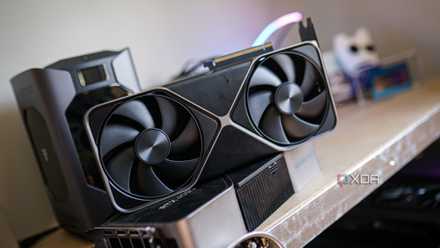
The GPU market alone should be a warning sign for those imagining PC upgrades this year. Before Nvidia's RTX 50 and AMD's RX 90 series launch, it was clear that prices would be higher compared to the previous generation, but no one anticipated the other horrors we witnessed soon after the launch. The supply of the latest GPUs was non-existent, prices were twice or thrice the MSRP, and any hope of things getting better soon was slim.
It's anyone's guess when exactly the supply chain issues will be fixed and prices will return to MSRP (or somewhere close to it). Even if you manage to find a sensibly priced GPU, the generational uplift compared to the RTX 40 and RX 7000 series isn't huge. Those rocking older GPUs can consider one of the RTX 50 or RX 90 series models, but only when the market returns to normalcy.
If you give in to temptation and buy an overpriced GPU, you'll be left with little else for other upgrades to your PC. This could lead to a pretty imbalanced configuration if you're planning to go for a complete system upgrade. Waiting for prices to stabilize or newer models to launch seems to be the right option in this market.
5 reasons we may never get GPUs at MSRP again
Buying a GPU at MSRP might be officially over
2 Even the pre-owned market is on fire (not in a good way)
Sellers have seized the moment
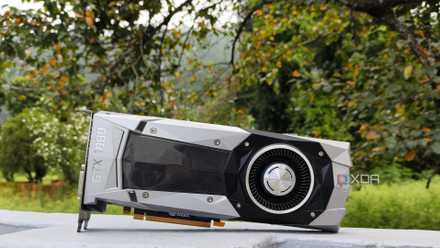
You might be thinking about checking out the used market in search of a good deal. Unfortunately, the bloodbath has spilled over into the pre-owned market, causing previous-gen hardware to shoot up in price significantly. Consumers can't find new GPUs, so models like the RTX 4090, RTX 4080, and RTX 4070 Ti Super are in huge demand, but the prices already reflect that. These models are selling way over their launch MSRPs, making it impossible to recommend a used GPU right now.
Even AMD GPUs, which are usually in low demand, have shot up in price on sites like eBay, with models like the RX 7900 XTX and RX 7900 XT listed for over $1,000 and $800, respectively — essentially the same as the brand-new prices. Considering the price-to-performance of AMD's RX 90 series GPUs, it's hard to pay these prices for pre-owned RX 7000 GPUs right now. Sellers know they can make hay while the sun shines, and the sun shows no signs of setting any time soon.
5 scenarios when buying used PC hardware is a bad idea
Used PC components can be great value, but some situations are worth walking away from
1 Tariffs on China mean price hikes are coming soon
Expect a 10-20% increase
If you haven't been following the news, the Trump administration has imposed new tariffs on a bunch of goods from a bunch of countries, including electronics from China. This is set to impact PC hardware as well, and many products have already seen price hikes at retailers. While the exact price increase on various components will differ, you can expect around a 10–20% mark-up on almost everything.
Components like GPUs, motherboards, and power supplies, among others, are set to get more expensive. Many GPU manufacturers hiked prices in anticipation of the new tariffs, and coupled with the overall price inflation going on, this has just made things worse for the end consumer. Even if the tariffs are removed after a few months, there is no guarantee that manufacturers will decrease prices.
Waiting till next year to build a new PC or invest in upgrades, however, might still allow you to see lower prices than right now, since the supply would have hopefully improved, and the shipping chaos caused by the new tariffs would have normalized.
5 reasons I have mentally given up on upgrading my gaming PC
Upgrading my gaming PC isn't my focus anymore, and I have a lot of reasons for it
If it isn't urgent, skip the upgrade this generation
Unless upgrading your PC is a life-and-death situation (which it never is), you can safely delay your plans to next year (at least). If you're happy with the performance of your existing PC, you can easily wait for a year or two before upgrading. On the other hand, if your PC is on its last legs, try to find a good deal in all the chaos (which is near impossible). Waiting till the supply chain woes are fixed, the new tariffs are properly absorbed, and some new components are launched is what I'm going to do. What about you?