
Buying a new GPU in this market feels like a cruel joke — almost everything is out of stock, retailers have become scalpers themselves (willingly or unwillingly), and finding a GPU at MSRP seems like it'll never happen again. I believe there's a high probability of that being the case, considering what we're seeing in and around the GPU market. GPUs selling above the MSRP in the first few weeks after launch isn't new, but something feels different this time.
The industry is going through a bit of a supply crunch which doesn't seem temporary. Plus, the demand for AI chips is making it harder for gamers to get enough GPUs to meet the consumer demand. As companies like Nvidia and AMD compete to market unrealistic MSRPs, it will become nearly impossible for retailers to reflect the same in street prices. Overall, we seem to be heading into a new age of GPU pricing.

3 reasons why right now is the worst time to upgrade your GPU
Waiting just a little while longer will pay dividends for your future GPU upgrade
5 Demand will continue to go up
PC gaming isn't going anywhere
As much as I like to knock on PC gaming due to unsustainable costs and broken AAA games, the demand for PC components, especially GPUs, is only going up. PC gaming continues to grow in popularity, and its mainstream nature means the demand for GPUs will always outstrip the supply. The market will have only three players — Nvidia, AMD, and Intel — offering consumer GPUs, meaning competition isn't likely to increase overnight.
Whenever a commodity with high demand is in short supply, scalpers will take advantage of the crisis. With nearly every GPU launch, we'll see the same story play out again and again — the few units actually shipped to the market will be scooped up by scalpers, and sold for obscene markups. Another angle to consider is that we will always see pent-up demand, since a large section of gamers who couldn't secure a new GPU will lie in wait for the next generation, hoping for better fortunes.
They will face disappointment again, and the cycle will continue. Unless the demand for PC gaming wanes considerably, and gamers switch completely to consoles, handhelds, or something else, I don't see a way out. And that kind of magical demand reduction is a pipe dream, at best.

6 rules of thumb PC newbies should know about the GPU market in 2025
AMD & Intel are back in the game, and advertised prices are a scam
4 Supply chain woes will only worsen
Chip manufacturing isn't getting easier
A big reason behind the trickling supply of GPUs in the market is the disruption in the supply chain. TSMC, responsible for the 4nm and 5nm nodes used to produce Nvidia's Blackwell GPUs, was hit by a severe earthquake in January this year, damaging tens of thousands of wafers that would have made their way to high-end Nvidia GPUs. As TSMC works to resume full capacity, the supply of Blackwell GPUs remains strained.
Component shortages in other areas such as VRAM and memory controllers have further contributed to a troubled supply chain, affecting Intel and AMD GPUs as well. These problems might sound temporary, but fabs like TSMC are usually booked for years, and huge disruptions now and then have lasting repercussions. Plus, producing increasingly advanced chips with every GPU generation will become more complex, and hence, more expensive, which won't always be reflected in the MSRP.
Boosting supply in the near term to respond to the ongoing crisis isn't feasible, since the supply chain bottlenecks are what they are. Consequently, paper launches and "fake MSRPs" will likely become a running theme with every GPU launch. Even the used market will mirror the inflated prices, and just the opportunity to buy a GPU, any GPU, will become a luxury.

6 reasons to keep your current GPU
Some reasons why you may want to keep the GPU installed inside your PC
3 AI chips will eat up more wafers
More for businesses, less than ever for gamers
It's abundantly clear by now that the AI chip market is much more profitable for companies like Nvidia and AMD compared to the gaming vertical. Sure, consumer GPUs still draw billions in revenue, but it is dwarfed by what enterprise GPUs bring in. Manufacturers are already allocating a bigger share of wafers to AI GPUs versus gaming GPUs, and this will become more lopsided in the future.
As the supply of consumer GPUs goes down in the face of steadily rising demand, gamers will get the short end of the stick. Fewer GPUs will make it to the shelves, and the lopsided demand-supply equation will keep prices way over the MSRP. Perhaps there's no point in blaming GPU manufacturers; after all, they're just doing business and will make the most profitable decision. As it stands, that decision is prioritizing the AI market over everything else.
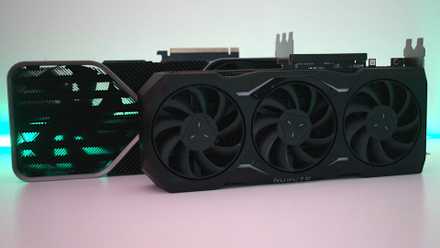
Nvidia and AMD are in their AI era, and gamers can do nothing but watch
The AI wave has turned into a tsunami for gamers, as Nvidia and AMD turn all their energies to data center GPUs
2 Consumers have set a bad precedent
They know we will not stop buying
The confidence that retailers and scalpers have in hiking up GPU prices is rooted in years of behavior and patterns on the part of gamers. Whether it was the GPU crisis of the pandemic era, the weeks and months after the RTX 40 series launch, or the current market conditions, they know consumers will keep buying GPUs, no matter the price. Sky-high MSRPs or scalper tax on top of that, gamers have set a bad precedent, and it's hard to get rid of it.
Retailers and scalpers are in it only for profits, and will do their best to make the best of a seemingly bad situation. Gamers have continued to reward Nvidia with market share despite AMD offering better performance per dollar for years. Nvidia GPUs are the ones seeing the maximum price hikes over the MSRP, as a result. Team Green still enjoys a 90% share of gaming GPUs, and consumers are showing no signs of changing that any time soon.

Nvidia's RTX 50 series is disappointing, and we are the ones to blame
We might be mad at Nvidia for the RTX 50 series, but we're the real culprits here.
1 Manufacturers will keep setting unrealistic MSRPs
"Valid only till stocks last"
Despite knowing they'll not be able to meet the demand, Nvidia and AMD will not stop setting unrealistic MSRPs that will be valid only for a handful of units at launch (at best). The competition to market more attractive MSRPs will keep the situation more or less the same as we're seeing right now — retailers will pay more to acquire the initial batch of GPUs, wait for rebates after the announcement of lower-than-expected MSRPs, and jack up the prices in the absence of sufficient rebates.
Only a handful of consumers, if at all, will be able to buy a GPU at the advertised MSRP. The larger consumer base will be forced to buy at inflated prices as it becomes impossible to enforce MSRPs across the board. Manufacturers offering rebates to retailers post the price announcement isn't anything new, but we're now seeing retailers receiving rebates for only a portion of their inventory, resulting in prices remaining high despite more stock coming in.
ASRock Radeon RX 9070 XT Steel Legend
- Memory Clock Speed
- 2518 MHz
- Architecture
- RDNA 4
- Process
- 5 nm
- Shader Units
- 128
- Ray Accelerators/Cores
- 64
- AI Accelerators/Cores
- 64
The RX 9070 XT is one of the best 4K gaming GPUs on the market right now. If you can get it at MSRP, it offers phenomenal value for the dollar in addition to advanced ray tracing and upscaling capabilities.

How much is too much to spend on a gaming GPU?
What is realistically the right price for a gaming GPU to enjoy a reasonable gaming experience?
Dreaming of buying a GPU at MSRP
MSRPs existing merely on paper might just become the new normal going forward. As consumers wait for prices to fall, retailers will struggle to meet MSRPs due to insufficient supply. GPU manufacturers will allocate more and more capacity to AI chips while they continue to market unrealistic MSRPs to capture more eyeballs. I really hope I'm wrong about this, and we get to buy GPUs at or around the MSRP next generation. However, that might just be optimism at its best.