
I used to be the guy who recommended Synology to everyone even when I didn't need a NAS myself. In the years since its inception, the brand cemented its reputation, making it a blind buy and a favorite on r/selfhosted and r/HomeNAS. It was just as great for a small business owner terrified of ransomware and a dad wanting to back up a decade of family photos. But today, a lot has changed, and I've finally picked a side where the grass is greener after being on the fence for a while.
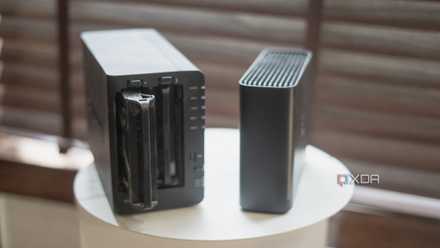
I usually tell people to look at the alternatives first. It hurts to say this because I genuinely love my Synology DS925+. Sadly, this specific model was the straw that broke the camel's back. The company has slowly shifted from a user-centric hardware maker to a profit-squeezing corporate entity that seems intent on testing just how much abuse its loyal customer base will take. Through a series of baffling hardware downgrades, software removals, and anti-consumer policies, Synology has eroded the rock-solid trust they spent a decade building. Here is how they lost me, and why backtracking on the proprietary HDD restriction is too little, done too late.
9 common NAS mistakes beginners make and how to avoid them
Put together a robust setup from the get-go
Software is king in the NAS world
The golden era
Back in the day, Synology shot to fame not because their hardware was powerful—it was actually pretty anemic compared to building your own server—but because of DiskStation Manager (DSM). While other NAS operating systems required a degree in Linux administration to manage, DSM was a friendly, windowed desktop that ran in your browser. It was easy to use, and consumers were okay paying for the software as a convenience.
You had Active Backup to save your PCs, Photo Station for your memories, and easy integration with Plex, and Docker for virtual machines and compartmentalized features. Most importantly, Synology devices used Synology Hybrid RAID (SHR). This was a godsend for novices, allowing customers to mix and match hard drives of different sizes and makes as the varying budgets allowed.
However, in typical Big Tech fashion, enshittification of this tech followed close behind Synology's success. The cracks started appearing when users realized that reliability cloaked aversion to changes and necessary updates. While the rest of the world moved to 10GbE networking standards, Synology kept slapping single Gigabit or 2.5GbE ports on devices costing upwards of $600. In a move that alienated the media server community, Synology transitioned the popular Plus series from Intel chips with QuickSync to AMD Ryzen embedded processors.
Don't get me wrong, Ryzens are great chips, but these specific ones lacked an iGPU that killed off hardware transcoding support. Where it survived, Synology finished the job with a software update to DSM, and users were left scrambling for workarounds. Those were plentiful, but they chipped away at the novice-friendliness which established Synology's fame. If you wanted to stream Plex to a TV that couldn't handle a specific file format, your NAS would choke trying to convert it via software. As such, customers felt charged more for hardware that did less, and left underutilized.
Regressive software policies sealed the deal
Bleeding DSM with a thousand cuts
If the hardware stagnation was annoying, the software regression was insulting. It started with the transition to DSM 7.0, where they killed off the beloved Photo Station and Moments apps, replacing them with Synology Photos.
On paper, it sounded like a great unification, but the reality was a feature bloodbath where users suffered clumsy timeline views and metadata handling worsened just like subject recognition. These mainstays of the photo viewer made it harder to recommend for the everyday user looking to use a NAS as a backup server. Killing Video Station down the road made Plex and its alternatives a necessity for Synology buyers, degrading the value of purchased hardware because setting up stuff like Jellyfin needed the same fiddling with Docker containers that DSM tried eliminating.

6 ways my NAS became the best backup system for every device I own
One NAS, backups for every device at home
The DS925+ was the last straw
Not just for me, apparently
The moment that truly broke the camel's back, however, arrived late in 2024 with the launch of the DS925+ and subsequent high-end consumer models. For years, Synology had been trying to push its own branded HDDs to enterprise users. They were rebranded Toshiba drives with a markup that'd make Apple blush. But with the DS925+, they locked firmware to prefer Synology-brand disks and certified hardware.
If a customer tried slotting in a reliable, cheaper Seagate IronWolf or WD Red—the standard drives everyone has used for a decade—the NAS would refuse to create a storage pool outright, or restrict firmware updates for buyers. It was a naked cash grab that made potential buyers second-guess a community favorite. Seasoned buyers who liked the ease of DSM but didn't really need it were quick to support Unraid and Truenas, and equally vocal with criticism. Synology grossly misjudged the average prosumer whose comfort with Linux-based NAS afforded them the choice of switching.
On Reddit and popular media, the backlash was instantaneous and nuclear. Synology eventually balked due to the pressure from users, but to me, it wasn't a consumer win in the truest sense. A fan favorite had proven its profiteering intentions yet again. To me, the move reeked of a high school bully deciding if they were "just joking" or entirely serious based entirely on whether the victim fought back.
Synology had found the line of consumer patience, overstepped, and backtracked an inch, expecting consumers to be grateful. I won't stand for that.
Trust is a non-renewable resource
DSM sure isn't going back to how it used to be, even if it allows using any drive I please now. I'm a believer that if a brand tries to push limits this way once, they always do it again, but smarter. For now, my Synology NAS is still humming away in a corner, and I'll add drives to it too, but it could very well be the last Synology NAS I buy.
For new buyers, I now point toward TrueNAS or Unraid on custom hardware, or even emerging competitors like Ugreen who are hungry for the market share Synology is taking for granted. With money to spend, I'd suggest any consumer should only remain loyal to the best value proposition, and Synology sadly isn't that anymore.