
The allure of the flagship PC hardware drives the bulk of the conversation every single generation. Hopes of owning the fastest CPUs and GPUs money can buy keep the community engaged, and the hype surrounding every new launch successfully capitalizes on that. While the high-end components represent the latest peak of computing every year, they're not what most people buy.
Besides the fact that the average gamer simply doesn't have the money to afford the flagships, they aren't able to use all of that power either. Whether it's display bottlenecks or diminishing returns once you're in the mid-range, the average gamer will almost never consider buying the fanciest graphics cards or gaming CPUs.

You probably don't need to upgrade your PC with the latest hardware
Your current PC hardware is probably good enough.
5 Only enthusiasts need the latest and greatest
RTX 5090 and Ryzen 7 9800X3D enjoyers
As much as tech journalists and reviewers love strong gen-on-gen improvements at the top of the stack, those yearly improvements matter only to a small niche of users. The Ryzen 9 9950X being faster than the Ryzen 9 7950X might be great news for professionals and enthusiasts, but the majority of gamers are more than fine with hardware from one or two generations ago.
The average gamer looking for a smooth 1080p or even 1440p experience doesn't need all the power of an RTX 5080 or the Ryzen 7 9800X3D. The Ryzen 5 7600 and RTX 4070 are enough to play all modern titles at 60+ FPS. If you're currently rocking a 5-to-7-year-old CPU, even a budget processor from 2 to 3 years ago will blow it out of the water.
Modern budget GPUs like the RTX 4060 are easily faster than older flagships like the GTX 1080 Ti. This is why you see the RTX 4060 and RTX 3060 ranked the top two desktop GPUs on the Steam Hardware Survey. The flagship components might set the benchmark every year, but it's the low-end and previous-gen components that most gamers care about more.

5 reasons I'm never buying a high-end GPU again and you shouldn't either
High-end graphics cards don't justify the premium. I can save hundreds of dollars and still get a superb gaming experience with a mid-range card.
4 The average gamer isn't spending thousands on upgrades
Most people need to afford rent and groceries
Even if the average gamer wants to experience high-end gaming, investing in $1,000 GPUs and $400 CPUs is out of the question. Most gamers can't afford to spend thousands on a single component or even the entire PC. The majority of the PC community targets $1,000 as the entire budget for a gaming PC. This price range comfortably beats a current-gen console without making the whole exercise a luxury.
Hence, high-end components are rarely in the consideration set of most people when they set out to build a new gaming rig. It's fun to watch the reviews, criticisms, and stock-outs when it comes to the flagship parts, but when it's time to get serious, it's the budget segment that looks the most attractive. Lately, the state of the budget GPU market has made PC gaming a luxury for many users, but affordable GPUs like the Intel Arc B580 give me hope.

Here's how to build yourself a killer PC with old and used parts
Scouring for bargain deals and putting together a killer PC is almost a lost art
3 Most people have major bottlenecks in their setups
With great hardware comes great responsibility
Another reason the average gamer cannot utilize the power of the greatest GPUs and CPUs is the rest of the setup tends to become a bottleneck. Most gamers still game on 1080p 60Hz screens, which might sound antiquated to you but feel perfectly normal to the majority. Even a 144Hz 1080p gaming monitor does nothing for a graphics card like the RTX 5080 (let alone the RTX 5090), which only makes sense for 4K gaming.
Even if you look past the monitor, there are other sources of bottlenecks in the average gamer's setup. Traditional hard drives can make a PC feel terribly slow compared to one with a SATA SSD. Insufficient RAM can create a variety of issues during gaming that can't be overcome with a high-end CPU or GPU. Many PCs don't even have a capable power supply to support flagship components.

Here are 6 real ways to avoid bottlenecks on your gaming PC
Bottlenecking is easily avoided if you make careful choices when building your gaming PC
2 Diminishing returns are real
Overspending is rarely worth it
Flagship components might not make any sense for most gamers, but what about mid-range hardware? Doesn't a Ryzen 7 7800X3D or RTX 4070 Ti unlock a significantly better gaming experience compared to a budget PC? Well, it certainly does, but the average Joe would have to spend considerably more for something that doesn't translate to an equivalent increase in their enjoyment.
For instance, an RTX 4070 for around $500 gives you 80% of the performance of the $800 RTX 4070 Ti. Similarly, the Ryzen 7 7800X3D is the second-fastest gaming CPU in the world, but the Ryzen 5 7600 for under $200 gives you around 80% of the performance of the $450 3D V-Cache processor. These diminishing returns mean that most gamers will try to save up for the RTX 4070 (at best) instead of considering the upper mid-range or high-end models.
Once you have a decently powerful budget CPU and a solid mid-range GPU, you're all set for a fantastic 1440p gaming experience. Throwing more money will not give you an appreciable return on investment unless you go all out and build an enthusiast gaming PC.
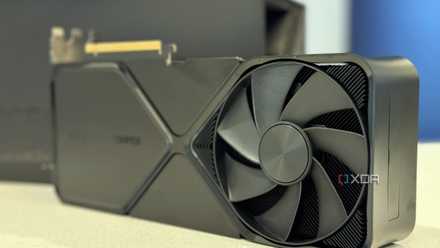
8 gaming PC myths that trick you into overspending on your build
Old and new myths about PC building can trick you into blowing your budget on parts you never really needed
1 Depreciation hits high-end PC components the hardest
Time is brutal for high-end component resale
Every PC component loses its value with time, but in terms of the absolute dollar amount, the more expensive the model, the more value it loses every year. Selling older hardware after upgrading to something new is integral to getting back some of your investment, especially for the average gamer. Not everyone has endless funds to buy the best thing every generation without worrying about the resale price.
If you somehow manage to buy the RTX 5090 for $2,000 (which is the optimistic price), you'll lose a lot of that investment when you sell it after 2 or 3 years. If you decide to make your expensive GPU last for longer, things will only get worse due to depreciation. In contrast, a mid-range graphics card or budget CPU will not sting as much even if you apply the same percentage depreciation on it.
This is why it makes more sense (for most users) to avoid "future-proofing" and buy only the hardware needed at the time. You can keep upgrading every 2 to 3 years without losing much (in absolute terms) on reselling your older components.

How much is my PC worth? Know your PC's resale value
Finding out your PC's resale value doesn't have to be tough. Here are four ways to do it.
It's the PC hardware bell curve
Just like any other industry, the majority of consumers don't buy or consider the absolute best products. The biggest movers are the value-for-money components or the budget champs that are more affordable without sacrificing too much in terms of the gaming experience. Enthusiasts and professionals will continue to find value in the flagship hardware, but the community, as a whole, will always gravitate toward value over raw performance.