
With digital sovereignty taking a massive shift in the past couple of years, I was tired of being a data crock for Google's AI training. I wanted my memories on my own iron behind my own firewall rather than stored within Google Photos.
Recently, Google One has been facing price wars. Google slashed its 2TB plan to just $49 a year to keep people from leaving. In turn, the self-hosting route has never been more expensive, thanks to significant volatility in the hardware market. I achieved my goal of 100% privacy, but between the AI hardware tax and unexpected infrastructure costs, my free photo library will take seven years to break even. I'm in a position now where I'm wondering if it was all worth it.
I replaced cloud storage with a local NAS and learned this the hard way
Abandoning big tech for a local NAS might not be a smart choice
How I made the switch
Simple but expensive
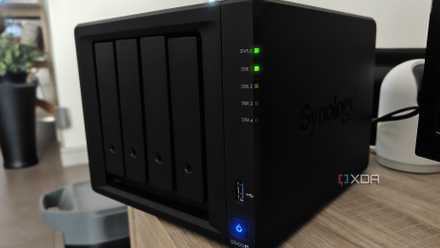
Years ago, we assumed hard drive prices would only go down, but in 2026 they actually went up as AI centers hoovered up high-capacity drives. Consumer HDD prices have jumped significantly over the last four months. A 16TB IronWolf Pro that was just $280 a year ago is now pushing $550 for the exact same drive. My cheap 4-bay NAS suddenly became a $1,500 investment before I even turned it on.
Hardware has become so expensive that investing in it as an alternative to cloud storage, which is cheaper than ever, is a difficult decision.
Alongside just the hard drives themselves, you'll likely also invest in a range of other hardware to get the real Google Photos experience. If you're someone who just wants to store your images on a hard drive and forget about them, then transferring them over to your HDD and ignoring them moving forward is fine. If you're someone who actually wants to index your images, the same way that Google Photos allows you to, with features like the search option and facial recognition, then this isn't an option, and you'll need to use a tool.
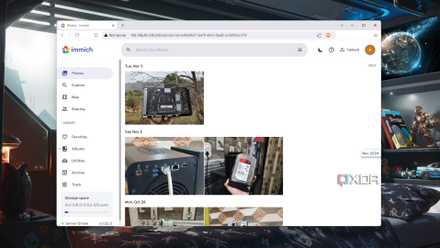
I decided to use Immich, the gold standard for self-hosted photo storage alternatives. However, there's a hardware bottleneck. To get that Google-like magic search feature and facial recognition locally, you can't just run it on a Raspberry Pi anymore. You need an NPU or a modern GPU for the machine learning headers. This means you have to run it on your PC directly or ensure your external server is high-spec enough to handle this.
This led to another cost for me. I had to upgrade my server to an Intel i5-14600K just to handle the background facial recognition and object detection for 1000+ photos without it taking three months to index.
Alongside this, you might have some backup paranoia. When you leave Google, you lose the safety net. If your home NAS dies, your memories are gone forever.
How I made my own photo hosting platform with Immich
Ditch Google Photos, iCloud, and OneDrive for this incredible (free!) backup solution.
If you want to opt for a backup, you might have to buy a second NAS for off-site storage in a different location, plus pay for a subscription for encrypted cloud backup of the absolute essentials. Your free storage now has a monthly bill for electricity, off-site bandwidth, and cloud storage that is actually higher than the cost of a standard Google One subscription.
Weigh up your options
Is this really worth it?
After making the switch, I noticed a lot of friction in convenience. Google Photos is practically invisible and there whenever you need it. I don't have to constantly upload my images or battle sync friction, it does it automatically. I don't have to do any maintenance; it's all done for me.
All I have to do is take the images I want, as and when I want. I know in the back of my mind that they're all stored and backed up in the cloud. Self-hosting requires a lot of maintenance. There's a time cost on top of the original financial cost I noted above. You'll spend hours setting up Docker containers, turning on reverse proxies, and troubleshooting the background sync, which still isn't as bulletproof as Google's native integration.
Really and truly, the only way you're benefiting is from privacy and privacy alone. Self-hosting isn't easier or cheaper than using Google Photos. For many people, this just won't be worth it. I'm not sure for me that it was, but I was already in too deep to step back and reevaluate before noticing just what I was in for.
Pixel 10 Pro
- Display
- 1280 x 2856 pixel resolution LTPO OLED at (495 PPI)
- RAM
- 16GB
- Storage
- 128GB
- Rear camera
- f/1.68 50-megapixel wide, f/1.7 48-megapixel ultrawide, f/2.8 28-megapixel telephoto
- Front camera
- f/2.2 42-megapixel
- Battery
- 4,870 mAh
I'm not sure if I made the right choice
It's not for everyone
Right now, I'm of two minds about whether I regret this decision. It was very expensive. I'm paying a privacy tax of around $20 a month, thanks to amortized hardware, power, and backup costs, just to stay off Google servers. If you're doing this to save money, then stay on Google. But if you're doing this so that you own all of your own files, images, and life, then get your wallet ready because it's a pretty healthy and hearty investment.
Immich
- Key highlights
- Self-hosted
- iOS compatible
- Yes
- Android compatible
- Yes

4 lessons I learned after switching from Google Photos to a self-hosted solution
It has gone better than expected, but with a few hurdles.