
I've been using turnkey NAS enclosures for a decade or so, and none have given me more issues than the first unit I ever owned. I got the wrong hard drive types, thought I could postpone some upgrades for a later date, and overestimated just how many things I could run on it at one time. But I learned a lot during that time, mostly from frustrating hours troubleshooting things that were (mostly) my fault, and every NAS installation since has been relatively stress-free. Maybe you can learn something too, and not repeat the problems I found myself with.
5 irreplaceable services my NAS provides that I couldn't live without
I rely on my little box of storage for a lot of things
6 Using the wrong hard drives
I missed a crucial specification and got burned
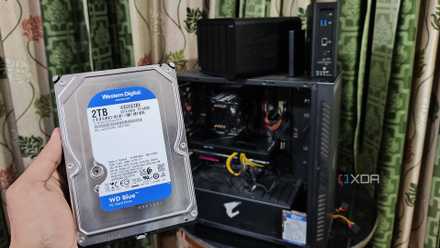
The hard drives I ordered for my NAS were not only consumer-grade, but SMR and from the infamous batch of 3TB Seagate 3.5-inch drives that had a habit of failing early for no reason. They were noisy when spinning, but each drive had its particular noise and pitch, so I hated being near the NAS when reorganizing data or transferring anything.
I don't remember hard drives being sold as NAS-tuned back then, but even if they were, I probably couldn't afford that many of them. I was only using consumer drives because enterprise ones were nearly twice the cost, and I had plans to upgrade before too long. My hand was pushed by multiple drives failing within a few days of each other, and the replacements were larger capacity and of better quality. Still, I learned a valuable lesson about having backup drives and picking the correct ones for your storage needs.

Hard drive tech matters more than you think - learn from my mistakes
Uncovering the hidden dangers of inexpensive hard drives
5 DHCP issues
The default IP for the NAS was on another subnet
When I set up my first NAS, I had just returned to owning a desktop PC after a few years of laptop ownership. I could only remember some networking from when I'd studied my A+ and Network+ certifications about a decade before that, so I fell back on what I knew better: a direct cable connection from my PC to the NAS for setup purposes. Everything went fine, so I swapped the cable over to the router so everyone in the house could connect, and found that the NAS wasn't showing up on the network at all.
The NAS had reverted to its default IP configuration, which wasn't the same DHCP range my home network was set to use. It took me forever to troubleshoot, identify what was wrong, and then manage to set a static IP address on the correct subnet. The worst part is that I can't be certain I won't do it again. At least newer networking appliances are better at identifying issues and have better interfaces, because back then, I was lost.

4 reasons running your own DHCP server can improve your home network
Running your own DHCP server is a great learning experience for anyone building a network
4 Ryzen CPU meant no transcoding
My dreams of a smooth media server were dashed
One of the things I wanted to use my NAS for was as a media server, to stream the sizable collection of digital movies I owned to my laptop and other devices. I'd been streaming using a Raspberry Pi running Kodi, so I incorrectly assumed I would have no issues with my NAS. The best option available at my budget was a new Ryzen V1500B processor, which looked powerful enough for encoding, decoding, and transcoding.
But when I got Plex running on the NAS, I noticed that 4K and multichannel audio files struggled to play back because the CPU didn't have an iGPU and couldn't do transcoding. Now when I look for a new NAS, I always check for iGPU compatibility, the ability to add a discrete GPU, or take the easy route and make sure that the NAS runs with an Intel CPU, because QuickSync makes transcoding a breeze.

2 free and open-source media servers that make Plex Pass look overpriced
Looking at some of the free and open-source Plex alternatives.
3 I overloaded it with services
Low-powered CPUs are not meant for home server use
Along with a media server, I stuffed my NAS with projects and services—so many that it started to grind to a halt on simple file transfers. Either the disks were being accessed by services as well, or there was no available RAM for the system to use. I put game servers on there, backup services, a caching DNS server, installed everything in the Synology app store, and as many virtual machines as possible.
It's no wonder that it wasn't running well. I had four or five Linux VMs running simultaneously, constant downloads going, and was constantly encoding video files. It's harder nowadays to do the same, because containerized services are fairly lightweight on resources, and the CPUs inside are more powerful, but it's still worth remembering that NAS enclosures are meant for certain tasks, no matter how many things the manufacturer thinks you could be running.

I hosted my own DNS server using my NAS, and you can too
Self-hosting a DNS server makes your searches faster and more secure.
2 Add-in cards gave me sticker shock
I thought I could add cache or faster networking at any time
I specifically picked my first NAS enclosure because I wanted one with an x1 PCIe expansion slot. This way, I could add NVMe cache or faster networking at a time that suited me after I'd outgrown the NAS's capabilities. I soon learned that I should have swallowed the cost in the first place because adding PCIe cards to do either cache or 10GbE networking was more expensive than I thought, almost as costly as the NAS enclosure. The next time I upgrade my NAS will be to a custom device running TrueNAS, with standard components, because I don't want to be locked-in to expensive accessories ever again.

I installed SSD caching inside my NAS, but here's why you probably shouldn't
SSD caching is great ... if you truly require it. Here's why your NAS may be better off without caching.
1 Snapshots ate up my storage
I couldn't figure out why I had no available space
The thing about any new piece of tech, at least for me, is my almost willful disregard for reading the manuals or the software that runs on it. I get too excited to use the thing, which sometimes doesn't go too well. Except I read enough this time to know that my new NAS should enable backups and snapshots so that I could rewind the clock on anything I break in the future. Cue several weeks later of regular operation, where I didn't think I was saving much in the way of files, but my drives were almost full. It took a little bit of searching to figure out why, but Hyper Backup had filled up every bit of available space with snapshots because I hadn't set it to discard any that were older than 14 days, and hadn't added any storage limits, so the backup went wild.
How to quickly set up and follow the 3-2-1 backup rule
It's easy to keep all your data safe.
I learned a lot of lessons with my first NAS
I'm now several NAS enclosures from that first system that caused me so many headaches, but I'll never forget some of the lessons it taught me. Well, not the one about the default IP address being on another subnet to the one on my home network, because that gets me every single time. But I've scribed the rest of the lessons here into indelible memory, and I won't make them again in a hurry.