
It didn't take long from building my first gaming PC to running out of storage space. First, I kicked the decision down the road by adding an external hard drive. I mean, I'd only just bought the PC, and my wallet was hurting. It was only supposed to be a stopgap measure, but then I remembered the old chestnut about how "there is nothing more permanent than a temporary solution", and decided to do something about it, the right way.
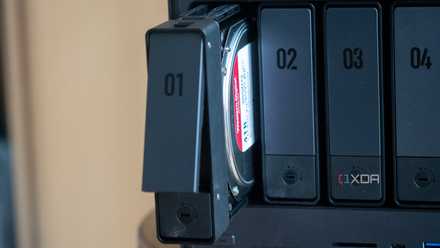
That meant setting up a Network-attached storage (NAS), replete with multiple hard drives for RAID and an M.2 SATA SSD for cache, since the only decent NAS in my budget didn't support NVMe. I picked out the highest capacity hard drives I could afford to get multiple of, took a moment to say a silent prayer for my overworked wallet, and waited with no small amount of excitement for my new NAS. I mean, I'd spent weeks researching and planning, got everything in one go, and all I had to do was put it together.
Except I'd missed one excruciatingly small but consequential piece of specification, and my NAS wasn't the powerhouse of increased I/O operations I'd expected from RAID. It would later turn out that the drives I picked were faulty, and Seagate replaced them with better ones of higher capacity, but I'm getting ahead of myself.
5 tips to prepare for your inevitable NAS drive failure
Your HDD or SSD will fail, but how can you prepare your NAS for this event?
I didn't pay attention the first time I built a NAS
And ended up with entirely SMR HDDs
When picking hard drives for your NAS, the first stage is planning how many drive bays you have, how many you will fill, and some estimate of how much data you will create in the next couple of years. I had four bays, wanted to fill them all, had no idea about my ability to hoard data, but my external 8TB was half full, and I had a budget to (mostly) stick to.
HDD prices were wild then, and didn't start to normalize until after I had already built. That meant I didn't have many choices if I wanted four of the same capacity, so 3TB drives were the most cost-effective. And at first, they seemed to be good, lots of capacity, good file transfer speed for single files, and more importantly to me at the time, not noisy when spinning.
It wasn't until I started doing large file transfers, first from the external drive and then over the network, that things slowed down. I didn't know at the time, but I'd missed a crucial specification and picked up shingled magnetic recording (SMR) drives when I should have looked for conventional magnetic recording (CMR). If my NAS was used for pure long-term storage, it wouldn't have been that much of an issue, but I wasn't, and the constant write and read jobs slowed everything down to a crawl. I thought it was my network, so I upgraded that, but no dice.
What's more, I bought a bad batch
Ahh, the mid-2010s. Taylor Swift had just started telling us to "Shake It Off," Drake was still relevant, and Rihanna had some novel debt collection methods. It was also a period of recovery for the factories in Thailand that produced nearly half the world's hard drives after devastating flooding earlier in the decade. And that's when I picked out my NAS drives.
Great timing, right?
Great timing, right? My first NAS experience (and most of my data) was about to be ruined because I bought 3.5" consumer drives—from Seagate—at the height of the 3TB platter failures. It's a good thing I kept the 8TB external drive and an even better thing that I hadn't wiped data off it, because I had multiple failures with the 3TB drives.
To Seagate's credit, they approved the RMAs for the drives and upgraded me to 4TB capacity drives. They were still SMR (I think, it's been a while, and my memory is fuzzy), but at least they had a better chance of living past their warranty period.

What are SMR HDDs (and why you should avoid using them in a NAS)
SMR drives can be useful when archiving data, but you shouldn't use them in NAS setups involving frequent write operations
You have better options
And the price difference isn't worth the hassle
So, SMR drives are not good for RAID configurations, which is how almost every turnkey NAS is set up. It's also how you'd set up your drives if you were making your own NAS, so they're best avoided for the home lab or storage hoarder. I know better now, and while planning out the next stack of spinning rust that I need to upgrade my NAS to the next level, I'm looking for CMR and HAMR before I look any further.
I've also found that the NAS or enterprise ranges tend to be CMR, but not always on every capacity, so it's always worth double-checking. The downside is that those drives are more expensive than the consumer-level ones, but what price do you put on your data? I know mine's priceless.
HAMR is here for larger drives
There's a third type of magnetic hard drive now, heat-assisted magnetic recording (HAMR), which enables higher data densities by using tiny lasers to heat the platter before it passes the write head. The physics involved means that the drive is more receptive to magnetic effects while hot, so you can write data to a smaller spot than previously, and it keeps the magnetic grain when cooled back to normal operating temperatures. It's really cool stuff, I mean, everything with lasers tends to be, and it also enables drives to go beyond 30TB of capacity, which is incredible.
Plus, you can get ex-enterprise drives to save even more
Your average mid-to-large company's data requirements are immense, without thinking about data centers or other specialists. Enterprise hard drives or SSDs are designed for tougher workloads than desktop drives, and companies routinely rotate them out before their effective lifespan are over. And that's where you can get a bargain, by buying tested but used ex-enterprise HDDs for a fraction of their MSRP, with plenty of active life ahead of them.

I used desktop drives inside my NAS — Here's how it went
Desktop drives aren't recommended for NAS, but I used some anyway to see how they'd fare.
Don't repeat my mistakes (I know I won't)
I'm looking at my next round of hard drives for my NAS, and none of the replacements will be SMR. I'm not sure what other specifications I'll be aiming for, although I have to go significantly higher with 20TB drives in my NAS already to make it worth it. Maybe I'll offload my data temporarily to Backblaze or Amazon Glacier, build a TrueNAS machine with more drive sleds, and build sideways into larger vdevs and storage pools. But either way, I will watch like a hawk for SMR so I can avoid them, and you should too.