
PC gaming has always held technical superiority over consoles. You can't argue with the degree of graphical fidelity the platform is capable of. The PC vs. console debate is pointless, though — each platform does some things better than the other. However, as a gamer, you will always gravitate toward one device more than others. For me, it's always been my gaming PC. It kicked off my gaming journey over 25 years ago, and has stayed my go-to platform for a quarter of a century. The control, customization, and performance advantages that make PC gaming superior are clear, but it's not enough to make it the default choice for everyone. Add to it the hardware storm we've been living through for the last five years, and you start to see why more people are moving away from PCs to consoles and handhelds.

I prefer console gaming to PC gaming for these 4 reasons
Many people would rather play games on a console than on a PC setup. Here are a few reasons for why they prefer that.
My PC will always be my primary gaming device
I'm a PC gamer at heart
From a single-core Intel Pentium III CPU in 2000 to the 8-core Ryzen 7 5700X system I have today, gaming has always been synonymous with PCs. I've spent nearly 20 years building PCs, lived without a discrete GPU for a decade, and played everything from DX-Ball and Moto Racer to Cyberpunk 2077 and Arc Raiders on a PC. It's not like I didn't try consoles along the way. I got a PS4 back in 2018, just so I could play The Last of Us, Uncharted 4, and Horizon Zero Dawn on it. I've also dabbled in handheld gaming on my friend's Steam Deck, but nothing came close to displacing my love for PC gaming. My PC has always been more than a gaming device; it's been my work machine for years, and also served as my dedicated home theater for the better part of a decade.
A PC may have been the reason I got into gaming in the first place, but it stayed my go-to device because of the limitless freedom it offered. Even today, the ability to run Moto Racer, a 1997 game, on my Zen 3 gaming PC, as if nothing changed, boggles my mind. Modding the heck out of beloved PC titles, emulating nearly everything on a modern machine, and using upscaling and frame generation to enjoy superior visuals without sacrificing performance remain some of the greatest joys of PC gaming.
While it's true that we've been living through what's essentially a 5-year-long PC hardware crisis, I'm more than willing to wait it out. New hardware might be inaccessible right now, but my existing PC has enough power left in it to wait it out for a few years. I've had this PC for only around 3.5 years and am in no mood to upgrade anyway. My RTX 3080 can still play new AAA games, and my Zen 3 CPU isn't old by any means.

5 things from my old gaming PCs that I miss the most
PC gaming and hardware used to be so much simpler and more enjoyable
PC gaming might be superior, but it's not the best choice for most gamers
Some gamers just don't want to get into it
As I mentioned, the technical, visual, and functional superiority of a gaming PC is beyond question. The problem, however, is that a large section of gamers doesn't care about all of that. According to 2024 data, the 907 million PC gamers still outnumber the 629 million console players worldwide, but the numbers don't tell the full story. For new gamers entering the arena and mobile gamers upgrading to something better, the affordability advantage lies firmly on the side of consoles and handhelds. The price of entry is significantly lower, and the gap has been increasing since the last two generations. A $500 PlayStation 5 or $400 Steam Deck sounds more attractive than an $800 or $1,000 budget gaming PC.
Even the convenience factor favors consoles and handhelds. A PlayStation 5, Xbox Series X, Steam Deck, or Nintendo Switch gamer doesn't have to put up with bad game optimization, unexpected crashes, and hardware instability. They don't need to worry about balancing visuals and FPS through in-game settings, undervolting the CPU and GPU, or tuning fan curves. Gaming handhelds add portability to the mix, and while the immersion level may be lower than in PC gaming, it works for a particular section of gamers. Most people still use a laptop even when working from home — the portability is a big plus. Besides, if it's powerful enough, it can also double up as their gaming device.
It's a given that a sufficiently powered gaming PC will beat each one of these options in terms of peak performance, immersion, and control, but gamers also value a seamless experience, more convenience, and greater affordability. PC gaming may stand at the top of the mountain, but gamers might simply abandon the climb.

Every time I try PC gaming, I'm reminded of why I prefer consoles
I don't have time to deal with it
The industry is trying its best to kill PC gaming
And it looks like it's succeeding
As if PC components weren't expensive enough, yet another hardware crisis has arrived to make things worse. Enterprise AI demand has swallowed almost all the available silicon on the market, leaving less than scraps for the end consumers. It started with the DRAM supply crunch that sent RAM prices through the roof around September last year. SSDs soon followed the trend, and graphics cards were next. PC hardware is going through a bad phase, and even laptops, consoles, and handhelds will be affected. However, DIY components will fare the worst, establishing a new normal for hardware pricing at the other end of this crisis.
Consumer hardware isn't the priority anymore as manufacturers shift production toward enterprise hardware. Companies like OpenAI have booked wafer production pipelines for years to come, and players like Nvidia obviously don't care about the tiny gaming market. We might never see PC building return to what it was before. The AI bubble will probably get way bigger before it bursts, or it might never burst at all. Either way, manufacturers will never let prices return to normal again. PC builders will continue to buy components at seemingly crazy prices because that's all that will be available. By the time the dust clears, PC gaming might be just a shell of what it is today, with gamers having moved on to one of the many alternatives.
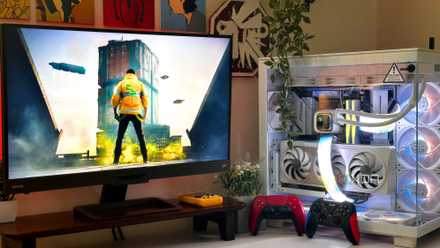
PC gaming is dear to my heart, but I can see the brewing problems
I'll probably never be able to permanently switch to something else; PC gaming is just too ingrained in my blood. That said, I can see the other points of view that speak to the problems it has. It's more expensive than ever, is hardly convenient for newcomers, and is more complicated than most gamers care for. Consoles and handhelds offer a seamless experience that can marry immersion and convenience if you have one of each. PC gaming might not disappear, but it'll definitely become less attractive if the existing market conditions continue.