
Here we go again, debating some widely-held beliefs about PC games and hardware. PC gaming is a topic that encompasses so many aspects — graphics, gameplay, performance, optimization, hardware, bottlenecks, frame pacing, generated frames, and more — that believing in some or the other myth is inescapable. In this list, I want to shed light on some of the most popular gaming-related myths that people hold dear. Let's get into each of them and dissect why it's high time you stopped believing in them.

10 PC hardware misconceptions you still believe in
Cores, VRAM, PCIe 5.0, or DDR5 — you might be guilty of believing in these 10 PC hardware myths.
6 Ultra settings look much better than High settings
It's the placebo effect
The words "Ultra," "Psycho," or "Ultra Nightmare" might sound uber cool, but maxed-out settings in almost every title aren't worth the performance hit. It might be tempting to scale everything to 11, including maximum ray tracing and path tracing settings, but even the flagship GPUs of today can't handle that at native resolution in the most demanding games. Dropping just one preset below the maximum can net you a lot more frames without a visible drop in the visual quality.
Most gamers should try to use "Very High" or "High" settings to strike a great balance between impressive visuals and smooth performance. Granted, today you have tools like upscaling and 4x frame generation to boost framerates at demanding settings, but you might need to resort to them. It's worth checking if your PC can run the game at playable framerates at high settings before defaulting to DLSS, FSR, or XeSS. Upscaling is, more or less, a given in today's titles, but you need not enable frame generation every time.

4 settings I first tweak when optimizing game performance on a PC
It's important to flick the right switches to get good game performance
5 Ray tracing automatically makes a game look better than others
It's not that clear-cut
Ray tracing and path tracing are often considered the gold standard for gaming visuals. If a game boasting ray-traced effects is compared to one without them, at face value, many games might declare the former as the winner in the graphics department. However, what actually decides the battle is the ray tracing implementation by the developer. Even in 2025, only a handful of games really make use of ray tracing to the fullest.
For instance, many titles that technically support ray tracing will only use one of the following: ray-traced shadows, reflections, or lighting. You'll be hard-pressed to spot ray tracing in action in titles like Dead Space (2023), A Plague Tale: Requiem, Resident Evil 4, and even Elden Ring. They do have ray-traced effects running in the background, but the tangible impact on the visuals is minimal. On the other hand, titles like Cyberpunk 2077, Alan Wake 2, Control, Black Myth: Wukong, and Metro Exodus Enhanced completely transform the world when ray tracing is enabled.

10 games that prove you don't need ray tracing for phenomenal visuals
Ray tracing might be the cool new tech in gaming visuals, but these games manage to look amazing even without it
4 Photorealism equals immersion
How far is too far?
These days, many game studios are caught in a hyperrealism arms race. Photorealism was once a highly sought-after quality in games, but once we achieved it, the law of diminishing returns kicked in fast. The belief that the more real or lifelike a game world or characters look, the more immersive the game will be is flawed, since realism alone is insufficient.
For a truly immersive experience, realistic graphics need to be complemented by an arresting art style, deep lore, engaging gameplay, and playable framerates. Without these pillars, your next-gen game is just a shiny showcase with little substance. Every time an announcement trailer teases hyperrealistic visuals without any information on the gameplay, story, or characters, I silently cringe.

5 reasons realistic graphics aren't enough to sell games anymore
Photorealism looks pretty and creates some hype, but it takes a lot more to create a good game
3 Upscaling always looks worse than native resolution
Most of you can't notice the difference
Despite upscaling techniques like DLSS and FSR being almost inevitable for most new titles, many purists still rally against them. Their rationale is that upscaling a lower-resolution image to a higher-resolution one will never look as good as the real thing, i.e., native resolution. While that is technically true, does it matter if you can't spot the difference?
Modern upscaling algorithms like DLSS 4 and FSR 4 have reached a point where an upscaled image is indistinguishable from a native one. Even the artifacts tied to upscaling have been reduced to the point that you can't see the difference without pixel-peeping, and certainly not in real-time. Today, if you enable quality or balanced upscaling presets, you get a free boost in performance, since the visual trade-off isn't visible to most gamers.

3 reasons gamers prefer upscaling over frame generation
Gamers don't consider frame generation all that hot, but happily use upscaling to boost frames
2 Frame generation helps budget GPUs stay relevant
It's a catch-22 situation
Since Nvidia's RTX 50 series brought Multi Frame Generation to gamers, the conversation around frame generation has blown up significantly. AI-generated frames existed even at the time of the RTX 40 and RX 7000 series GPUs, but the downsides of, say, 2x frame generation weren't as apparent as they are with 4x frame generation. Since more aggressive frame generation exacerbates visual artifacts and latency penalties, AI-generated frames are much worse than conventionally rendered ones.
This means that frame generation is only usable when your GPU is already able to generate a high enough framerate (with or without upscaling). Since budget GPUs get the shortest stick in this regard, frame regeneration isn't really a savior for them. Enabling frame generation below 60 FPS will make for a much worse experience than doing it above 100 FPS. The unavoidable performance overhead and additional artifacts will introduce a greater negative impact in the former scenario, making the game unplayable in many cases.
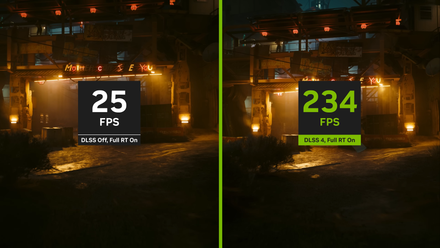
Nvidia's DLSS 4 multi frame generation works best when it doesn't make sense to use it
If you want to use Nvidia's new multi frame generation, keep in mind that there are very specific times where it can actually make a difference.
1 High-end GPUs are necessary for high-end gaming
Not anymore
This is an understandable misconception, particularly because it was true until very recently. After the launch of the RTX 40, RTX 50, and RX 90 series GPUs, however, you don't need the greatest cards for a high-end gaming experience. 1440p high-refresh gaming has become more accessible than ever, especially after the launch of GPUs like the Intel Arc B580. And cards like the RX 9070 XT have even brought 4K high-refresh gaming to a much larger consumer base.
The belief that you need $800–$1000 graphics cards for the best possible gaming experience is simply not true anymore. The enthusiasts will still go for the RTX 5090s and RTX 5080s of the world, but GPUs below $600 have made no-compromise gaming possible for the masses. There's still work to be done in the budget segment, which doesn't have many new Nvidia and AMD options to speak of. That said, things are looking promising on the AMD and Intel front, and I'm excited to see the next few offerings from these companies.
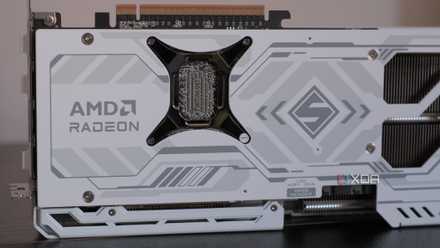
ASRock Radeon RX 9070 XT Steel Legend
- Memory Clock Speed
- 2518 MHz
- Architecture
- RDNA 4
- Process
- 5 nm
- Shader Units
- 128
The RX 9070 XT from AMD is the most value-for-money 4K gaming GPU you can buy, if you can find one at MSRP. It provides advanced ray tracing, upscaling, and frame generation technologies, and competes with Nvidia's pricier offerings.
It's time to find new PC gaming myths
Considering everything I've listed dates back years, it's high time PC gamers found newer myths to believe in. When it comes to graphics, things are subjective, and gamers will often have varying beliefs that are hard to leave in the past. Then there are marketing tactics like the infamous "RTX 5070 = RTX 4090" announcement that a lot of gamers took at face value. Lastly, years of conventional wisdom about the link between the price and performance of GPUs can't be changed overnight. Still, now that you know about these myths, you could start the journey.