
I wanted to switch from the RTX 3080 to the RTX 5080, but that dream was ruined, thanks to the less-than-expected performance gains and the street prices of the RTX 5080. However, I realized that the RX 9070 XT was the perfect upgrade for RTX 30 owners, and that's what I finally ordered. Switching from Nvidia to AMD wasn't just for better value (compared to the RTX 5080 upgrade I wanted); I also chose a better offering overall.
AMD isn't skimping on VRAM or counting on slim generational improvements to move units. Plus, the company's ray tracing and upscaling technologies have shown a significant leap forward. It seems AMD is committed to producing improved GPUs every generation, Nvidia is coasting along, and Intel has just started getting good. If there's any hope for the future of consumer GPUs and PC gaming, it's only with AMD at the moment.
5 ways AMD embarrassed Nvidia with the RX 9000 launch
Nvidia set a low bar with RTX 50, but AMD smashed it in a near-flawless RX 9000 launch
AMD is bringing 4K gaming to the masses
While Nvidia is still busy overcharging consumers
If we consider 4K 60 FPS native performance as a performance benchmark, then it has only been possible with premium GPUs before this generation. GPUs like the RTX 4070 Ti and RX 7900 XT, both priced above $800, were the cheapest GPUs that could break the 4K 60 FPS native barrier. However, with the launch of AMD's RX 9070 XT at $600, that minimum has been slashed by at least $200. While $600 isn't "budget," more gamers than ever can enjoy top-tier gaming without paying through the nose for a high-end graphics card.
I know almost everyone enabled upscaling at 4K (even 1440p), but the point of choosing the 4K 60 FPS native performance as the standard is to analyze how GPU technology is progressing. While Nvidia continues to break records in the pricing department, AMD's RX 9070 XT has delivered on many of the promises of the RDNA 4 series GPUs. Nvidia's RTX 5070 Ti offers around the same raw performance as the RX 9070 XT, but it does so for $150 more.
The RX 9070 XT trades blows even with the RTX 4080 Super, a $999 GPU that you can no longer buy for that price. For me, switching from the RTX 3080 to the RX 9070 XT meant a leap from 1440p to 4K gaming, and that too, at a much more affordable price, for which I couldn't have bought anything worthwhile from Nvidia. AMD's RDNA 5 GPUs might finally make 4K 60 FPS native performance possible for $500; that would be something to witness.
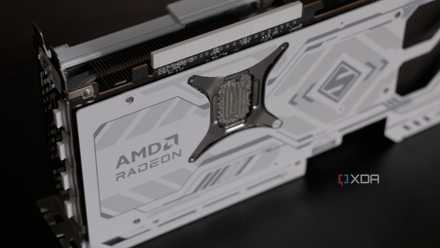
ASRock Radeon RX 9070 XT Steel Legend
- Memory Clock Speed
- 2518 MHz
- Architecture
- RDNA 4
- Process
- 5 nm
- Shader Units
- 128
The RX 9070 XT from AMD is one of the most affordable 4K gaming GPUs on the market. If you can get one for around the MSRP, it offers fantastic rasterization, ray tracing, and upscaling performance.

5 reasons high-end gaming doesn't need high-end GPUs anymore
Budget and mid-range GPUs are finally enough for everyone
AMD users don't have to beg for VRAM
Treating consumers right
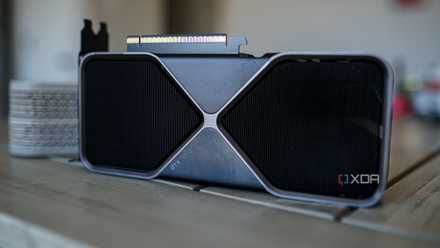
Nvidia's VRAM problem has been brewing since the RTX 3070 days, but the company refuses to budge from its upselling strategy. Outfitting powerful GPUs with insufficient VRAM only to force consumers to buy a higher-tier GPU is nothing short of predatory. GPUs like the RTX 5070 have no business having a mere 12GB of VRAM; 16GB should be the minimum on every mid-range GPU these days.
AMD, on the other hand, has been providing consumers with enough VRAM for a few years now. That trend continues with the RX 9070 XT's 16GB framebuffer, something which you need to pay $750 for in the Nvidia camp. The importance of VRAM is greater than ever, even at 1080p, thanks to textures being larger than ever, and ray tracing demanding more VRAM than ever. Nvidia has been handicapping its own GPUs with paltry VRAM; cards that are otherwise capable of reaching greater heights.
Even Intel, the distant third player in the GPU market, provides a 12GB framebuffer on its $250 Arc B580. Any Nvidia GPUs providing the same VRAM at $250? I thought so. Whether it's focusing on increased value for consumers, or not skimping on VRAM, AMD has Nvidia beat. Now, consumers need to vote with their wallets to show Nvidia that it needs to seriously reconsider its tactics.
3 ways shrinkflation is making Nvidia GPUs worse every year
Nvidia is silently making its GPUs worse with every generation
AMD's ray tracing and upscaling are shockingly close to Nvidia's
AMD is making bigger leaps than Nvidia every generation
Ray tracing and upscaling used to be AMD's undoing until the RX 7000 series. With the RDNA 4 architecture and the leap in FSR we've seen, however, it's clear that AMD is now, more or less, in the same league as Nvidia. AMD had made it clear pretty early on that its RDNA 4 cards would feature vastly improved ray tracing performance, thanks to dedicated hardware. And the early previews of FSR 4 were highly promising as well, showcasing vastly fewer artifacts and improved stability compared to FSR 3.
The real kicker, however, is the fact that while AMD was cooking, Nvidia was content to show up with the bare minimum. This has now created a situation where AMD's ray tracing performance, while still behind that of Nvidia's, offers consumers a real alternative if they care about enabling ray tracing effects. Except for one or two titles, AMD's RT results are finally competitive with those of Nvidia's. And the image quality, movement handling, and overall stability of FSR 4 now place it comfortably between DLSS 3 and DLSS 4.
AMD has shown consistent improvements this generation, while Nvidia has shown nothing but complacency. It seems AMD is the only GPU manufacturer committed to providing powerful mid-range GPUs for a reasonable price. Intel isn't there yet, and Nvidia only wants to gouge as much money from consumers as possible, pushing them toward $1,000 GPUs.

3 reasons why AMD finally used AI for FSR 4
AMD's FSR 3 wasn't far behind the competition, but FSR 4 needed sweeping changes for truly impressive gains
Let's hope we're placing our hopes in the right company
As it stands, AMD seems to be the only player interested in taking PC gaming into the future. Thanks to powerful yet affordable mid-range GPUs with modern ray tracing and upscaling performance, AMD has delivered a strong answer to Nvidia's overpriced GPUs. If Team Red continues to show the same commitment with RDNA 5, we might be on the heels of a reversal of fortunes in the GPU market. Nvidia's dominant share in the market might be under real threat if AMD's RDNA 5 GPUs manage to beat whatever new Nvidia comes up with.