
I'd be lying if I said I never wished to have an RTX 4090 (or a 4080 Super) in my gaming PC. In fact, I was sure I'd upgrade from my RTX 3080 to the RTX 5080 this year, but that dream stands ruined for now. High-end and flagship GPUs are some of the most coveted components by PC gamers, and garner the most hype because of it. It's also the reason scalpers make merry during every GPU launch, but, well, scalpers gonna scalp.
With games pushing the boundaries of graphical realism, high-end GPUs gradually became a necessity rather than a luxury, at least for gamers who didn't want to settle with watered-down in-game settings. This year, however, we have seen some shifts in the GPU market which threaten to make high-end GPUs irrelevant for the vast majority of gamers. Even those with high standards don't need to spend a bomb on the greatest GPUs anymore.

5 reasons the fastest CPUs and GPUs are wasted on most gamers
The average gamer doesn't need or care about flagship PC hardware.
5 1080p gamers still don't need high-end GPUs
Budget gamers are spoiled for choice
In the last 5 to 7 years, games have started demanding more from gaming PCs than ever before. Titles like Cyberpunk 2077, Microsoft Flight Simulator, Metro Exodus Enhanced Edition, Elden Ring, Alan Wake 2, and Indiana Jones and the Great Circle employ advanced techniques such as path tracing that require more powerful GPUs than before. 1080p gaming, however, remains far less taxing on GPUs compared to 1440p and 4K. Ray tracing, upscaling, and frame generation together exact a hefty toll on any GPU, but Full HD gaming is fairly easy to run on budget GPUs.
The RTX 3060 is the most popular GPU according to the Steam Hardware Survey, even after two more generations of GPUs have come out. While you can't easily find it on the market now, other affordable options like the RTX 4060, RX 7600, and the new Arc B570 can all be had for around $300. The 8GB of VRAM on most of the models in this price range is still enough at 1080p, and Intel's new Battlemage GPUs are even capable of demanding ray-traced games. In fact, the Arc B570 even handles 1440p 60+ FPS gaming with ease (except in the most demanding RT titles).
With 1080p 100+ FPS gaming a breeze for many of the affordable GPUs on the market (despite the ongoing GPU pricing crisis), high-end GPUs remain unnecessary for budget gamers. This might not be a groundbreaking new reality, but considering modern titles have taken a giant leap in visual fidelity and GPU requirements, it's remarkable that lower-end GPUs have kept up as well as they have.
Intel Arc B570
- Architecture
- Xe2
- Process
- 5 nm
- Ray Accelerators/Cores
- 20
- AI Accelerators/Cores
- 160
- Base Clock Speed
- 2500 MHz
- Boost Clock Speed
- 2750 MHz
Intel's second B-series GPU is the B570, a slightly cut-down and more affordable version of the B580. It excels at 1080p, besides being one of the best-value 1440p GPUs on the market.

5 gaming PC building tips to maximize FPS per dollar
When squeezing the maximum FPS for your budget is the goal, these tips are all you need
4 1440p gaming is more affordable than ever
1440p Ultra gaming doesn't have to be expensive
You might think that, unlike 1080p, 1440p gaming will be a bit too much for affordable GPUs. Well, that might have been true a year ago, but with the arrival of outstanding budget GPUs like the Arc B580 and even the Arc B570, 1440p Ultra RT gaming is no longer a far cry for affordable gaming PCs. The Arc B580 might be retailing for around $400 ($150 above MSRP), but once prices stabilize, it'll single-handedly make 1440p the new 1080p. What's more, Intel's ray tracing and XeSS upscaling have seen tremendous improvements over the last generation, so you aren't really settling anymore.
Even if you aren't sold on Intel GPUs, budget Nvidia and AMD GPUs have gotten progressively better at handling 1440p, thanks to improvements in DLSS and FSR, respectively. You can retain your older GPUs for far longer, thanks to advanced upscaling and frame generation (on select GPUs) features. High-end GPUs might make it easier for you to achieve those 100+ FPS numbers at 1440p, but 60+ FPS with ray tracing is no longer the domain of high-end GPUs alone.
Intel Arc B580
- Memory Clock Speed
- 2400 MHz
- Architecture
- Xe2
- Process
- 5 nm
- Shader Units
- 2,560
- Ray Accelerators/Cores
- 20
- AI Accelerators/Cores
- 160
The Intel Arc B580 is a fantastic 1440p GPU. Rocking a new architecture, generational performance improvements, and the same budget-friendly price, this is the GPU to buy for affordable 1440p gaming.

5 reasons 1440p is the new 1080p
For the longest of time, 1080p was the sweet spot for PC gaming, but the goalposts have moved.
3 4K gaming is no longer restricted to $800+ GPUs
60 FPS at native 4K is finally affordable
Native 4K gaming has been the elusive holy grail for PC gamers that, until now, was only truly possible on GPUs priced at $800 or more. Of course, you could achieve 60+ FPS at 4K on cheaper GPUs with the help of upscaling, but 60 FPS at native 4K, as a benchmark, was still prohibitively expensive, and out of reach of most gamers. This changed with the launch of AMD's RX 9070 and RX 9070 XT GPUs this year, as the RDNA 4 cards finally breached 60 FPS at 4K High settings without ray tracing and upscaling, all for under $600 — a feat previously unheard of.
AMD made great strides in the ray tracing, upscaling, and frame generation departments as well, but Nvidia remains ahead for now. For the millions of gamers not interested in 4K ray tracing, the new AMD GPUs as well as Nvidia's RTX 5070 Ti (albeit for $750) have brought 4K gaming to a wider section of gamers than ever before. And I know that every gamer will use DLSS and FSR at 4K (to great results), but it's important to include the 4K native benchmark in the discussion, if only to track the progress of GPU technology over the years.
Previously, only GPUs like the RTX 4070 Ti and RX 7900 XT (and above) could match this feat, and each of those GPUs was priced at $800 or more. Hopefully, the next few generations of GPUs will make 60 FPS ray tracing possible at native 4K, but for now, we've arrived at a place where 4K doesn't feel as elusive anymore.
ASRock Radeon RX 9070 XT Steel Legend
- Memory Clock Speed
- 2518 MHz
- Architecture
- RDNA 4
- Process
- 5 nm
- Shader Units
- 128
- Ray Accelerators/Cores
- 64
- AI Accelerators/Cores
- 64
AMD's RX 9070 XT is the best-value 4K gaming GPU at the moment. Featuring more advanced ray tracing and upscaling technologies, it is the one of the best GPUs to buy, if you can find it at the right price.
5 reasons 1440p is still the best resolution for PC gaming
Gaming at 1440p makes for a gorgeous image without overly taxing your PC.
2 The software stack is significantly advanced now
Lower-end cards have access to the same features
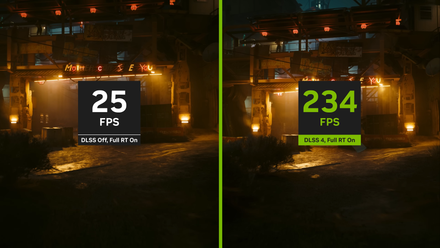
I touched on DLSS and FSR above, but they deserve a dedicated section. This generation has showcased massive strides in both upscaling and frame generation techniques, extending the life of affordable GPUs from both Nvidia and AMD camps. While Nvidia went all-in on AI-generated frames and a much-improved transformer model in DLSS, AMD focused more on how FSR has matured, thanks to machine learning and ground-up development for the RDNA 4 GPUs. FSR 4 now lies somewhere between DLSS 3 and DLSS 4 in terms of image quality, which is a big achievement for Team Red.
Nvidia's much-hyped Multi Frame Generation might not be available on older-generation GPUs (yet), but most everything else from the latest DLSS 4 stack is available on the RTX 40, RTX 30, and even RTX 20 series GPUs. I'm not holding my breath for the RTX 5060 Ti and RTX 5060 to be priced competitively, but you can still enjoy the benefits of DLSS 4 on previous-gen RTX GPUs.
AMD has also limited FSR 4 to its RX 90 series GPUs for now, but we will soon see the RX 9060 and RX 9060 XT arrive at lower price points, rumored to be somewhere between $400 and $500. While not exactly "budget", these GPUs might just be the best value 1440p gaming GPUs we've seen in a long time. Combined with the benefits of AMD's much-improved FSR 4 suite, they could last 1440p gamers a long time to come.
DLSS, XeSS, and FSR will make 8K gaming arrive sooner than we think
Next-gen frame generation technologies will unlock next-gen gaming sooner.
1 A balanced gaming rig is more important than ever
Invest the money saved in other components
A GPU is the most important component of a gaming PC, but it's not the only one. You also need a capable CPU, especially if you play CPU-bound titles like strategy and simulation games. Besides, even open-world games are becoming more CPU-demanding every year, requiring modern CPUs that can keep up with your GPU. Other components you should focus on are the RAM, SSD, and motherboard. After all, you want a balanced PC where no component ends up as a significant bottleneck for your GPU.
You don't upgrade a CPU that often, so budgeting for one that can last for years is important. You need at least $200 for a chip like the AMD Ryzen 5 7600 which is plenty for 1440p and even 4K gaming. A decent DDR5-6000 32GB RAM kit will cost you around $100, as will a 2TB Gen4 NVMe SSD. A motherboard with three M.2 ports, Gen5 support, onboard Wi-Fi, decent VRMs, pre-installed heatsinks, and a generous I/O selection will be around $200. Adding the cost of a quality power supply, CPU cooler, and case to all of these will bring the total to at least $800. You then need to add the price of the GPU to this number, so $300–$500 GPUs start to look a lot more enticing than $800–$1,200 high-end models.
With the performance that $500 GPUs are offering right now (once you can get them at or around MSRP), it doesn't make sense to overspend on high-end GPUs. Just build a $1,200-$1,300 4K gaming PC right now, and enjoy it for 3 to 4 years before thinking of an upgrade.

6 tips I always recommend for building a balanced gaming PC
Building a balanced gaming PC sounds abstract, so let's break down the tips to help you build one
High-end gaming GPUs are becoming irrelevant
The time when you were forced to drop a grand on a GPU for "high-end 4K gaming" is over. $500–$600 GPUs are now offering native 4K gaming performance at high settings. Sure, turning ray tracing on will turn this on its head, but you can still enjoy 60+ FPS with upscaling in all but a handful of newer titles. Only those with plenty of cash to burn and who need the bragging rights will continue to buy high-end GPUs. Those who purchased $800 GPUs for high-end 1440p or 4K gaming will think thrice before dropping the same amount of money on their next GPU.