
When it comes to finding the proper distribution of Linux to choose from after years of using Windows, some are easier to transition to than others. While it’s essential to experiment and try different flavors, there are some glaring reasons I decided to switch from NixOS to Mint.
With the official end of support for Windows 10 approaching, you may consider using Linux instead of upgrading to Windows 11 or purchasing a new PC. That’s a wonderful and doable switch. However, I dove deep into Linux, having been enticed to use NixOS by colleagues and users on Reddit. While Nix is a powerful operating system and has reasons to dive in, the steep learning curve (and other reasons) turned me off, and I went with Mint instead.
4 reasons I use NixOS in WSL instead of Ubuntu or Fedora
NixOS outperforms popular Linux distros
4 Familiar GUI and customization
Mint has a Cinnamon desktop out of the box
While you can load any desktop environment on Linux, including KDE, Plasma, GNOME, XFCE, and others, the default version of the Cinnamon desktop is a welcoming environment for Windows users. Once loaded up for the first time, it’s straightforward to navigate and figure out where things are.
It includes a Start menu-like launcher, repositionable taskbar, and an easy-to-navigate default folder system. As I come from a point-and-click Windows environment, I find that configuring and customizing Mint with its GUI-based approach is easier to manage than constantly editing configuration files in Nix. It’s just far more efficient to use, given my years of experience with Windows.
It also includes several customization options. I can set up and tweak the appearance of Mint as I like it via a GUI rather than tweaking a configuration file. I am still new to the Nix language, and the point-and-click nature of configuring themes, startup apps, system settings, and other aspects of Mint was more straightforward for a Windows user. Nix may be more customizable through the file in the end, but until I can wrap my head around the language better, I decided to switch to a more familiar desktop environment.
Additionally, Mint also includes several theming options that can be combined to make Mint look and feel however you want. I appreciate being able to see the changes as instant visual feedback, which facilitates easier experimentation. Additionally, since I come from a visual environment, seeing customizations happen in real-time is preferable to having to initiate rebuilds or system restarts.
Ready to ditch Windows 10? Here are 12 reasons Linux Mint is the perfect introduction for Windows converts
The best Linux distro for Windows converts.
3 App management
The apps you know and trust are ready to go
Mint includes familiar, preinstalled apps to help you accomplish your tasks out of the box, such as Firefox, VLC, and LibreOffice. Additionally, it features a straightforward package manager that enables you to locate and install more. It uses the APT package management, which is more traditional than Nix.
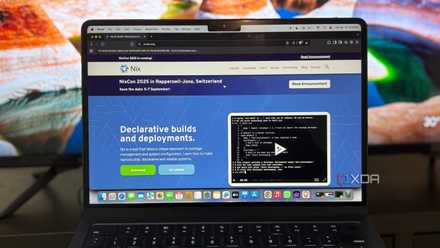
However, it's worth noting that the Nix package repository is the largest, with over 100K packages and includes atomic upgrades and rollbacks, which is a plus if you are looking for choice and compatibility. It also makes installing software easier with fewer dependency conflicts. Still, I need to get things done, and Mint’s software manager is straightforward.
5 reasons why Linux Mint is the best distro for Windows converts
Linux Mint is the friendliest distro for Windows veterans.
2 Troubleshooting
The GUI-based environment is easier for me to grasp than configuration files
Linux Mint is based on Ubuntu LTS, which has proven to be a reliable foundation for various distributions over the years. Like other operating systems, it has been updated for improved stability and performance. It also includes built-in driver support, which makes it easier to run on older hardware.
Additionally, if something isn’t working in Mint, I have a clear idea of where to start troubleshooting compared to Nix. I know it’s somewhere in the config file, but it’s easier to wrap my head around Mint and its GUI-based system. If I need the terminal, it’s always there. It includes helpful system tools that I'm familiar with.

6 reasons why I use NixOS over any other Linux distro
NixOS is the most exciting distro out there.
1 Mint is straightforward
NixOS has a much steeper learning curve
There are many benefits to NixOS if you are familiar with the Linux environment and its declarative configuration model. However, the Nix language presents a steep learning curve for fully utilizing its capabilities. It requires learning the language to edit the configuration.nix file.
While you don’t need to be an expert coder to learn to do basic tasks, you do need to have some familiarity with it. With atomic rollbacks, it doesn’t matter if you break it while learning the language, since it can be easily restored with little additional configuration.
Still, it’s built in a way that turns off newcomers; it certainly did for me. I had a difficult time hacking my way through some basic tweaks. Since I needed a PC with a production environment ready to go, I decided to switch to Mint, as I am more comfortable in its environment and will learn Nix on my own terms.
I tried Linux Mint as a Windows fanboy and here's how it went
It's less scary than I thought.
For now, I am going with Mint over NixOS as a Windows convert
As a long-time Windows user and a “Linux dabbler,” I wanted to see if I could be comfortable using a more powerful version of Linux, but my experiment has failed so far. I decided to make the switch from NixOS to Mint Linux because it’s a welcoming environment and a familiar experience. Plus, I needed to get Linux running fast on a production system. I didn't have time for extensive research and trial and error.
If you are coming from Windows to Linux, it is crucial to try a variety of distributions. I’d certainly recommend using a distro like Mint (or Zorin OS) before NixOS. Once I become more familiar with Linux, I believe it's fair to say I will graduate to a more advanced distribution, such as Arch or NixOS.