
Until recently, the only smartphones I'd ever used were powered by Android. And while it's true that Android is based on Linux at its core, it's also true that it's very significantly different from a typical Linux distro. You don't have a terminal (at least out of the box), typical Linux packages aren't supported, and there are some big changes to the kernel. For example, you can't really run Docker on an Android phone.
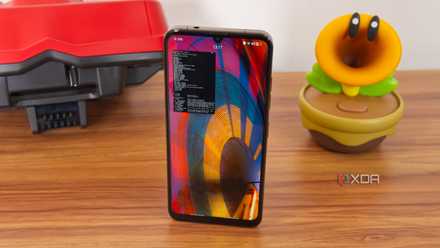
But for over ten years now, there has been a proper implementation of Linux on phones in the form of Sailfish OS. This operating system was first introduced back in 2013, and I finally had the chance to go hands-on with it with the Jolla C2 Community Phone. And what I found was a platform with a ton of potential that's actually doing some really cool things. I would love to see more developers and users rally behind this platform.
It's such a unique platform
But it still does everything you need
Like I said above, I've never used an iPhone for much longer than a few minutes in stores, but even I can tell that over the years, things have become more and more standardized across the industry. Android and iOS have increasingly similar UI paradigms, and even within Android, things used to be a lot more varied. The disappearance of Windows phones left a vacuum in terms of mainstream mobile platforms with more unique designs.
Sailfish OS brings that feeling back for me. There are some things in general that are still similar, like swiping down to see your quick controls, but everything else is so different. Instead of displaying your app list, your home screen displays your open apps, and each preview shows you relevant information and, optionally, some quick shortcuts. The phone app, for example, shows your recent call history, and there's a button with the preview window to immediately open the dialer. The clock app can show the current time or a running timer, along with a button to create a new alarm. Every open app can basically become its own widget with quick glanceable information and quick actions you can take.

I've waited a decade for a new Windows Phone, and this could be everything I want
It really could change the game.
If the home screen isn't where your apps are, then how do you access them? Well, you swipe up from the bottom of the screen, and what's interesting about this is that this gesture always works. Even if you're already in an app, swiping up doesn't close or minimize it, the app list opens over it, and the app is still right there if you swipe back down.
The use of gestures all throughout Sailfish OS is incredibly interesting. Swiping in from the side of the screen is how you go home, whereas swiping sideways on the home screen takes you to your notifications, calendar overview, and weather forecast. When you're in an app, swiping down from the top center of the screen brings up your quick settings, but if you swipe down from one of the top corners, you actually close the app.
It's the use of gestures within apps themselves that I find fascinating, though. In many native apps for Sailfish, a lot of the primary actions live in a menu that's actually above the screen. You swipe down slowly to reveal the options, and lifting your finger from the screen selects the highlighted option. Even the lock screen works this way, and you can add up to three apps that can be launched directly from the lock screen by swiping down. It's certainly unusual and takes some getting used to, but I love how unique it is. It does give me some Windows Phone vibes with the simple text-based menus and square-ish look. In some cases, you might have to swipe up, too, such as when a timer goes off in the Clock app; swiping up is how you dismiss it.
It's also Linux
But it could be even more so
What makes Sailfish OS especially curious to me is that all of that mobile-first philosophy that's so uniquely designed fits on top of something that is still Linux in a fairly "pure" form. Sailfish comes with its own terminal app, and generally speaking, you can do all the things you'd expect. You can install packages using PackageConsole or Zypper (using RPM as the backend), edit text files with Nano (though you need to install it first), and run custom scripts.
This is even useful for theming. Sailfish OS themes are called Ambiences, and typically, you can create your own using the UI to choose a photo, which automatically sets a theme color based on the image you chose. But if you don't like the colors chosen or you find that images are too heavily compressed, you can create custom Ambiences in the terminal using Nano to create the theme file with custom colors and using the full resolution image of your choosing.
Of course, you can technically also install apps via RPM packages downloaded from the internet. Because Sailfish OS is configured with different repositories than most Linux desktop distros, you won't be able to install a lot of the typical software out of the box, but you can always try to add repositories from larger distros to Zypper, though I frankly don't know how easy this would be. I tried doing it myself but was unable to.

Distrobox is like a package manager for distros that runs on top of your distro, and I love it
Use any distro, any time
It would be great if the software repositories for Sailfish OS were supported in the same way big desktop distros are, so I could easily get a newer version of Nano, or tools like ffmpeg, yt-dlp, or even Distrobox. Being able to run any Linux distro within Sailfish OS would be fantastic. Something like podman or docker could also be very cool for self-hosting services on a phone.
On the flip side, as a Linux device, you can also SSH into it relatively easily for remote control, which is another cool perk of the platform.
More native apps are sorely needed
You still need Android
The biggest problem with Sailfish OS as it stands is the lack of developer support. There are, of course, apps for the essentials like phone calls, messages, a clock, and notes. Plus, surprisingly, some apps for third-party services also exist and are decently functional. I've been using Reddit through an app called Quickddit, and it's fairly solid, allowing me to access subreddits I'm in, see my notifications, add comments and votes, and so on. The only thing that doesn't seem to work is audio in videos embedded in posts. Likewise, while it only supports basic messaging, an app called Sailcord lets me access my Discord account while staying true to the design philosophy of Sailfish OS.
But there's a fundamental lack of apps on the official Jolla Store, and even using the OpenRepos platform for sideloading, it doesn't get much better. And it doesn't help that the official Jolla store imposes certain limitations, which makes a few apps recommend sideloading instead. I've seen this with Pure Maps and the file browser app (yes, there's only one).
Find phone deals and discounts on Linux-friendly mobiles
And frustratingly, PureMaps is available on a second third-party store called Sailfish Chum, and attempting to install it with the RPM file returned an error saying some dependencies couldn't be resolved. And while OpenRepos has a frontend app store for its apps, I was not able to set up the Sailfish Chum GUI app. An already tiny platform being divided in this way means it's hard to get support whenever something doesn't work, and Sailfish badly needs some more consistent support from the community and its core developers alike.
Ultimately, the burden of making Sailfish OS a usable platform for most people falls on its Android AppSupport integration, which relies on a proprietary compatibility layer for Android apps. This is solid, but it's not properly set up with Google services, so most Google apps don't work, and apps that rely on the Google Services Framework may also have trouble. A lot of banking and finance apps rely on security features from Google, which aren't usable here. A platform like Waydroid has similar problems but it actually works better in many ways, and I wonder if it wouldn't be better to adopt it in some way.

Waydroid runs Android apps on Linux better than Windows ever ran them on WSA
They're barely in the same league
Sailfish OS is a great concept
As an idea, I love Sailfish OS. Not only does it bring a wholly unique interface to mobile devices at a time when things seem more unified than ever, but it also has the potential to bring the full power of Linux to a smartphone you actually want to use. But the lack of apps makes it hard for it to become anyone's daily driver, and the power of Linux is somewhat hampered because it relies on dedicated repositories that, again, don't get much support.
The community as a whole would benefit if the UI for Sailfish OS could also be open-sourced and made available as a desktop environment other distros could adopt. I can see a world where many more Linux distros might be ported to mobile devices using this UI, and leading to more apps being ported to the platform as well. It's unlikely, but taking that step could make a big difference.
Jolla C2 Community Phone
- Brand
- Jolla
- Operating System
- Sailfish OS 5
- SoC
- Unisoc
The Jolla C2 is an affordable phone running Sailfish OS, a Linux distribution with a custom touchscreen-oriented UI.