
I have spent the better part of the last decade treating VS Code like a digital Swiss Army knife. I was convinced that the right combination of extensions was the secret to a perfect workflow. However, a week after moving my project over to Google Antigravity, I had a realization: I hadn’t missed most of those must-have add-ons.
Here is why I finally left the comforts of Microsoft’s ecosystem for a leaner, faster, and more capable workflow.
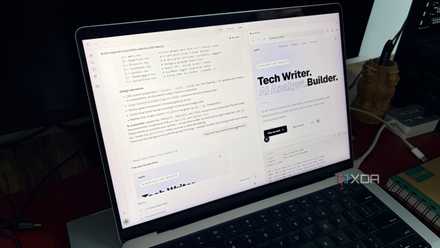
I tried Cursor, Claude Code, and Google Antigravity for a month and I have a clear winner for you
The state of AI dev tools in 2026.
Extension debt on VS Code
And then I found Google Antigravity
I have always preferred a perfectly tuned environment. Like a lot of devs, a curated collection of extensions in VS Code made me feel like a power user.
Every time I opened VS Code, I was greeted by a notification tray full of extension updates, a sidebar cluttered with 20 different icons, and the feeling that I needed to spend an hour tweaking my settings.json because two plugins were messing with my auto-formatter.
I stumbled upon Google Antigravity almost by accident while researching AI-native developer tools for a review piece. At first, I dismissed it as another browser-based IDE. But the buzz was different this time.
People weren’t talking about how many plugins it had; they were talking about how it felt like the first IDE designed after the AI revolution, not just a legacy editor with an AI chatbot on the side.
I decided to give Antigravity a weekend trial. Since it’s a VS Code fork, Antigravity already supports all my extensions from day one, so there was no harm in trying it out for my projects. I went in expecting to feel restricted, but within a couple of days, I felt something I hadn’t felt in years: lightness.
The Antigravity approach
Google handles the essentials
Thanks to VS Code’s excellent support for third-party extensions, I fell into the trap of believing that my IDE should be a single place where I could manage my containers, check my emails, track my Jira tickets, and maybe even listen to Spotify. If you have a problem, there is an extension for it.
I eventually realized that by trying to make VS Code do everything, I was making it mediocre at the one thing it was supposed to do: help me write code.
This is where Antigravity flipped the script for me. When I first opened Google Antigravity, my instinct was to head straight to a marketplace to find my essentials. I was looking for my Git enhancers, Docker dashboards, and AI assistants.
But within 30 minutes, I realized that Antigravity already has essential stuff built in. Unlike the blank-canvas philosophy of VS Code (where you start with a text editor and add functionality until it becomes an IDE), Antigravity feels like it was built by people who actually watched how modern developers work.
For example, in my old setup, I had a specific extension just to handle Git Lens-style line history. In Antigravity, that deep version control context is native. It’s not a third-party plugin trying to hook into the UI.
Because Google owns the stack, the integration with things like Firebase isn’t a bridge built by a random developer on GitHub. It’s a seamless, built-in feature.
I also stopped needing a dedicated AI chat extension since the LLM is integrated into the autocomplete and terminal itself. I don’t need a project manager add-on either, as the workspace logic is designed for multi-repo workflows from day one.
Antigravity proves that integration beats add-ons. By having fewer extensions, the features that are there work in perfect harmony. There are no conflicts between two different plugins trying to take over the same hover menu.
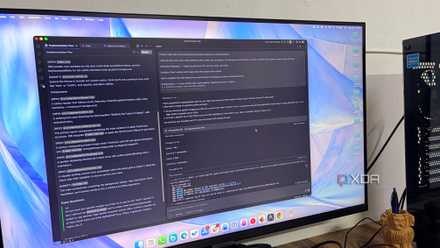
Forget Cursor and Claude Code, Google Antigravity is the perfect example of vibe coding
Stop coding, start commanding.
Out-of-the-box productivity
Zero configuration and efficiency
The first time I cloned a repo into Antigravity, the IDE just worked. It recognized the language servers immediately, the formatting was crisp, and the debugger was ready to go.
The biggest impact on productivity came from how AI is handled. In VS Code, Copilot always felt like a very smart AI that shouts directions. In Antigravity, the AI feels integral.
It doesn’t just see the file I’m in; it understands the entire workspace, my terminal history, and even my deployment logs. It doesn’t wait for me to ask a question in a side chat.
It identifies logic flaws as I’m typing, with a level of speed that third-party extensions can’t match due to API latency. Overall, I stopped being an IDE manager and went back to being a developer.
Less is more
Overall, I mistook a crowded sidebar of extensions for a professional workflow and failed to see that the complexity I was adding was actually a barrier to the work itself.
Antigravity proved that when the core tool is built with essential features and modern intent, you don’t need a dozen third-party plugins to bridge the gaps. It delivers the out-of-the-box fluidity that I hadn’t experienced since my early days of coding. After all, there is a reason why I crown it the best fork of VS Code.