
There's no doubt that Nvidia currently leads the GPU market with almost no competition in the high-end segment, but fans often exaggerate how far behind AMD really is. As someone who has always preferred Nvidia cards, I'd say AMD's offerings deserve more credit than they usually get. Nvidia has earned its reputation over the years because of ray tracing, AI-powered features, and top-tier halo products like the RTX 4090 and 5090. However, AMD has its own strengths despite the lack of a high-end GPU to match.
The thing is, most gamers aren't splurging on flagship GPUs every generation as some enthusiasts do. They're trying to save money by shopping in the mid-range segment with the intention of keeping them for multiple generations. And that's exactly where AMD's GPUs quietly shine. Once you look past the fan-driven hype and launch-day benchmarks, it becomes clear that AMD has closed the gap in more ways than people like to admit. Below, I'll break down the areas where AMD actually has the edge over Nvidia.
They generally offer more VRAM
Nvidia continues to skimp on VRAM despite charging more than AMD
In 2025, I wouldn't recommend anyone to get a GPU with 8GB of VRAM because it's simply not enough for modern AAA gaming. Sure, most games may run fine at 1080p, but newer, demanding titles like Black Myth: Wukong and Indiana Jones and the Great Circle can consume more than that, especially when you enable ray tracing. At 1440p, 8GB VRAM becomes even more of a problem, with certain titles outright crashing in some cases. So if you plan to keep your GPU for a while, settling for 8GB can easily be one of the biggest mistakes you make.
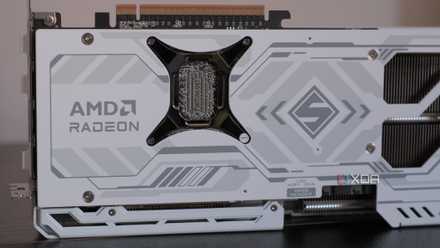
Although both companies offer 8GB models in the entry-level segment, Nvidia is notorious for skimping on VRAM even in the mid-range. Take a look at the RTX 5070, for example, which is only available with 12GB of VRAM. On the other hand, AMD's RX 9070 and 9070XT both offer 16GB of VRAM as standard, so running out of memory would be the last thing you need to worry about while gaming. Right now, the only 8GB AMD GPU you can buy is the 9060XT, which costs $299, whereas Nvidia continues to sell the 5060Ti 8GB in the sub-$400 price range.
Cost per frame is AMD's biggest strength
AMD more than makes up for feature gaps with its aggressive pricing strategy
AMD may lack some cutting-edge features that Nvidia loves to advertise, but that doesn't necessarily make its GPUs a bad buy for most gamers. At the end of the day, the vast majority of people care more about rasterization performance than inflated numbers from multi-frame generation, and in that regard, AMD doesn't disappoint. The company continues to undercut Nvidia on pricing, which is exactly why its GPUs are such a great value for gamers on a strict budget.
Take a look at the RX 9060 XT 16GB, for example. It costs $349 (at least officially), which is cheaper than the 8GB variant of the RTX 5060 Ti that carries a price tag of $379. Likewise, the RX 9070, which launched at the same MSRP as the RTX 5070, beats it outright in most rasterization benchmarks. And the RX 9070XT, which launched at $599, trades blows with the RTX 5070 Ti, which costs $150 more. When you take frame generation out of the equation and compare raw performance per dollar, AMD consistently offers more value for your hard-earned money.
Driver support and an "open" ecosystem
Nvidia no longer has the upper hand when it comes to driver stability
For the longest time, Nvidia was consistently ahead of AMD in terms of driver support, but that has no longer been the case over the past couple of years, especially with the release of the RTX 5000-series Blackwell GPUs. This year, countless people have reported black screen issues, crashes, and stuttering after recent driver updates. At one point, even developers recommended against installing the latest drivers. On the other hand, you rarely ever see gamers with RX 9000-series GPUs complain about wonky drivers online.
Another thing I like about AMD is how open its ecosystem is, unlike Nvidia's locked-down approach. Features like FreeSync and FSR don't necessarily require a Radeon card; you can use them with Nvidia and Intel GPUs too. That kind of flexibility gives you peace of mind when you switch teams down the line. For instance, you won't have to worry about paying a premium for G-Sync-certified monitors. All in all, AMD's technologies end up feeling more consumer-friendly, even though they're not as cutting-edge as Nvidia's offerings.
AMD is catching up fast, and that's a good thing
Nvidia may still have the lead, but with each year, AMD continues to bridge the gap. For starters, FSR 4 no longer feels like a compromise and even looks better than DLSS 3 in most cases. Driver support has also improved significantly in recent years, whereas Nvidia has stumbled more than people are willing to admit. When you factor in more VRAM, better price-to-performance ratios, and a more open ecosystem in general, AMD's value proposition becomes hard to ignore for most gamers who don't want to splurge on a halo product like the RTX 5090. Ultimately, AMD catching up is a win for all of us because it forces Nvidia to compete and gives consumers more options.