
It’s no secret that AI-powered development has moved from simple autocomplete to full-scale autonomous agents. But the real question is, which popular tool survives a week of deadlines and complex refactoring?
Over the last thirty days, I moved my entire workflow away from the familiar and into the three of industry’s heavyweights: Claude Code, Google Antigravity, and Codex.
After a month of pushing these tools through real-world stress tests, like debugging legacy scripts to building a personal website from scratch, the performance gaps were eye-opening.

I use OpenCode over Claude Code, and it's every bit as good
Beat-for-beat, feature-for-feature.
Claude Code
Autonomous architect
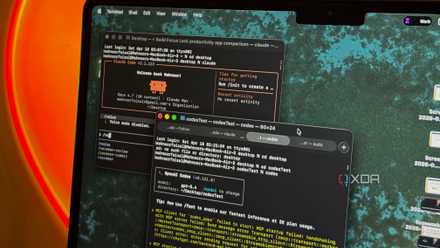
I started my month-long trial with Claude Code, and the experience felt like I had finally hired a senior developer who actually listens. It’s an agentic tool that means it doesn’t just suggest lines of code – it explores my files, understands the folder structure, and executes commands.
Its standout feature is its ‘thought process.’ I can actually watch it reason through a bug or a feature request, which makes the whole process feel much more transparent.
It handles complex refactoring across multiple files without breaking a sweat. It’s also incredibly fast at finding where a specific function is buried in a massive project.
However, it isn’t perfect. The biggest con for me was the cost and token usage. Because it reads so much context to be accurate, you can burn through your limits quickly if you aren’t careful. Also, being terminal-based, there is a slight learning curve if you are used to a more visual style of coding.

How much do you know about Claude?
Trivia challenge
Think you know Anthropic's AI assistant? Put your knowledge of Claude to the test.
Which company created Claude?
What is the name of the safety and values framework Anthropic developed to guide Claude's behavior?
What is the name most commonly associated with inspiring Claude's name?
Which of the following best describes Claude's context window capability in its more advanced versions?
Which of the following principles is NOT part of Anthropic's core goal for Claude?
What was a key distinguishing feature of Claude 2 when it launched compared to many rival models at the time?
Anthropic describes itself primarily as which type of company?
Which of the following tasks is Claude specifically designed to handle well?
Your Score
Thanks for playing!
The moment Claude Code truly won me over was during my ‘personal website showdown’ project. I wanted to build a modern portfolio that would showcase my work in the AI and productivity area.
I gave it a massive, complex prompt that included a specific tech stack, a unique menu structure, and a requirement for a sleek, gradient aesthetic. Claude Code nailed the entire foundation on the very first try.
If you are doing deep technical work where context is everything, the way this tool handles project-wide logic is hard to beat.
Google Antigravity
Integrated project command center
Next up is Google Antigravity. Released in late 2025, this platform isn’t just another plugin; it’s a dedicated development environment that feels like the evolution of how to build software.
Because it's forked from VS Code, the integration is seamless. It understands the entire lifecycle of my project, from the first line of a script to the final deployment.
The standout feature for me is its deep integration with the Google ecosystem. It manages dependencies and cloud-native configurations with ease.
The biggest pro is surely the efficiency of the IDE itself. Having an AI natively backed into the editor means there is zero friction. However, there is a catch: the stability.
During my month of testing, I frequently run into performance issues. It wasn’t alarming, but it’s something Google needs to address in the future.
The Mission Control view is excellent for complex projects. Instead of waiting for one AI to finish a response, I can run multiple agents to work on different parts of a project. For instance, while one agent is refactoring a backend API, I can have another one writing unit tests or browsing the web to research the latest documentation for a library.
The built-in browser also deserves a mention here. It will launch your app, click through the UI, and even record a video to actually verify their work. I recently used it for my Swami Jewels project, where I migrated a legacy inventory database and created a new customer-facing dashboard. Antigravity worked like a charm.
I switched from Claude Code to Codex for a week, and the trade-offs surprised me
One week, two tools, a lot of opinions.
OpenAI Codex
Automated cloud-based maintenance
Finally, I spent the last leg of my month-long experiment with OpenAI’s Codex. If Claude Code is the autonomous senior dev and Antigravity is the high-tech command center, then Codex in 2026 has become the ultimate efficient machine.
I can queue up a task, it spins up a sandboxed version of my repo, does the work, and just notifies me when the pull request is ready. While Codex has covered the basics, the standout feature for me is the Parallel Worktrees.
Unlike Claude, where I’m usually watching one terminal session, Codex lets me run three or four agents simultaneously on different branches.
Basically, it’s built for the batch workflow. I can ask it to update all my deprecated API calls, write unit tests for the last five files I changed, and refactor the styling to match our new design system all at once.
I also like how it handles the large volume of work without intervention. I found it consistent with existing code styles, and it seems to have a better memory for how I usually write things.
However, when it comes to nailing the design details and the reasoning based on the prompts, I found Claude Code superior to Codex.
I let AI write my code for a month
After a month of living with these tools, I have a clear favorite. While Claude Code is a robust partner and Codex is a reliable workhorse, my preference leans towards Antigravity.
The reason is simple: it’s the only tool that bridges the gap between an autonomous agent and the manual precision of a traditional IDE. By building an agent-first experience directly into a VS Code-powered setup, Google has created a workflow where I don’t have to choose between doing the work myself and letting the AI take over.
I can jump into the code to tweak a specific logic gate while my Mission Control agents handle the work in the background. Besides, I have access to all my useful VS Code extensions (or, to be specific, the ones on the Open VSX registry).
Of course, it isn’t a perfect victory. Claude Code remains the king of vibe coding. If I need to build a landing page like my portfolio from scratch, nothing beats its ability to understand a creative prompt on the first try.
Google Antigravity
Google Antigravity is an AI-powered IDE that rivals VS Code and Cursor.